
Energy & Critical-Maintenance Crane Systems
Lift out the component.
Make room for the repair.
Cranes for turbine and generator installation, hydropower equipment and planned plant maintenance. Start with the component to remove, the lifting path and where it will be set down.
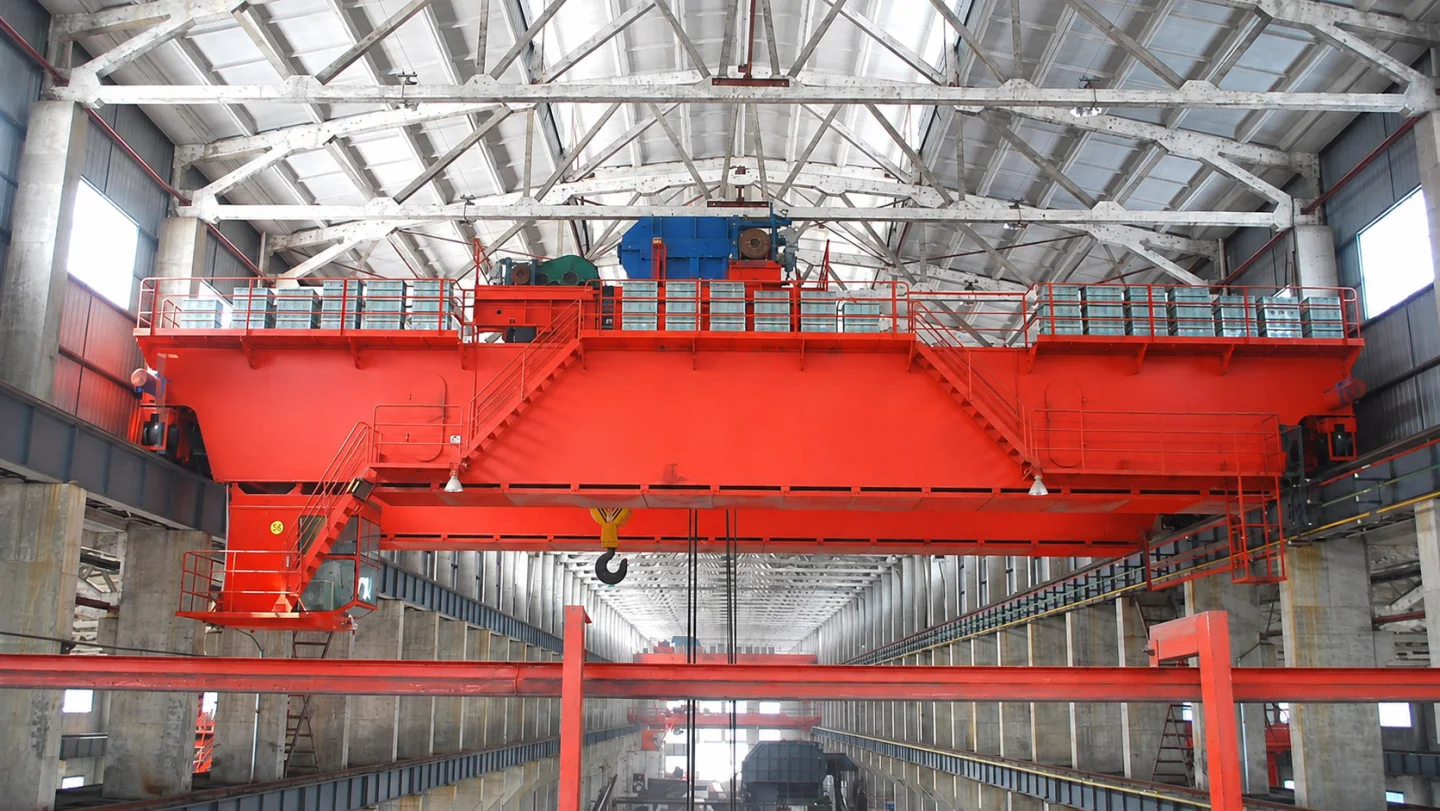
Inside the powerhouse.
Or above the gate.
The load, travel path and operating environment lead to different crane arrangements. Select a group to see the information that changes the design.
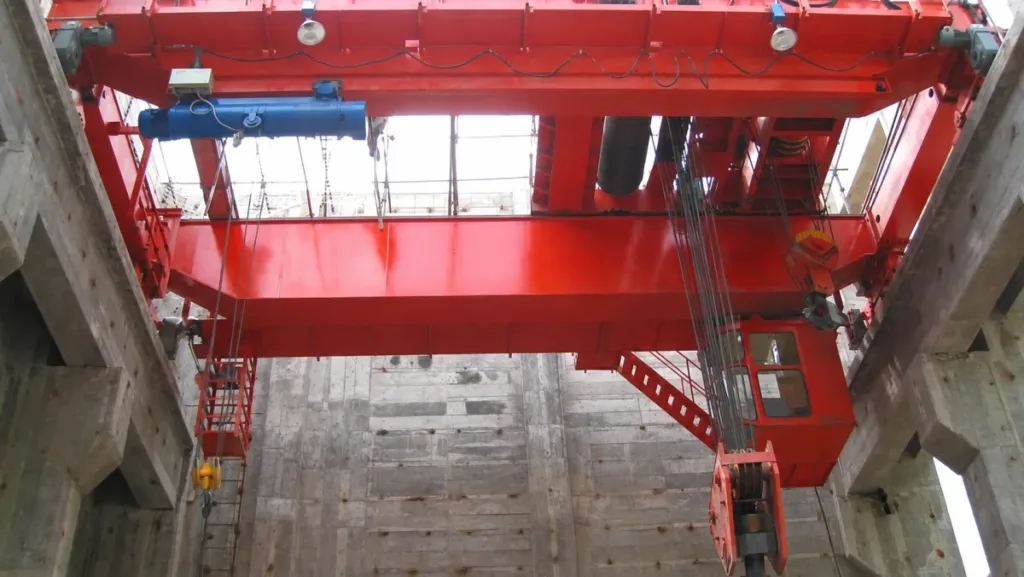
Powerhouse bridge cranes
Lift and position components between the installed machine, the loading bay and a maintenance area. Main and auxiliary lifting arrangements can serve different loads.
Check suitability
- Identify the rotor, casing or other component to remove, its lifting points and the headroom needed with the rigging attached. Review the complete removal and return path.
- Include vertical withdrawal from the unit pit and transfer to the assembly floor. Confirm the component dimensions, hook travel and available landing space.
- Pumps, valves and smaller assemblies may be better served by a dedicated hoist, monorail or jib. Check whether the main crane can reach and whether it must remain available for another lift.
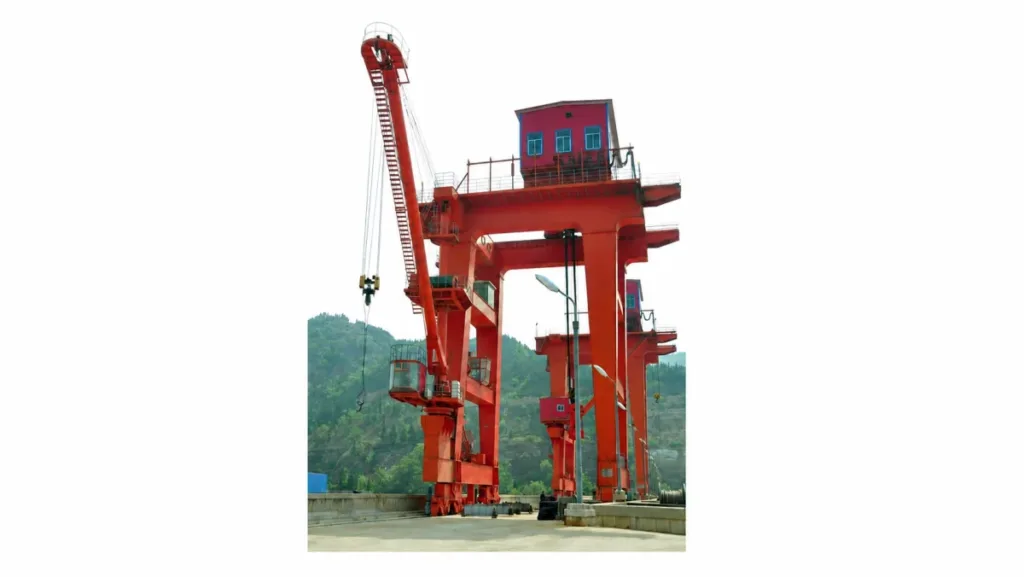
Hydropower gate cranes
Use a mobile gantry or a dedicated hoisting arrangement to serve defined gate slots and handling areas. Gate operation and removal for maintenance need separate review.
Check suitability
- Provide gate and stoplog drawings, lifting-point spacing and the lifting-beam or grabbing-beam interface. Define how engagement is checked.
- Gate weight alone is not the required hoisting force. Specify the water conditions, friction and the intended operating or maintenance duty with the gate designer.
- Confirm rail arrangement, hook travel, wind exposure, corrosion conditions, parking restraints and access. The pictured auxiliary boom is an example, not a standard inclusion.
Different lifts.
Different provisions.
Select a numbered area. This equipment example shows separate lifting arrangements and access; the required capacities and controls depend on the lift plan.
Design for the actual lift.
Prepare before the shutdown.
A crane may stand idle for months and then work intensively during an outage. Include slow-running time, repeated positioning and readiness after storage in the review.
| Load and lifting points | Include the component and rigging weight, centre of gravity and approved lifting points. Any coordinated lift needs a specific load-sharing and control plan. |
|---|---|
| Removal path and landing area | Check withdrawal height, hook approaches, obstructions and the space needed to set down and work on the component. |
| Duty during the outage | Review time spent positioning at low speed, starts and load combinations. Few operating days do not automatically mean a light-duty design. |
| Readiness and recovery | Plan inspection after idle periods, access to service items and the agreed response to interrupted movement or power loss. |
01What belongs in the supply scope?
Agree the crane or hoisting equipment, lifting attachments, controls, runway or rail interfaces and documentation. Identify responsibility for structural verification, installation, testing and commissioning, including temporary works and access required at the plant.
02What should be verified before the outage?
Agree the inspection and test programme for the selected equipment and site. Check the required lifting movements, limits and protective functions, and demonstrate relevant interfaces and recovery arrangements. Confirm that the component can reach its landing area with the intended rigging.
New installation?
Or an existing plant?
The initial review should identify what can be retained and what the next lift will demand.
01Can the existing crane be upgraded for the next overhaul?
Start with its nameplate, drawings, condition and the proposed load and lifting sequence. Controls or drive upgrades may improve handling, but they do not by themselves increase the crane rating or make the supporting structure suitable for a heavier lift.
02Do two hoists or two brakes make a crane redundant?
Not by themselves. Multiple lifting points, additional braking and independent load paths solve different problems. Define the failure conditions, load retention and recovery required, then review the complete arrangement.
03Can the same crane cover erection and later maintenance?
Often it can, but both tasks must be included from the start. Erection loads, building access, later component-removal routes and auxiliary lifting needs may differ. Do not assume the first installation lift covers the future maintenance requirement.
Need a controls upgrade?
Explore positioning assistance, controls renewal and automation for retained equipment.
View AutomationShow the component.
Mark its removal path.
Send the drawings and photos you already have. The first review can identify a suitable equipment arrangement and the inputs needed for a proposal.
Discuss an energy lift- Component or gate drawings, weight and lifting points; existing crane details if applicable
- Plant layout, lifting and landing positions, available headroom, rails or runway, and access photos
- Erection or outage dates, expected lift sequence, slow-positioning needs and scope of site work