
Electric chain hoists · Project fit
Keep the lift
close to the task.
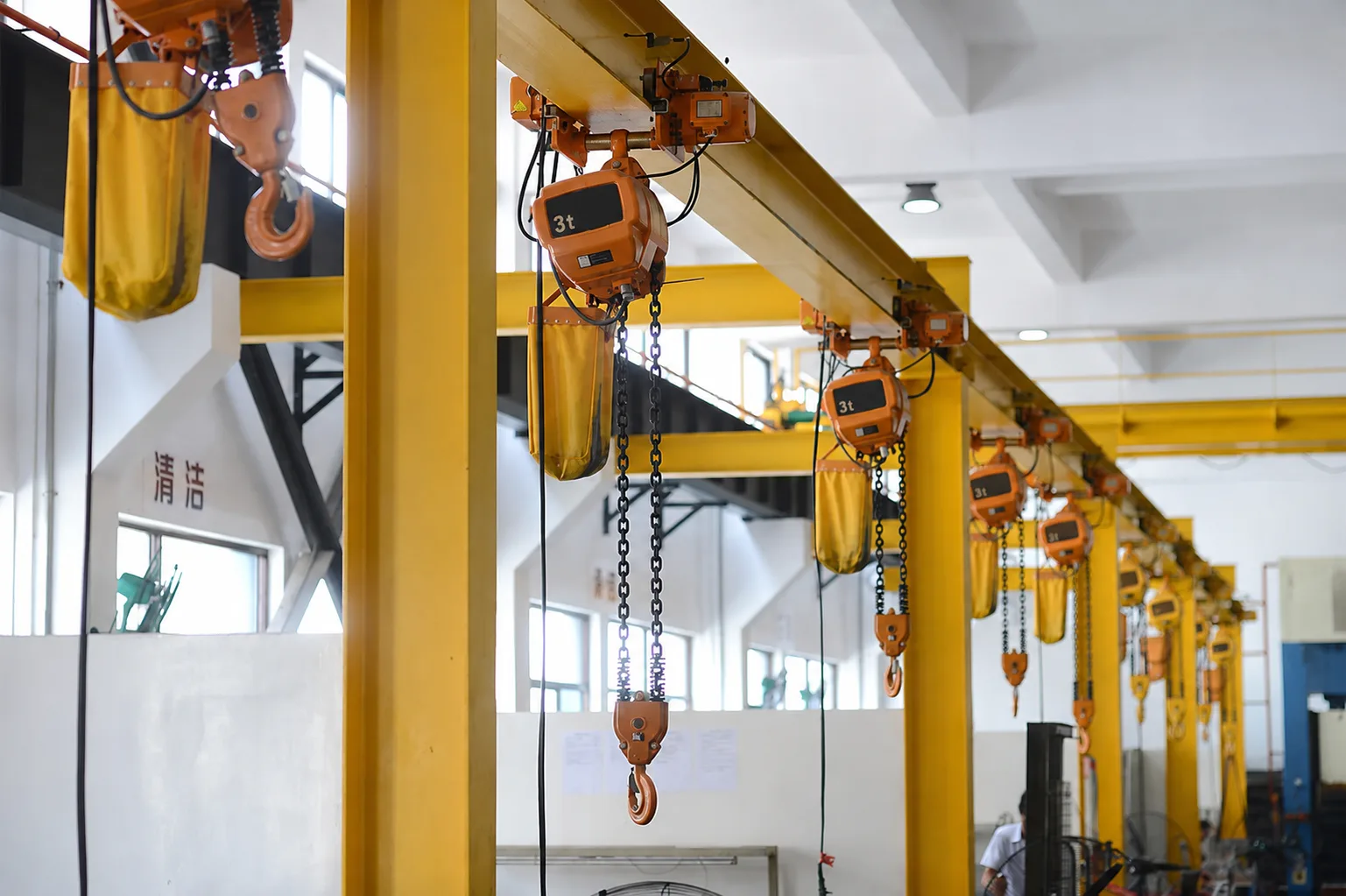
Choose the arrangement from load, lift, duty, suspension, travel and operator needs—not capacity alone.
- 01
- 02
- 03
- 04
- 05
Compact equipment still needs
a complete operating case.
Load, space, cycle and site interfaces decide whether a chain hoist is a useful fit and which arrangement belongs in the work area.
- 01
Define what the hook carries.
Mass, load shape, centre of gravity, lifting points and attachment establish the suspended load before a hoist is selected.
- 02
Measure the useful lift.
Required hook travel, upper and lower approach, beam depth, obstructions and maintenance space decide whether the arrangement fits.
- 03
Describe how the lift repeats.
Starts, running time, load spectrum, speeds, inching and positioning needs determine motor, brake, chain and control duty.
- 04
Close every site interface.
Suspension, trolley, power, controls, temperature, dust, moisture, access and destination requirements complete the selection basis.
One lifting mechanism.
Three ways to fit the work zone.
Fixed, travelling and low-headroom arrangements solve different coverage and clearance needs. They are configurations of one product family, not a quality ranking.
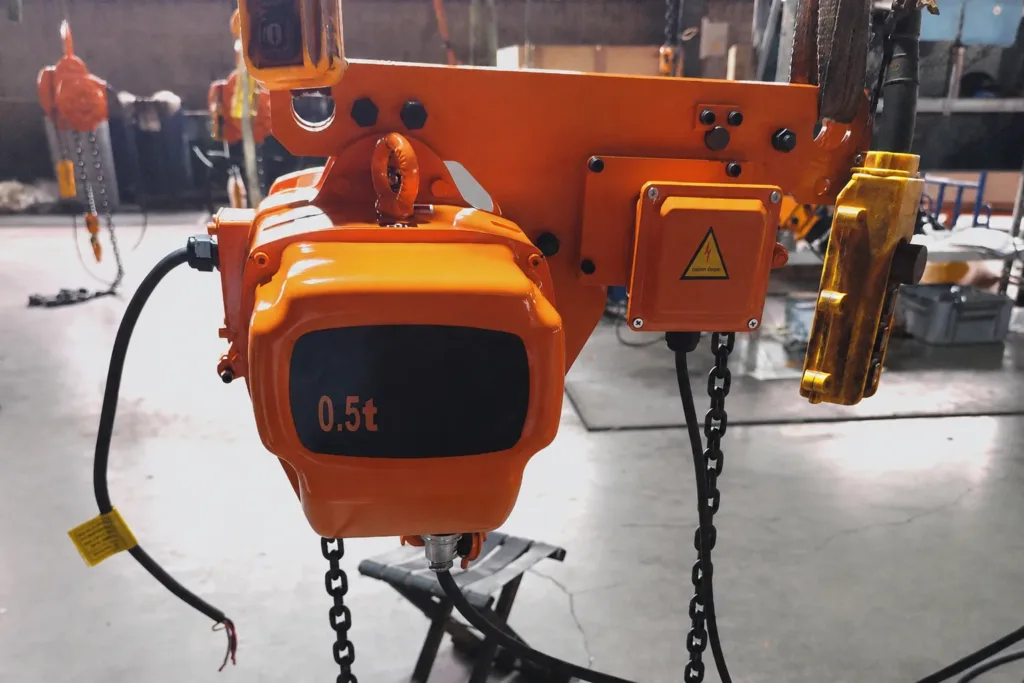
Fixed suspension
A hook- or lug-suspended hoist for a defined lifting point on a jib, workstation, monorail support or fixed structure.
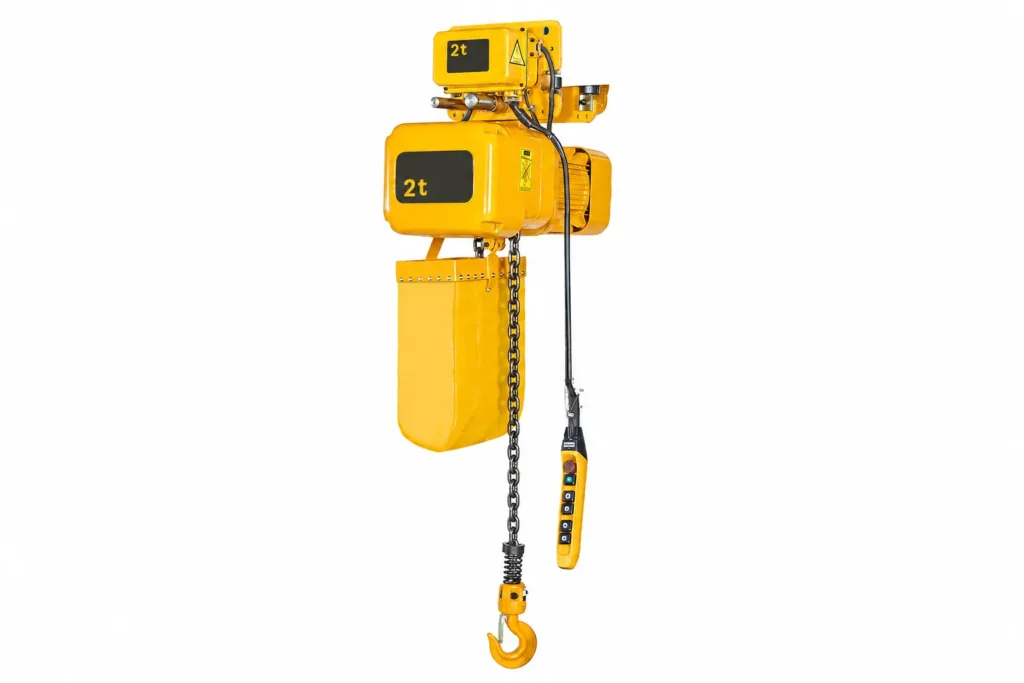
Travelling trolley
A push, geared or motorised trolley adds horizontal travel; the operator method, beam flange and travel distance decide the arrangement.
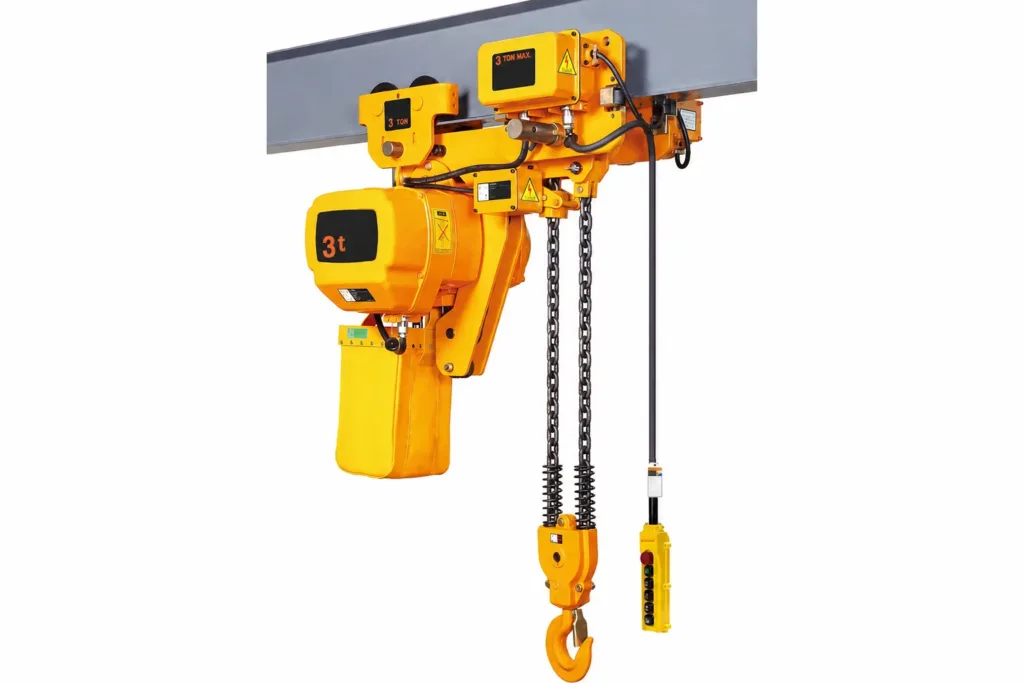
Low-headroom trolley
The hoist sits beside the beam to recover hook height where the roof, runway or process limits the available vertical envelope.
The chain hoist lifts.
The site must support the complete motion.
Support, clearance, power and control determine whether the selected arrangement can be installed, operated and maintained in the real work area.
- 01
Suspension point or trolley beam
Confirm support capacity, flange width, wheel or hook fit, end stops and how operating loads enter the structure.
- 02
Hook approach and chain storage
Check upper and lower hook positions, chain-container clearance, side obstructions and access for inspection or chain replacement.
- 03
Supply and moving feed
Define voltage, frequency, phase, isolation and the festoon or conductor route when the hoist travels.
- 04
Operator position and motion
Pendant, radio, lifting speeds, trolley control, limits and overload protection must match the real work sequence.
Follow the load path.
Then close every connected part.
Suspension, motor, brake, chain, container, hook and controls are selected as one mechanism. Component positions vary with the arrangement.
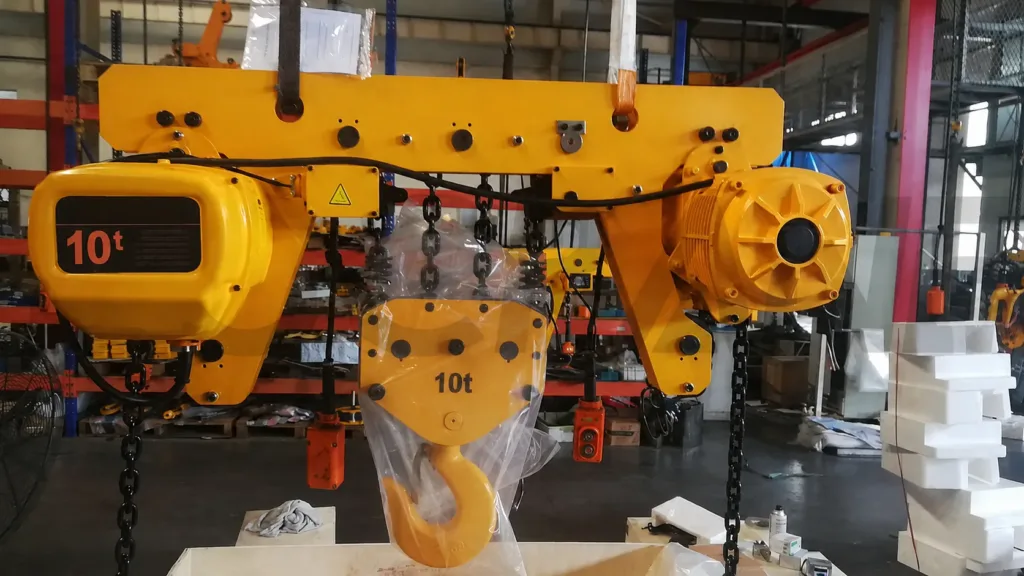
Rated load is one value.
Performance is the whole operating cycle.
Load spectrum, lift, starts, positioning, travel and environment change the mechanism even when the nameplate capacity remains the same.
- 01
Load spectrum
Frequent heavy lifts increase motor, brake, chain, guide and bearing demand even when rated capacity is unchanged.
- 02
Lift and chain falls
Long lift or multiple falls change chain length, container size, hook approach, speed and inspection access.
- 03
Starts and positioning
Frequent starts, inching and assembly work affect lifting speed, braking, control method and heat management.
- 04
Travel and power feed
Trolley motion adds beam, wheel, end-stop, pendant or radio and moving-power requirements.
- 05
Environment
Temperature, dust, moisture, corrosion or hygiene needs change enclosure, materials, controls and maintenance decisions.
One configured hoist.
Clear responsibilities.
The proposal should state what is included in the mechanism, suspension or trolley, controls, documents and site services so no interface is hidden at delivery.
Supply boundary Installation, commissioning, supporting steel, site power and third-party interfaces are included only when named in the agreed proposal.
Specify the result.
Then prove the configured hoist.
Review, inspection, functional testing and release documents should close against the approved arrangement and agreed project requirements.
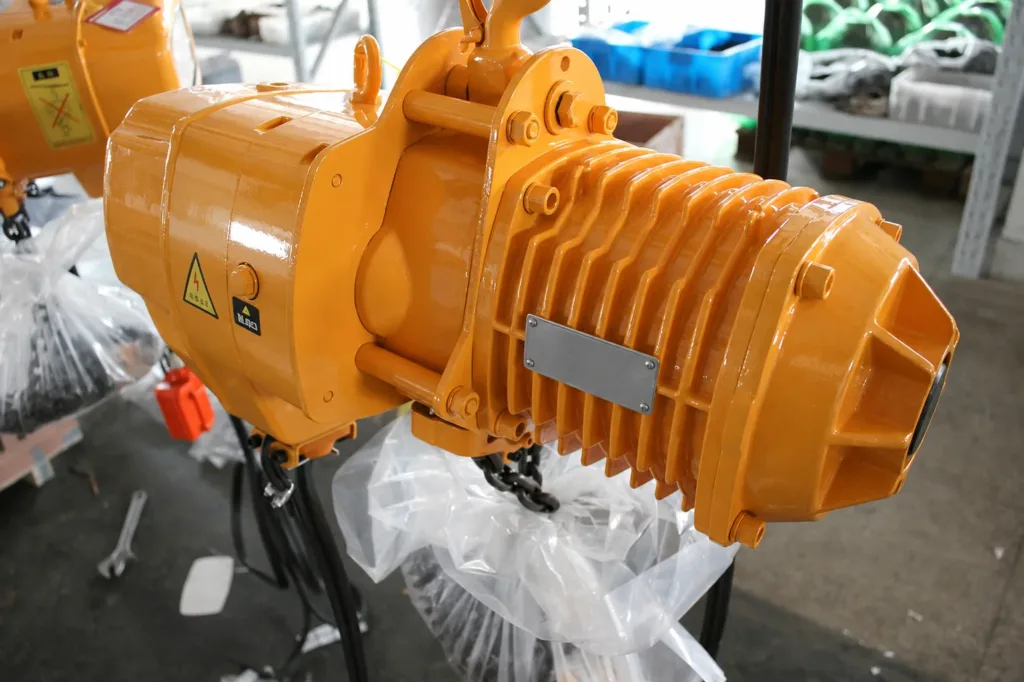
Inspect the unit that will be supplied.
Suspension, housing, motor, chain path, controls and records belong to the actual configured hoist—not to a generic catalogue family.
- 01
Approved configuration
Confirm arrangement, load, lift, speeds, chain falls, support, controls, environment and project exceptions before manufacture.
- 02
Manufacturing checks
Review suspension, trolley, housing, chain path, electrical assembly, identification and agreed quality records.
- 03
Functional and load checks
Verify lifting and travel motions, brakes, limits, controls, protection and load-related tests within the agreed boundary.
- 04
Documents and handover
Close actions and issue the agreed drawings, certificates, manuals, packing records and release evidence.
The product family is shared.
The work-zone demands are not.
Workstations, jibs, monorails, maintenance points and low buildings place different demands on approach, travel, duty and the surrounding system.
- 01
Local assembly and positioning
Compact lifting can serve a defined cell when approach, speed, starts and operator position are clear.
- 02
Point-to-point handling
Trolley choice, beam geometry, end approach and moving power determine how the hoist covers the work area.
- 03
Equipment service lifts
Protect the hook path, storage position, occasional-use controls and space needed to remove maintained equipment.
- 04
Headroom-limited zones
A low-headroom trolley can recover hook height, but side clearance, chain storage and service access still need verification.
Answer the questions
that change the selection.
These answers identify the information needed to choose an arrangement, define the interfaces and prepare a reliable project scope.
01When is an electric chain hoist a better fit than a wire-rope hoist?
Electric chain hoists are often credible for compact local lifting, workstations, jibs, maintenance points and shorter monorails. Wire-rope hoists become more credible as lift height, speed range, duty, reeving or crane integration increases. Compare the real task, headroom, starts, travel and control needs rather than capacity alone.
02Can the hoist be fixed or fitted to a trolley?
Yes. Fixed hook or lug suspension suits one lifting point. Push, geared or motorised trolleys add travel along a suitable beam. Low-headroom trolleys recover hook height by placing more of the mechanism beside the beam. Each option needs its own support, approach, travel and operator checks.
03Can an electric chain hoist be fitted to an existing jib, beam or workstation crane?
Possibly, after support capacity, suspension or flange geometry, clearances, end stops, power route, control method and equipment condition are checked. Photos and dimensions help the first review, but they do not replace the structural and interface information needed for release.
04How are lifting speed and positioning selected?
State the normal lift, slow or positioning motion, starts, operating time, load spectrum and stopping behaviour. Single-speed, dual-speed or variable-speed arrangements should then be checked with the motor, brake, control and duty rather than chosen as an isolated option.
05What happens to the extra load chain?
Unloaded chain is collected in a chain container sized for the configured lift and number of falls. Its position and full condition must remain clear of the load, structure, trolley travel, operator and nearby equipment.
06What information is needed for a reliable quotation?
Send the load and attachment, required lift, support or beam details, headroom, travel distance, duty, speeds, power, control preference, environment, destination and required installation or commissioning scope. Photos and partial drawings are acceptable for the first technical review.
Send the load and work zone.
We define the missing inputs.
Photos, drawings and incomplete data are acceptable at the first step. We will identify the remaining decisions before recommending an arrangement and supply boundary.
Request chain-hoist review- Mass, dimensions, centre of gravity, lifting points and handling method
- Required lift, hook approach, headroom, obstructions and chain-container clearance
- Suspension point or beam geometry, travel distance, end approaches and support information
- Load spectrum, starts, operating time, lifting and travel speeds, positioning need
- Supply, control method, temperature, dust, moisture, corrosion or hygiene needs
- Project location, applicable requirements, documents, installation and commissioning needs