
Manual Hoists
Lift and position.
Powered by hand.
Hand-chain and lever hoists for maintenance, installation and occasional load movement. Choose around the task, the available support and where the operator can stand and work.
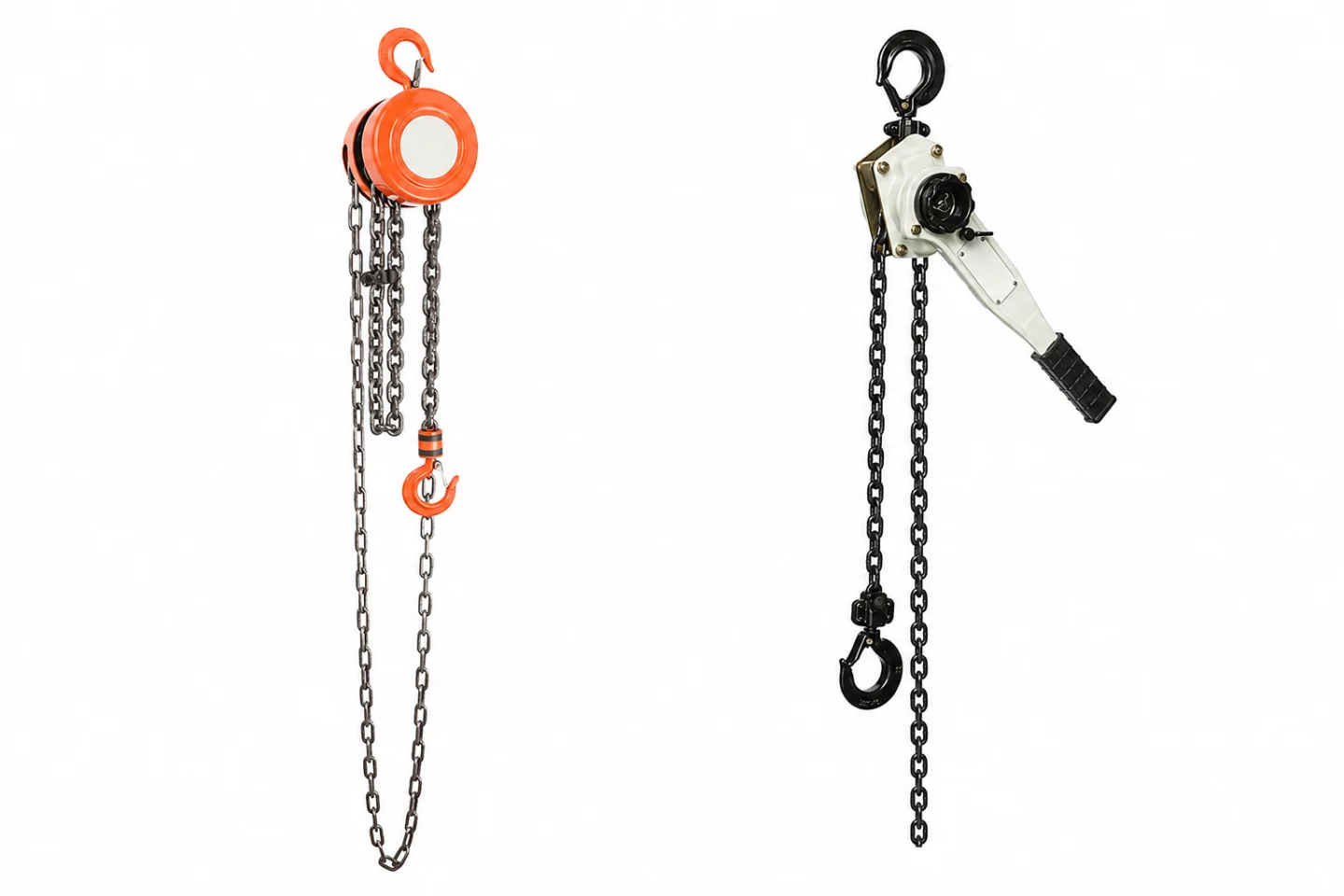
Pull a hand chain.
Or work a lever.
Both use manual effort. Their operating controls lead to different requirements for reach, access and working space.
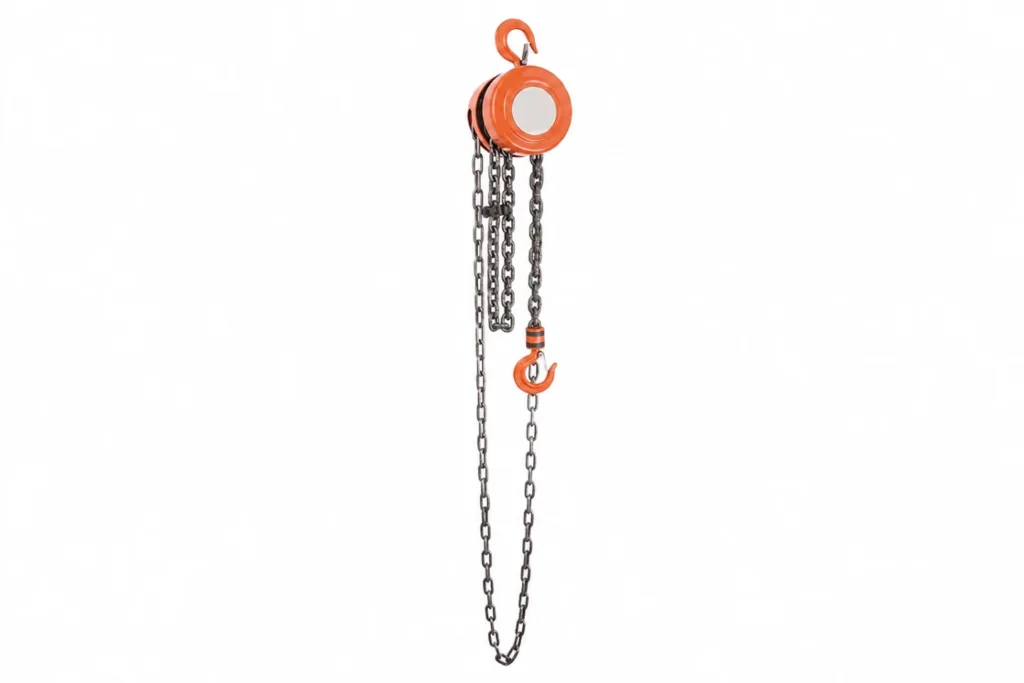
Hand-chain hoists
A separate hand-chain loop drives the hoist. Often used for vertical lifting from an overhead support, with the operator working at the hanging hand chain.
Check suitability
- Specify the operating level and required hand-chain drop separately from the lifting height. Allow room for the operator and both chains throughout the lift.
- A suitable trolley can add horizontal travel. Confirm the beam and trolley interface, total suspended weight and resulting hook height; a hook-mounted hoist and an integrated low-headroom unit are different arrangements.
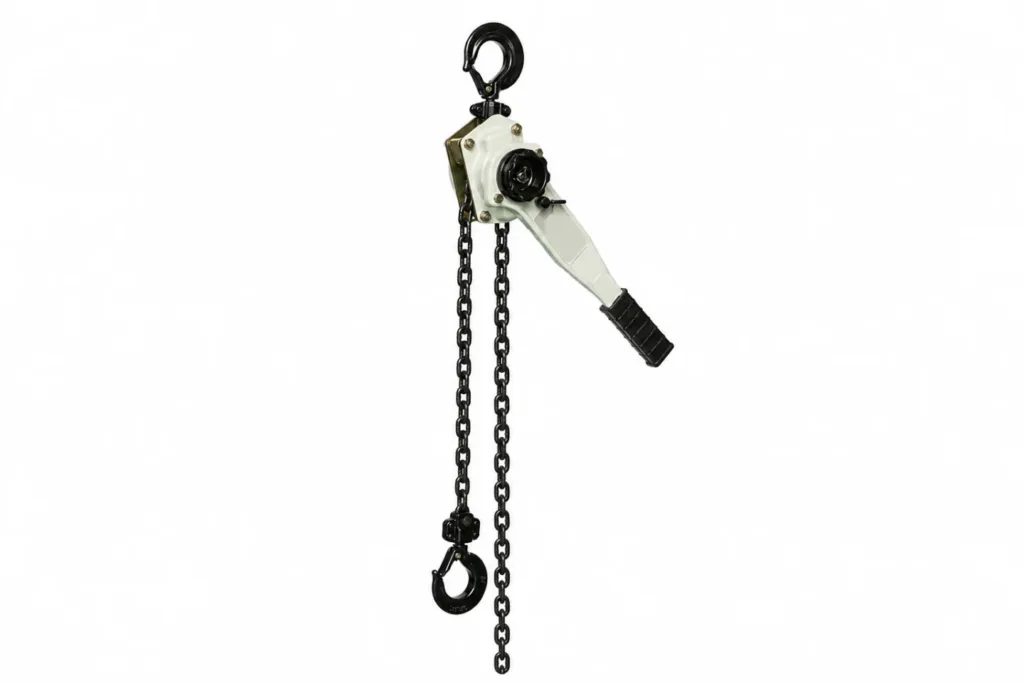
Lever hoists
A ratcheting handle moves the load chain. Used for local lifting, pulling or positioning when the selected model permits the task and the operator can reach the handle.
Check suitability
- Check the handle sweep and access at the proposed connection points. A short handle does not remove the need for operating space or suitable load alignment.
- Provide the connection points and intended direction of movement. Select equipment and attachments for that duty; do not assume any hook or chain arrangement is suitable for side loading.
One chain operates.
One carries the load.
Select a numbered area on this hand-chain hoist. The hand chain and load chain perform different jobs and must not be confused.
The rating is one check.
Space and reach matter too.
A hoist can have enough rated capacity and still be unsuitable for the available hook height or operator position.
| Load and movement | Load including lifting attachments; lifting or pulling direction; required movement and frequency of use. For pulling, the handled mass alone does not establish the required force. |
|---|---|
| Lift and headroom | Required hook travel and the available distance between support and load. Include slings or other attachments and the selected hoist’s minimum hook-to-hook distance. |
| Operator access | Hand-chain drop for a chain block, or handle clearance for a lever hoist. Show where the operator will stand and any obstacles that restrict operation. |
| Support and travel | Connection details and support information. If a trolley is needed, include beam section, flange width, travel route and available hook height. |
01Which options should be confirmed in the quotation?
Confirm lifting height, hand-chain drop where applicable, hook or trolley suspension, overload protection if required and the intended environment. Documentation, lifting attachments, beam clamps, trolley, support verification and installation should each have a clear supply boundary.
02What if there is very little headroom?
Compare the complete suspension arrangement. An integrated low-headroom hoist and trolley may retain more hook height than a separate hoist hung beneath a trolley. Provide the beam and required highest hook position before selecting the unit.
Choose for the job.
Confirm the limits.
Manual equipment still needs an appropriate rating, installation and inspection programme.
01When is a powered hoist a better choice?
Review repeated lifts, long lifting travel and the required work rate. Manual operation can be practical for occasional maintenance or installation, while frequent handling may justify an electric or air-powered hoist. Compare the complete task and available supply.
02Can every hand-chain hoist pull horizontally?
No. Some specially designed models permit other orientations, but an ordinary chain block must be used within its stated operating directions. Confirm the intended pull and connection arrangement with the selected equipment instructions.
03Is a manual hoist automatically suitable for a hazardous area?
No. Removing the electric motor does not establish suitability for an explosive atmosphere. The area classification and required equipment protection must be reviewed, and any special version must have the appropriate supporting documentation.
Need powered operation?
Explore electric chain hoists for repeated lifting and workstation handling.
View electric hoistsShow the lift.
Mark the working space.
Send a site photo or sketch and the load information. We can review the operating type, suspension arrangement and details needed for a quotation.
Discuss manual hoists- Weight including attachments, intended movement and frequency of use
- Required lift, available headroom, support or beam details and connection points
- Operator position, hand-chain drop or lever clearance, environment and quantity