
Crane Electrification & Cable Management
Power that follows
every movement.
Conductor rails, festoon systems, cable reels and energy chains for moving cranes and hoists. Source a complete system, matching cables or replacement components.
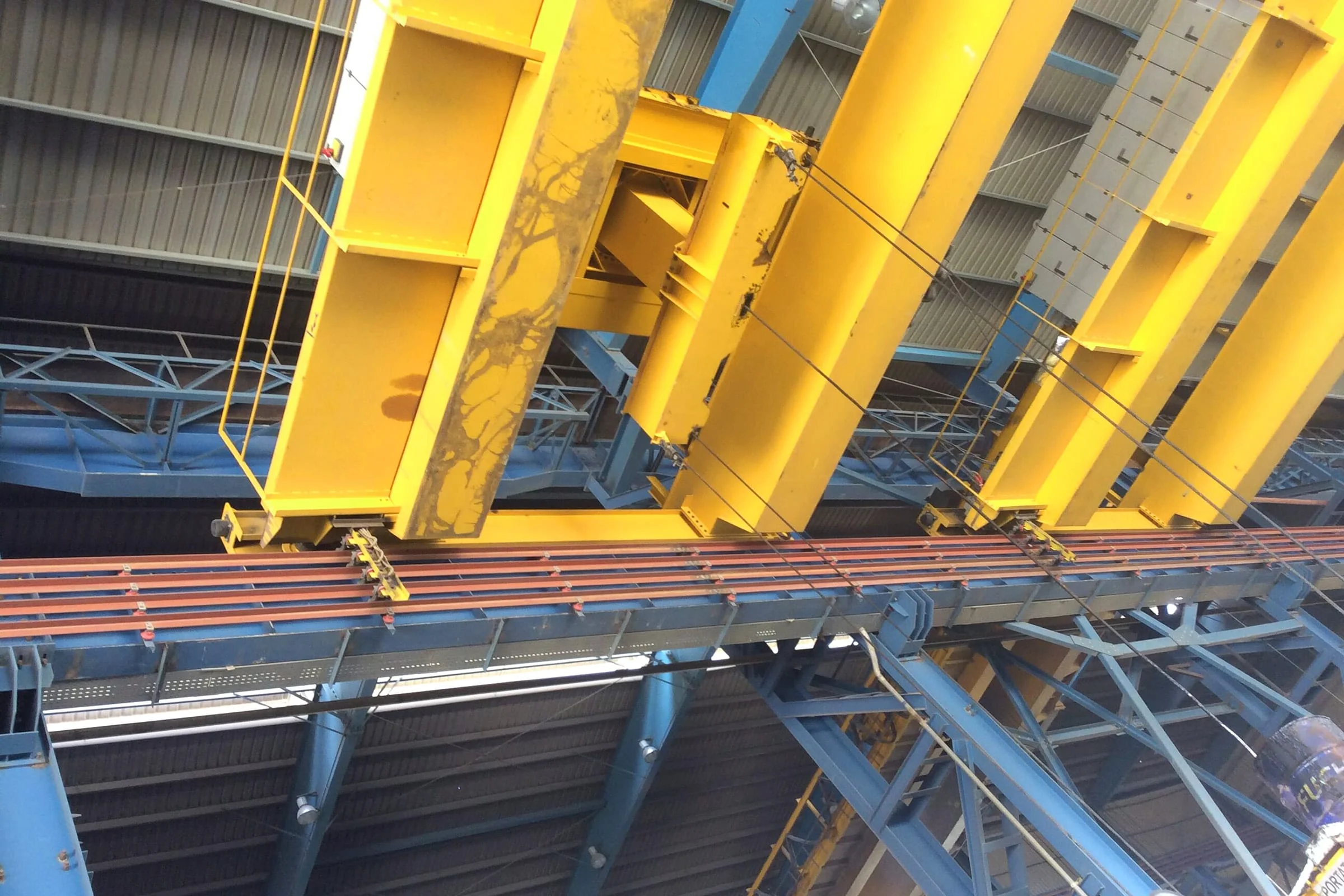
Four ways to serve
a moving machine.
Compare one travel axis at a time. A crane can use conductor bars for its main supply and a festoon or energy chain for the trolley.
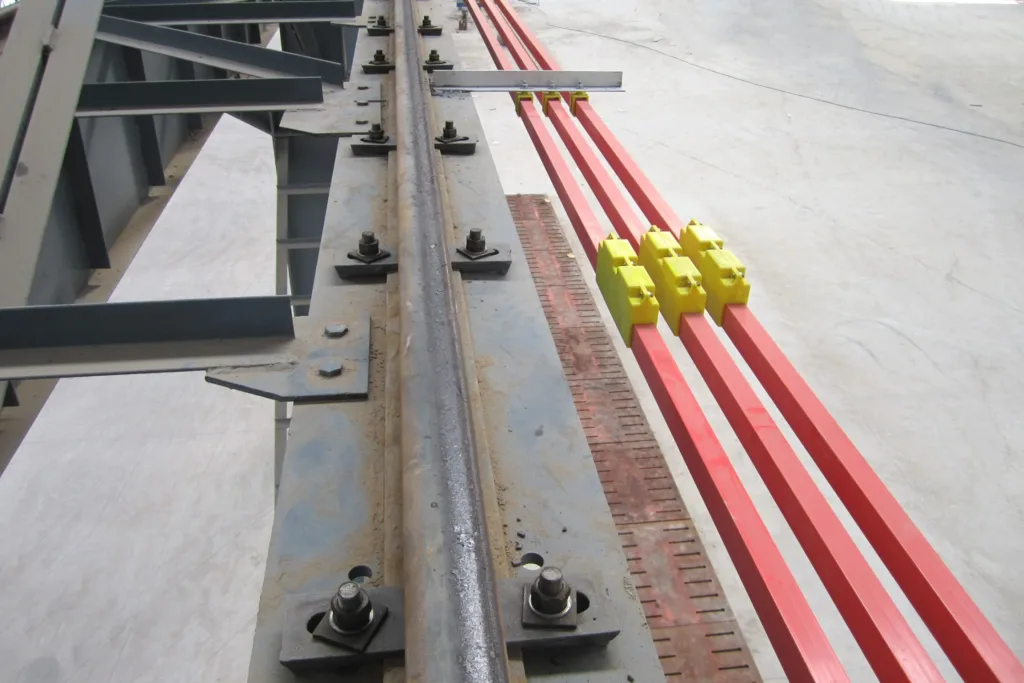
Conductor rails & bars
A moving collector takes power from conductors installed along the travel path. The system avoids carrying a hanging loop of supply cable along that axis.
Types & supplied parts
- Enclosed multipole systems, individually insulated single-pole bars and continuous conductor systems use different housings and collectors. Select the matching system and accessories.
- Conductor sections, current collectors, feeds, joints, hangers, towing arms and end caps. Expansion or curved sections depend on the selected system.
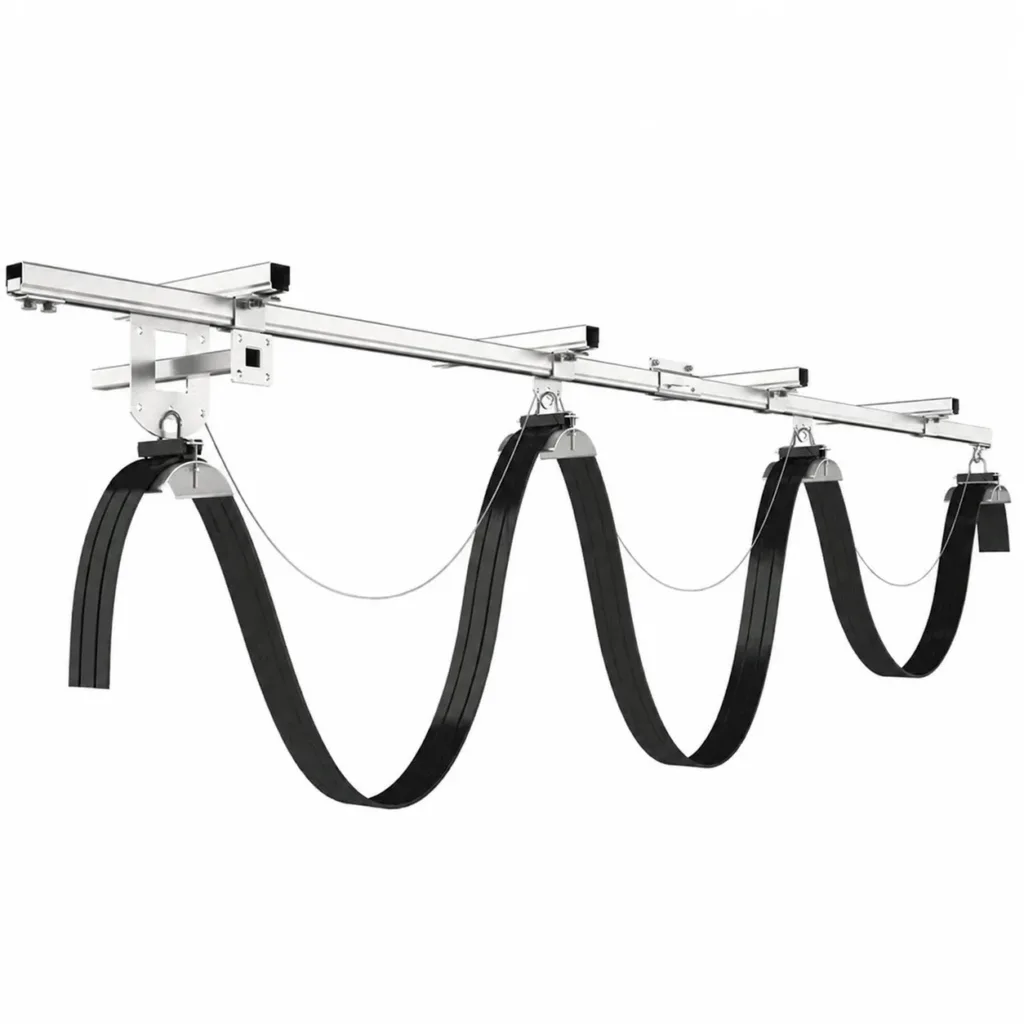
Festoon systems
Trolleys support the cables as the equipment moves. The loops spread along the track during travel and gather at the storage end on return.
Types & supplied parts
- C-track, I-beam, wire-rope and angle-bar systems suit different trolley and cable arrangements. Allow room for the hanging loops and the gathered trolley stack.
- Support track, cable trolleys, tow trolley, end clamps and suitable flat or round cables. Track profiles and trolley wheels must match.
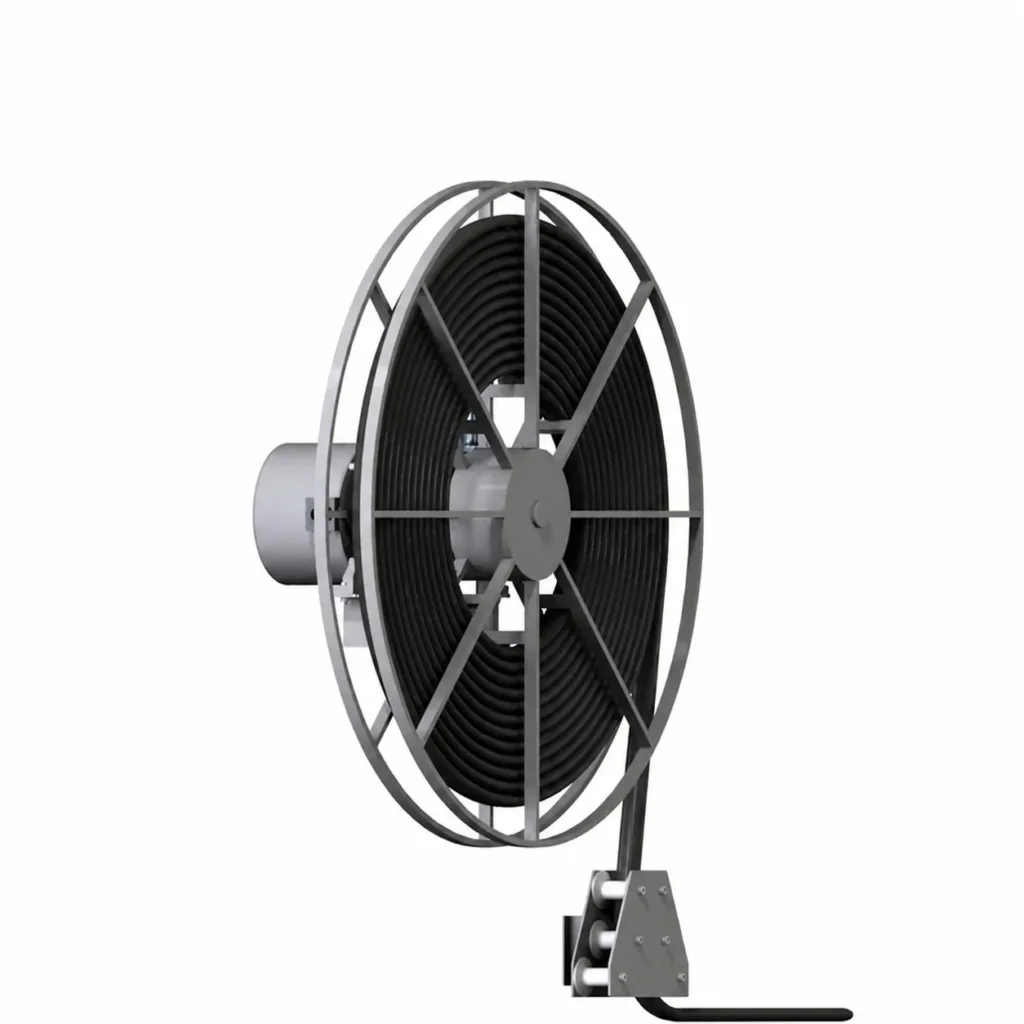
Cable reels
The reel pays out cable as the machine travels and takes it back on return. Horizontal travel and vertical cable handling need different installation arrangements.
Types & supplied parts
- Spring reels rewind through stored spring force; motor-driven reels use a powered drive. Selection depends on cable, travel, speed and usage, not crane capacity alone.
- Reel, drive arrangement, cable, guide and anchoring equipment. Confirm electrical transfer and control requirements as part of the selected package.
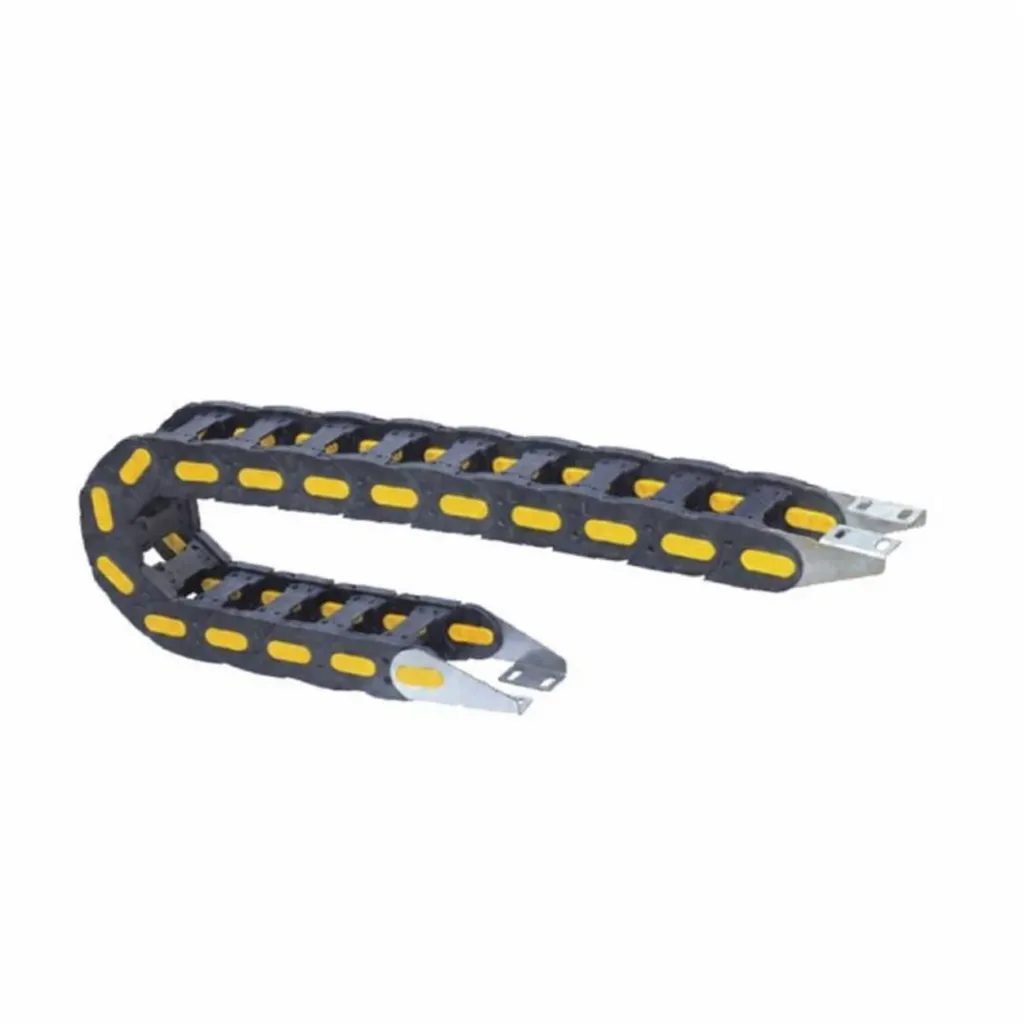
Energy chains
Articulated carriers guide cables and, where required, hoses through a defined moving path. The cables inside carry the power and signals.
Types & supplied parts
- Chain size, bend radius, mounting ends and supporting or guiding arrangement are selected around the travel and cable fill.
- Chain sections, mounting ends, separators, guide troughs and suitable moving cables. Cable space and bend requirements need to be checked together.
Follow the power
from rail to crane.
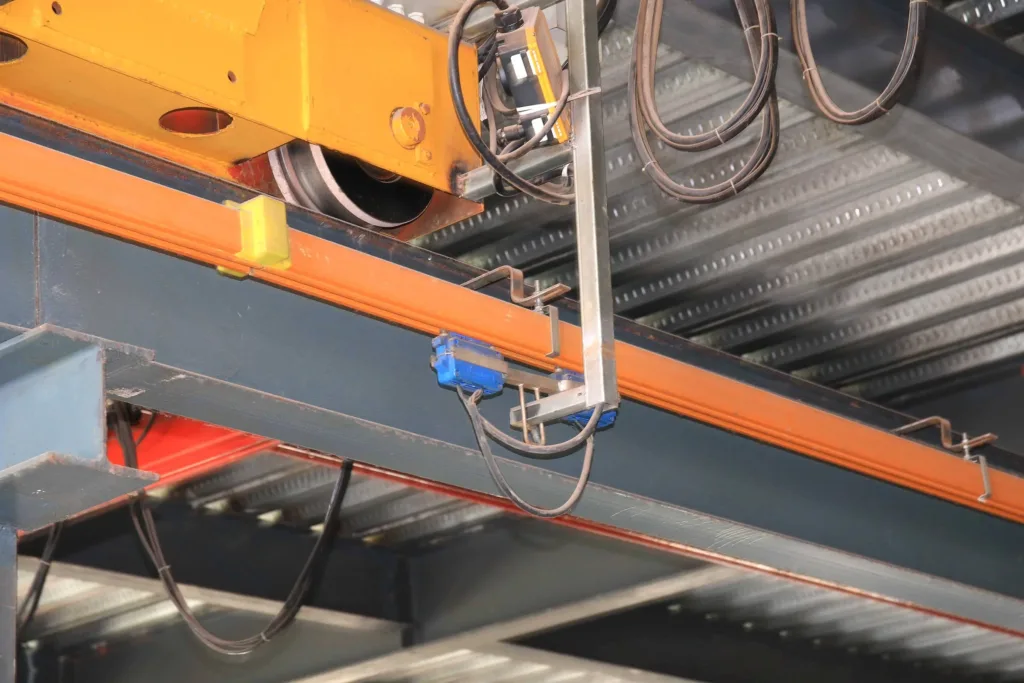
This installed example shows how a collector moves with the crane while the conductor housing stays on the runway. Click a number to see the connection.
01Bridge crane: main supply and trolley supply
Treat the runway and trolley as separate movements. A common combination uses conductor rails along the runway and festoon cables across the bridge. Energy chains are another possible cable-guidance arrangement.
02Gantry crane: ground route and cable payout
A cable reel can supply a travelling gantry from a fixed feed point. Reel position, cable routing and protection from vehicles or ground debris need to be planned together. Outdoor conductor systems are also possible when specified for the environment.
03Process crane: power, signals and repeated movement
A trolley may need power, data cables and hoses to move together. Festoon systems or energy chains can manage that package; available space, cycle requirements and the selected cables determine the arrangement.
Match the cable
to the way it moves.
A cable that bends in a festoon is not automatically suitable for a reel or an energy chain. Match the motion as well as the electrical load.
01Festoon, reeling, chain or pendant cable?
Specify how the cable moves first. Flat or round shape alone does not establish suitability. Match cores, conductor sizes, overall dimensions, bend requirements and any data or shielding needs to the selected cable datasheet. Pendant cables also need a suitable suspension arrangement.
02A complete package or individual replacement parts?
For a new system, define the conductors or cable-guidance hardware, cables, supports and interfaces included. For replacements, send the system profile, markings, mounting dimensions and photos of the worn collector, trolley or chain. Similar appearance or current rating is not proof of a matching part.
Looking for the steel rail?
Crane running rails and their fastenings support the wheels. They have a separate product range.
Explore rails & runwaysStart with the system.
Then confirm the details.
Photos and a simple route sketch are useful even when the original drawings are unavailable.
01Can a new collector fit an existing conductor rail?
Only after the profile and contact arrangement have been checked. Also compare current requirements, mounting, towing arrangement and clearance. Different manufacturers and series are not automatically interchangeable.
02Can I put a longer or thicker cable on an existing reel?
Not without checking the reel and cable together. The available winding space, cable weight, bending requirements and electrical transfer arrangement can limit a replacement. Send the reel nameplate and proposed cable details.
03What will the supply proposal include?
Confirm the system type, parts list, selected cable specification and installation interfaces. Any required test reports, material records or environmental ratings should be agreed for the actual equipment supplied.
A new installation.
Or a matching replacement.
Send the equipment photos or layout, required quantity and destination. We will review the supply scope and the information needed for selection.
Discuss electrification- Travel length, speed, horizontal or vertical route and available space.
- Supply voltage, current or equipment loads, plus control and data requirements.
- Photos, markings, cable details and available drawings.