
Crane Rails & Runway Systems
The rail. The fixing.
The support below.
Crane rails, matching fastenings and runway steelwork for overhead and gantry cranes. Start with an existing rail to replace, or a new runway to equip.
Recognise the shape.
Confirm the section.
These are different rail families, not three load ratings. For replacements, start with the rail marking and cross-section; for new runways, provide the crane wheel and loading information.
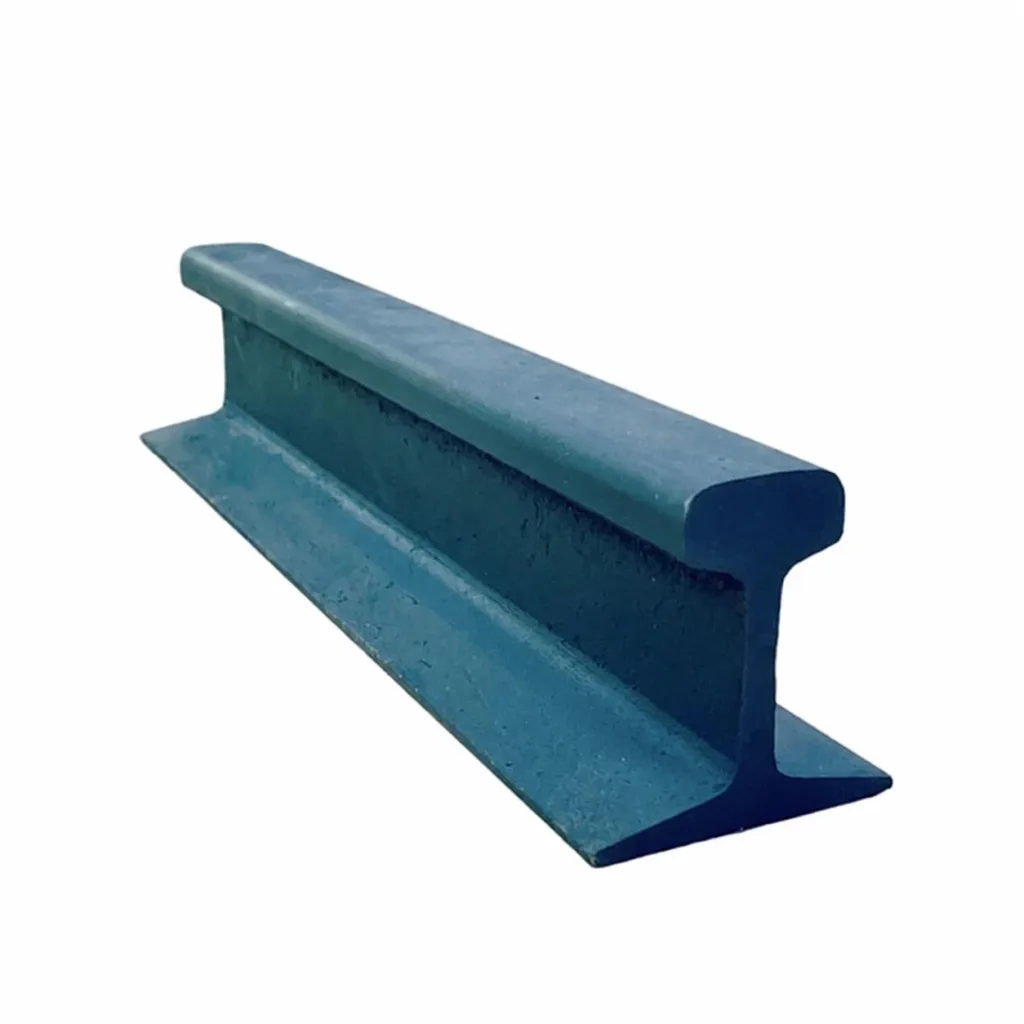
P rail
A distinct head, narrow web and flared foot. Identify the exact section when matching an existing rail, wheel or joint.
What to check
- P18, P24, P30, P38, P43 and P50 are different sections. The family name alone is not enough to specify a replacement.
- Send overall height, head width, foot width and web thickness, plus a clear end-view photo or drawing.
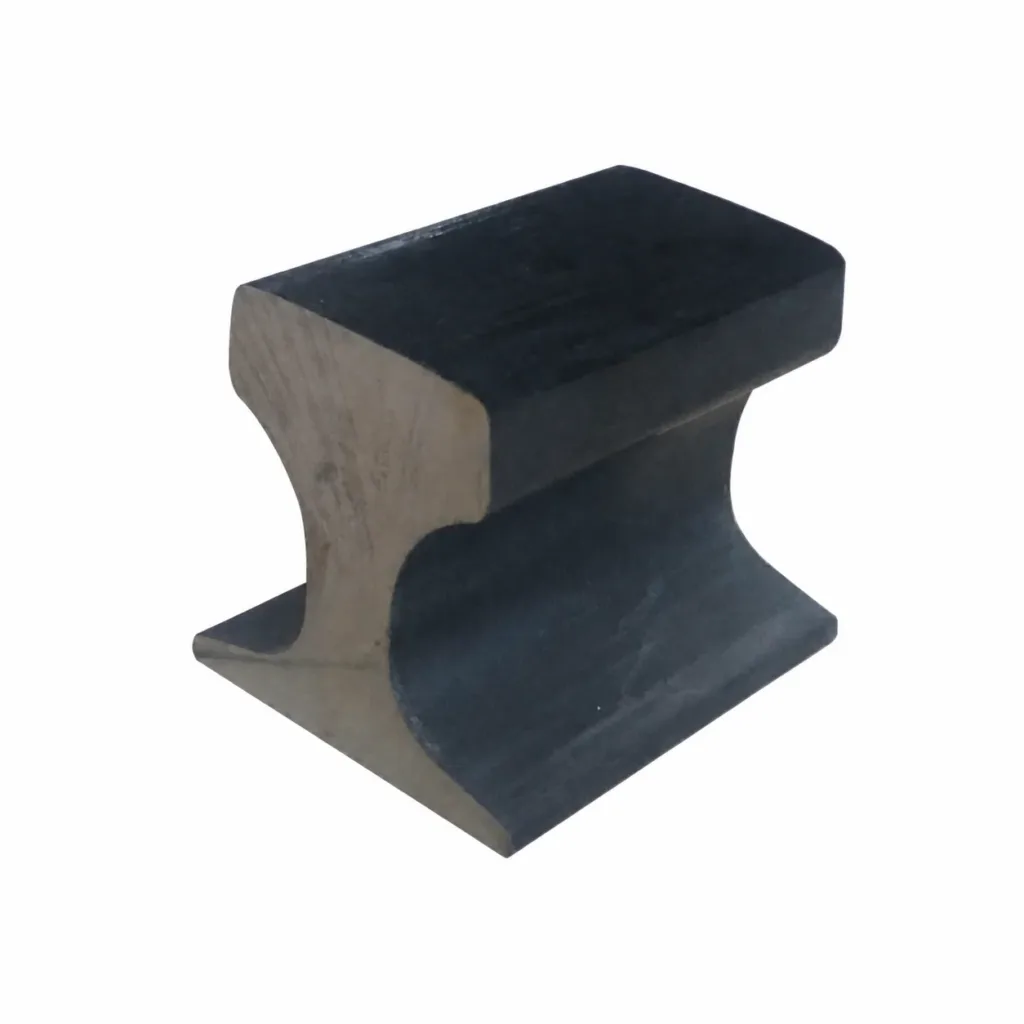
QU crane rail
A broad rail head and substantial web distinguish this crane-rail family. Check the complete section and its supporting arrangement.
What to check
- QU70, QU80, QU100 and QU120 identify different profiles. Specify the required standard edition and material with the order.
- Show the rail foot, clips, joints and available support width. A similar head width does not establish a complete match.
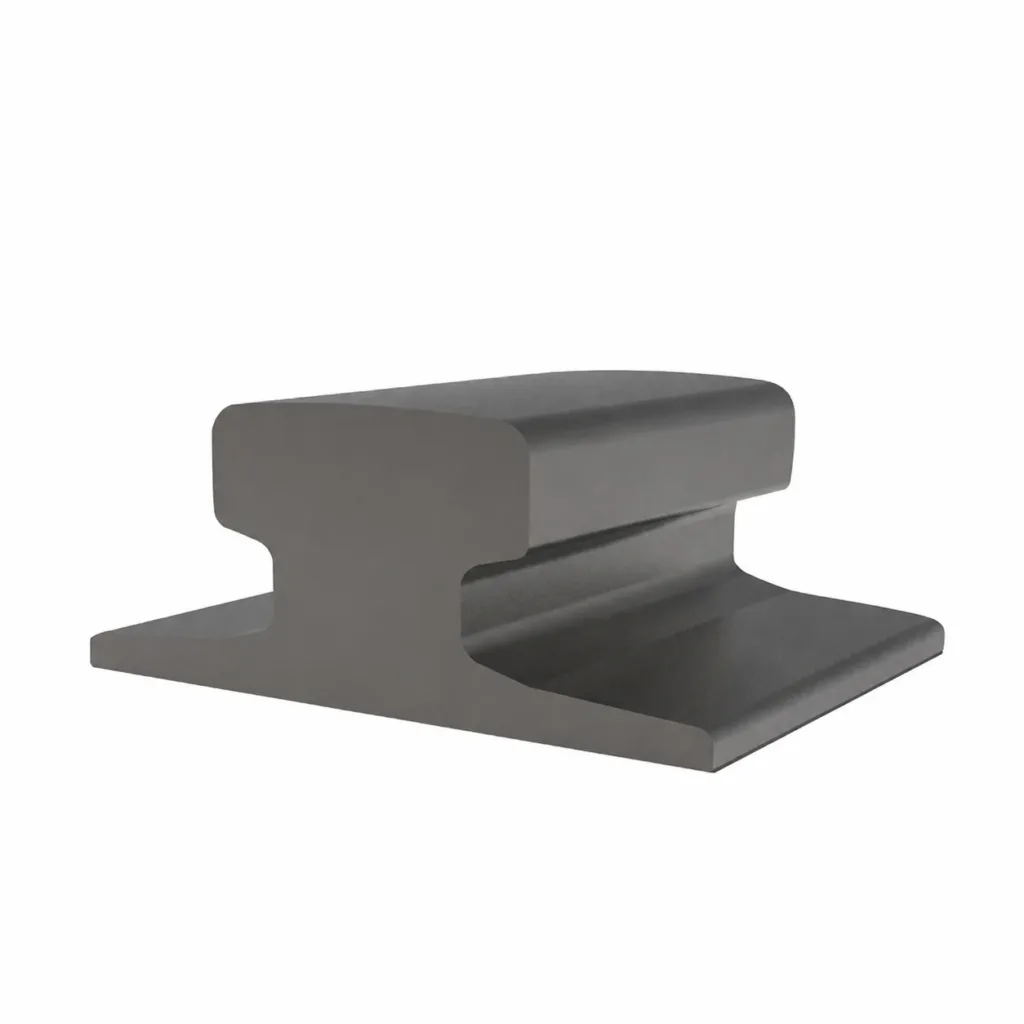
A crane rail
A low profile with a wide foot, as shown in this example. Match the A-series designation, wheels and fastening arrangement.
What to check
- A45, A55, A65, A75, A100, A120 and A150 are separate profiles. Confirm dimensions from the specified section drawing.
- Send the original rail designation and drawing. A-series and QU rails are not direct substitutes simply because their head widths are similar.
Join the rail ends.
Fix the rail to its support.
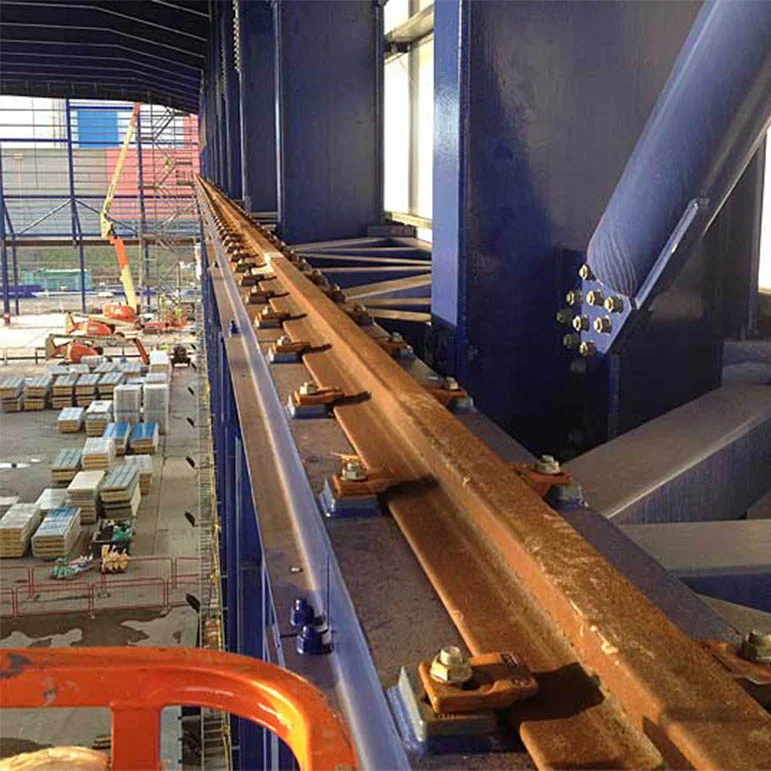
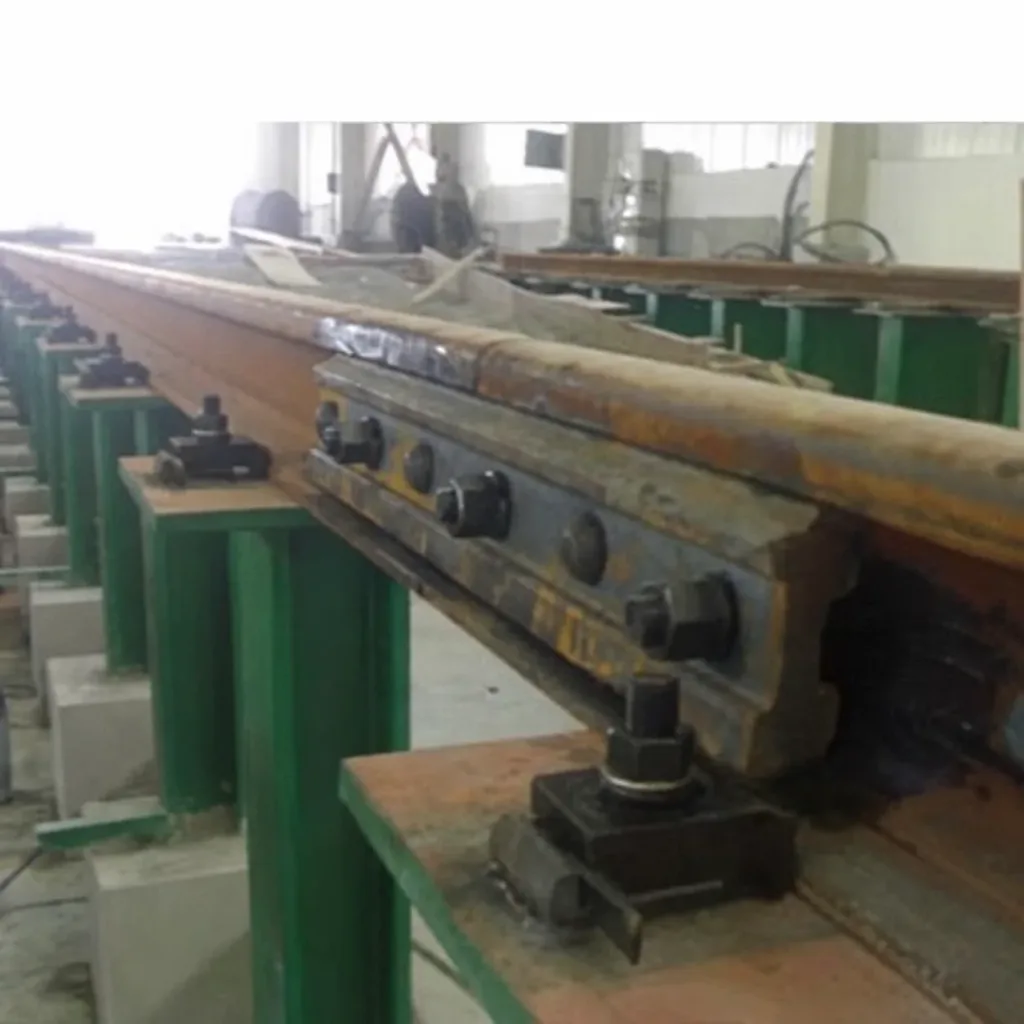
These are two different connections. This installed example shows a bolted rail joint and separate clips holding the rail foot.
01When is a rail pad part of the assembly?
A selected pad sits beneath the rail foot and changes the rail-to-support contact. Its type and dimensions must match the support and fastening design. It is different from the small resilient nose fitted to some clips.
02Bolted-base or welded-base clips?
The choice depends on the support detail, access, required adjustment and loads. A weldable clip base is attached to the support; this is different from welding the running rail itself. Confirm the complete fastening drawing before ordering.
Above the workshop.
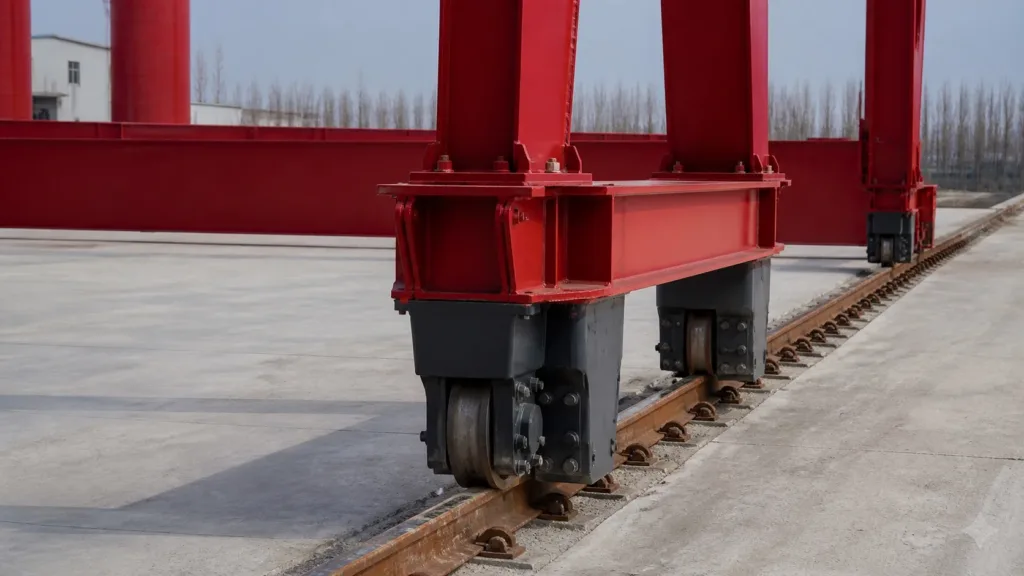
Along the ground.
The rail transfers wheel forces into the structure below. The support, connections and installation conditions change with the runway.
Elevated steelwork
Rails are carried by runway beams and their supporting structure. Coordinate the beam, column connections and crane clearance envelope.
What to check
- Provide the crane wheel loads and spacing, beam support spans, existing steelwork drawings and required rail level.
- Identify whether you need rails and fixings only, or also runway beams, columns and bracing. Agree responsibility for calculations, connections and foundations.
Ground-level tracks
Rails follow the crane route at ground level. Coordinate the supporting concrete or steel, anchors, access crossings and site drainage.
What to check
- Show the route, rail spacing, existing foundations, surface levels and areas where vehicles or people cross.
- State exposure and corrosion conditions. Coordinate end stops and restraint equipment with the crane and runway design.
01Do under-running cranes and aluminium workstations use the same rail?
Not necessarily. An under-running arrangement may travel on a beam flange, while an enclosed workstation track uses matching internal trolleys. Provide the actual track drawing and trolley details rather than specifying a QU or A rail by appearance.
Specify what arrives.
And how it fits.
Rail supply can include matching fastenings and end preparation. A runway steelwork package needs a separate layout and agreed design responsibilities.
01Lengths, cuts and drilled ends
State the number of pieces, required lengths and delivery destination. If the installation uses bolted joints, provide the hole pattern and joint position. Specify any angled end cut from the installation drawing; it is not a default requirement for every rail.
02Material and inspection documents
Specify the rail profile, material grade, standard edition and delivery condition. Agree the required quality documents, identification and any additional inspection before the order. A profile name alone does not establish material properties or certification.
03Replacing worn rail or damaged fastenings
Start with photos of the rail head, both sides of the joint, clips and support. Describe the wear or damage and which lengths are affected. Wheel condition, alignment and supporting structure may also need assessment; replacing the rail alone may not solve the cause.
04What should the quotation separate?
Ask for a clear list of rails, clips, joint plates, pads and other specified fixings, with drawings where required. Identify steelwork, anchors, foundations, installation, alignment checks and commissioning separately so the responsibilities are clear.
Know the rail?
Send the section.
If you do not know the model, a clear end-view photo and a few measurements are enough to start the conversation. Tell us whether you need rail, matching fittings or runway steelwork.
Discuss rails & runways- Overhead crane or gantry crane; new installation or replacement; existing rail marking and photos
- Profile or section drawing, quantity and lengths, joints and required end preparation
- Runway layout and supports, project location, delivery timing and available crane wheel-load data