
Grabs & Grapples
Pick up loose material.
Match the whole system.
Clamshell grabs for loose bulk, multi-tine grabs for irregular material, and timber grabs for logs. Select the jaw shape for the load and the operating system for your crane.
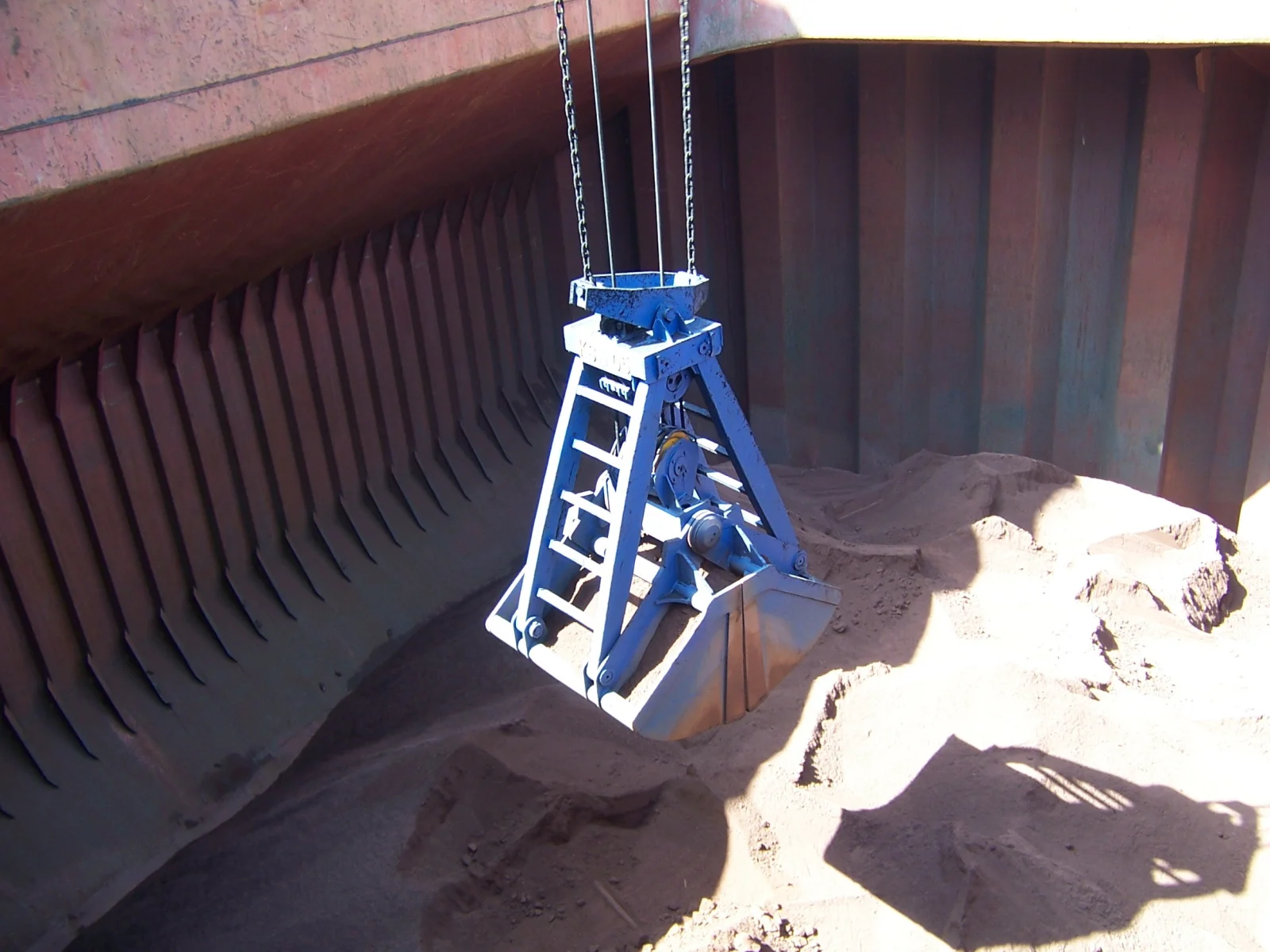
Start with
the material.
The jaws determine what the grab can contain or grip. Rope, radio control and hydraulic power describe how it operates; they are a separate choice.
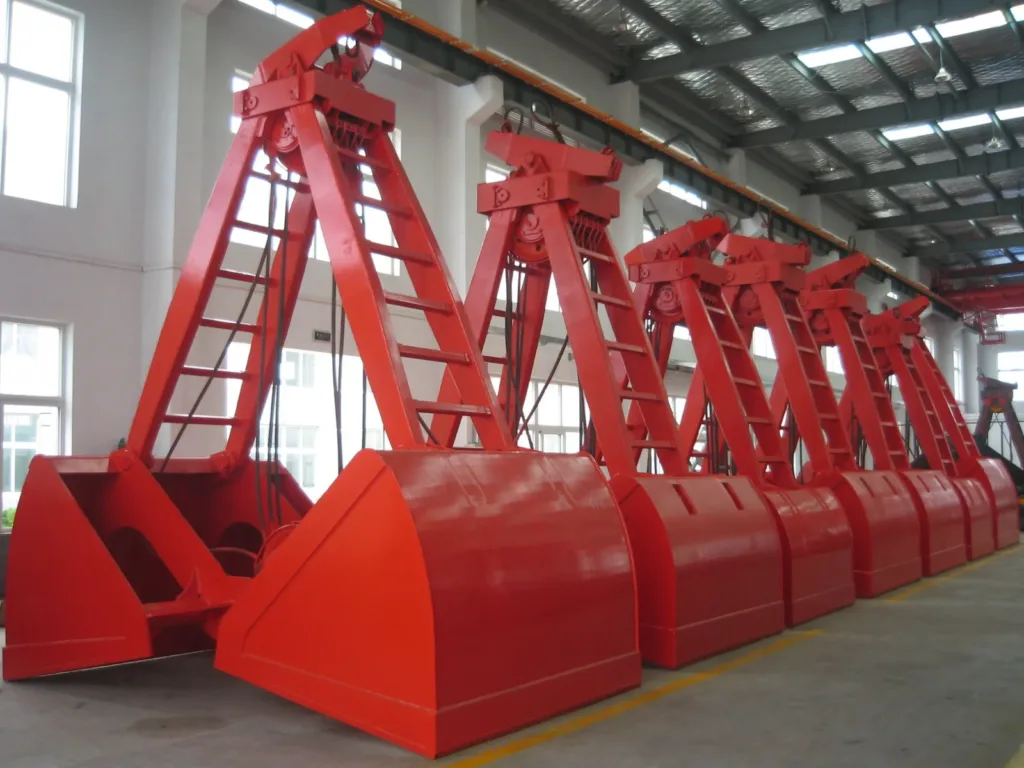
Clamshell grabs
Two shells form a bucket for material such as sand, grain, coal and aggregates. Choose the shell and cutting edge for the material.
Selection details
- Fine material needs suitable closing lips and shell coverage. Coarse or compacted material may need different edges or teeth.
- Describe the material size, moisture and whether the grab digs into a pile or collects free-flowing material.
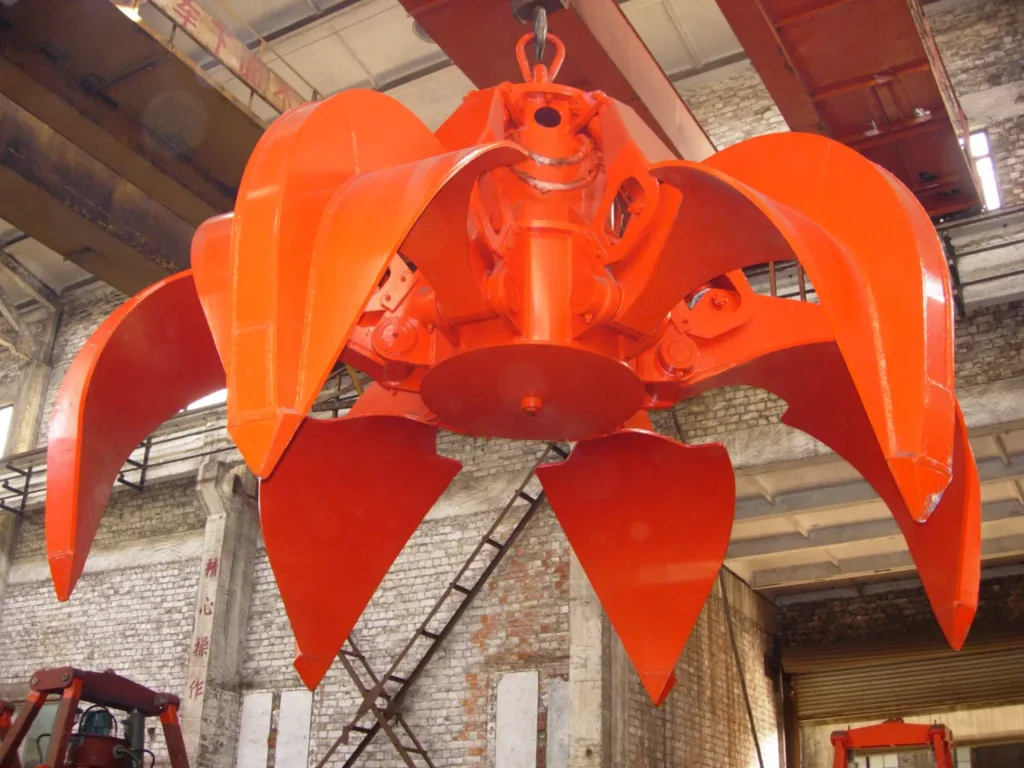
Orange-peel grabs
Several jaws close around scrap, waste or other irregular loads. Tine shape and shell coverage change what the grab can retain.
Selection details
- Long scrap, dense offcuts and mixed waste need different penetration and retention. Send representative material photos.
- Open tines allow visibility and penetration; greater shell coverage helps retain smaller material. Check the actual particle mix.
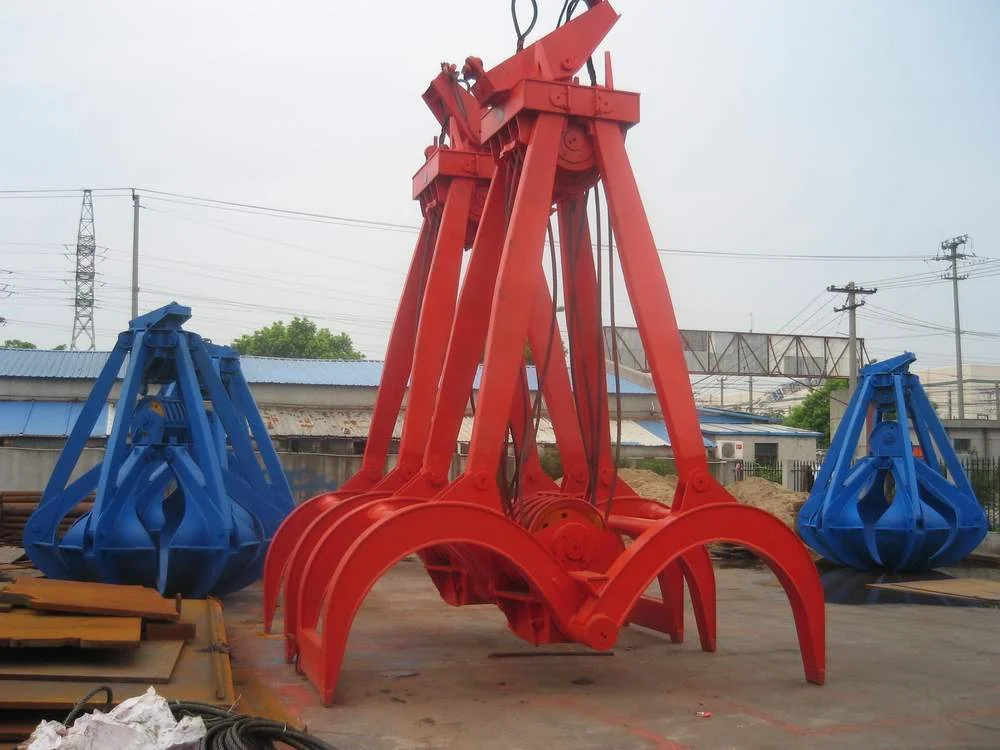
Timber grabs
Curved jaws hold single logs or bundles. Match their opening and contact geometry to the full range of timber sizes.
Selection details
- Provide log length, minimum and maximum diameter, bundle dimensions and weight.
- State whether rotation is needed and where the logs must be placed. Check the crane or carrier connection separately.
Will it work
with your crane?
Start with the hoist ropes, hook and available power. A grab that fits the lifting capacity may still need a different operating interface.
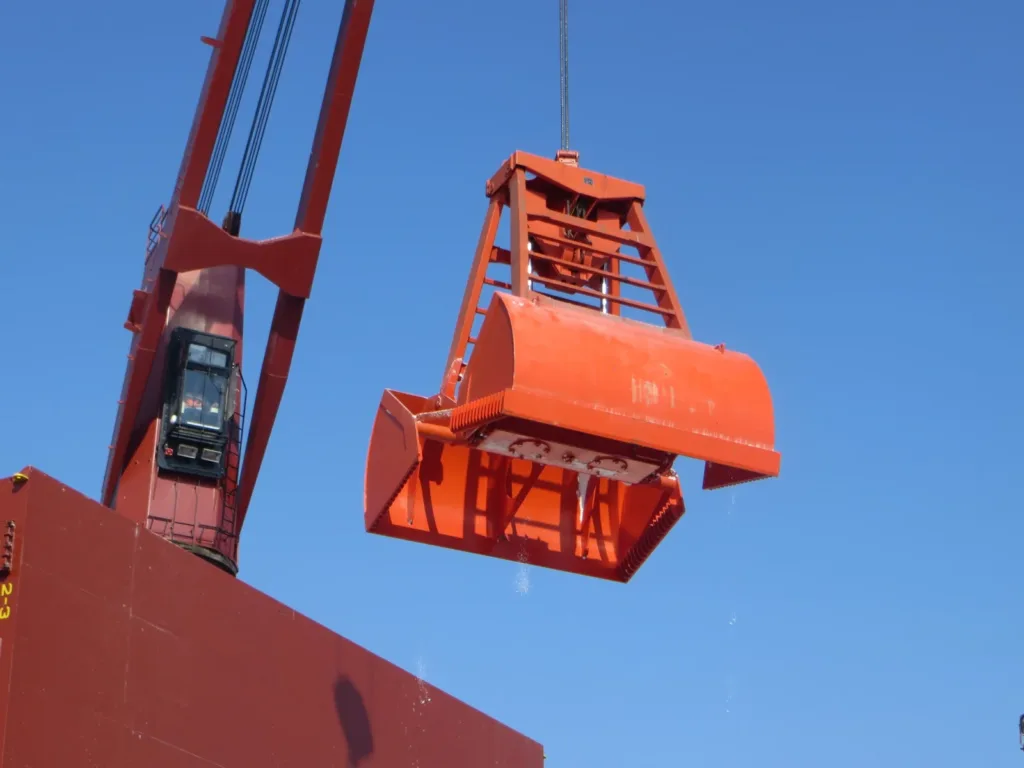
Remote opening. Crane-powered lifting.
On this type, the hoist rope closes and lifts the grab; the radio command releases material while suspended. The battery powers the control and release system. It does not power hydraulic closing or make the crane automatic.
01Can an excavator hydraulic grapple hang from a crane hook?
A carrier-powered grapple needs a compatible hydraulic supply, hoses and mounting arrangement. A standard crane hook does not provide these. Treat the carrier connection, pressure, flow and any rotator as a separate configuration.
02Are all electrically powered grabs electrohydraulic?
No. Some designs use an electric hoist or winch mechanism to operate the grab. Specify the actual operating mechanism, power supply and control arrangement rather than ordering by the word “electric” alone.
Same lifting task.
Different pickup needs.
Use the actual material and discharge point to choose the grab. These equipment examples show four common handling conditions.
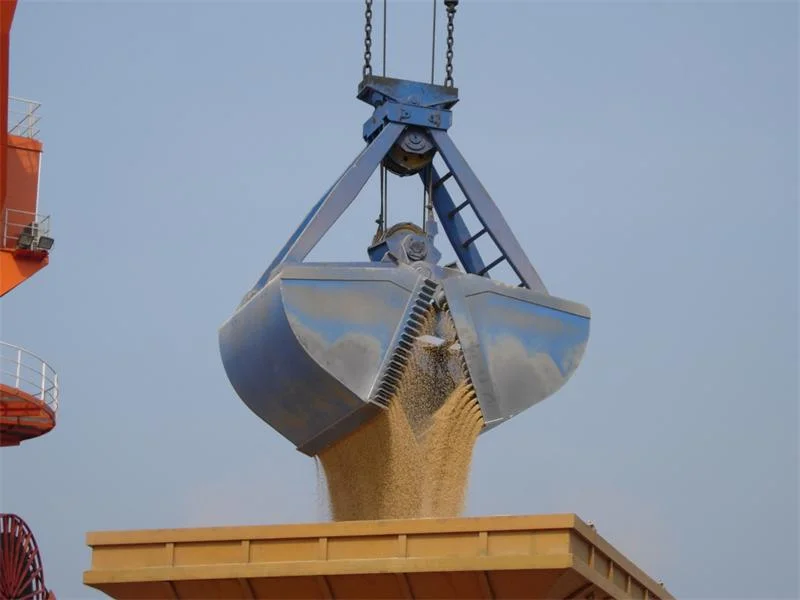
Contain the load
Match shell coverage and closing lips to the particle size. Check the hopper opening and discharge clearance.
Selection details
- Discuss leakage control, covers and dust extraction at the transfer point. A closed-shell grab alone does not make unloading dust-free.
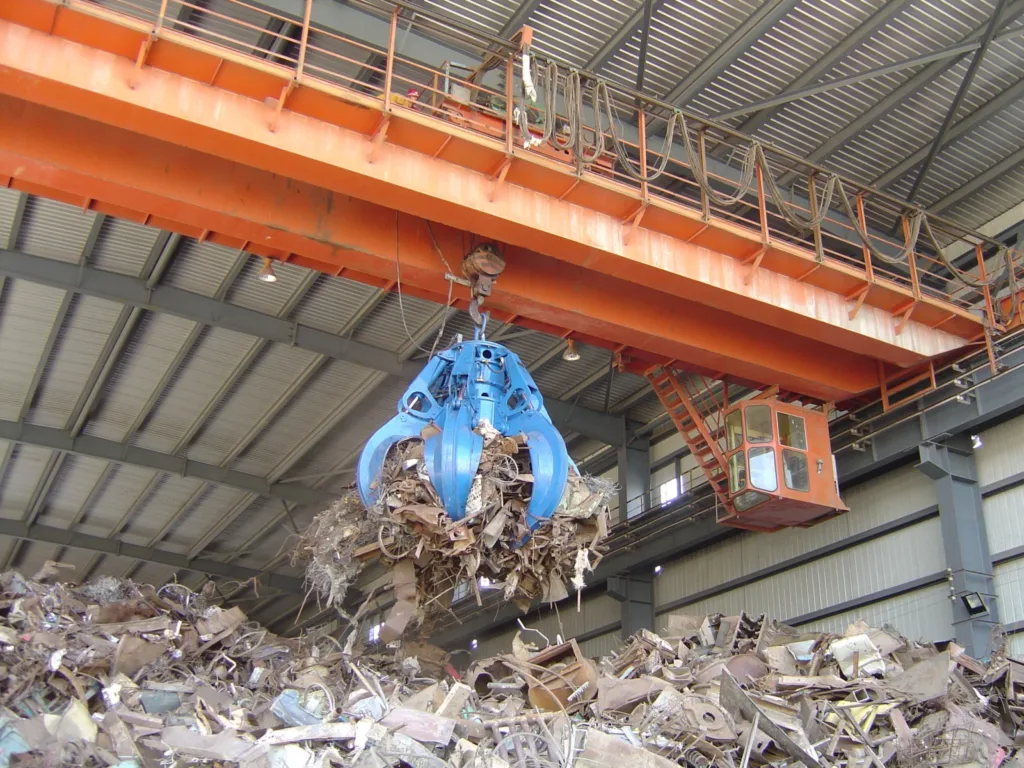
Grip the scrap
Select tine geometry for the scrap mix, chunk size and penetration needed. Nominal bucket volume alone is insufficient.
Selection details
- Provide photos of turnings, offcuts, shredded scrap or mixed loads. Long pieces and tangled scrap change pickup and release behaviour.
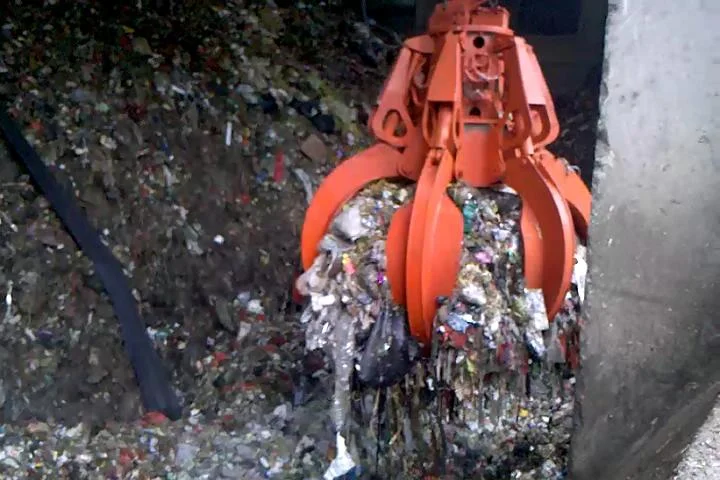
Retain mixed loads
Match jaw coverage to loose waste, wood chips or other biomass. Consider the bunker, mixing task and operating cycle.
Selection details
- State moisture, abrasive or corrosive content and hours of use. Identify access for cleaning, hose replacement and maintenance.
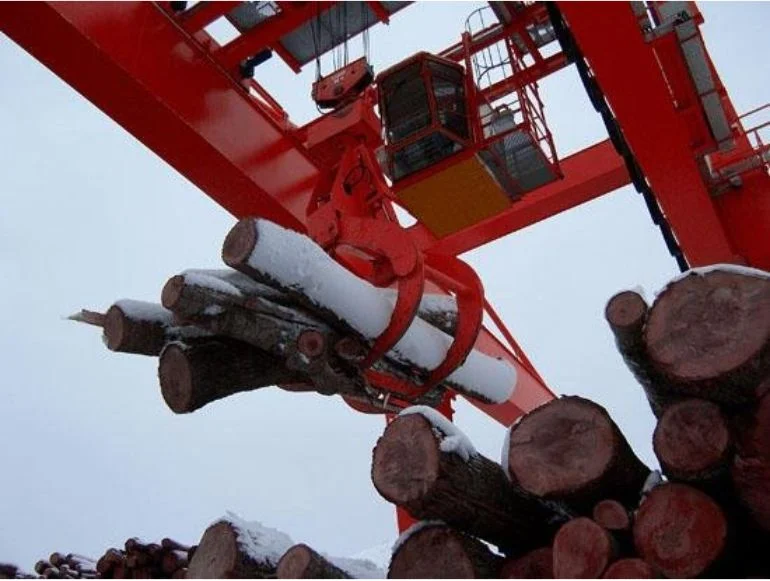
Hold the bundle
Match jaw opening to the log or bundle dimensions, then check placement accuracy and any rotation requirement.
Selection details
- Include timber length, diameter range, bundle shape and stacking layout. Check the space needed to open the jaws at release.
01What about dredging or underwater handling?
Use a grab designed for the soil, water depth and operating method. Underwater sealing, component protection and digging behaviour need specific assessment; an ordinary bulk grab is not automatically suitable for dredging.
02Can a grab collect residual material from a ship hold?
A trimming or scissor-type arrangement may suit some cleanup tasks. The hold geometry, remaining layer depth and required reach determine whether it is appropriate; discuss this separately from the main unloading grab.
Choose usable payload.
Plan for wear.
A larger grab does not necessarily move more material per hour. Include its self-weight, the crane duty and the time needed to fill and discharge.
- 01
Count the grab itself
Include grab self-weight, material and any connecting gear. Check the permissible crane load at the actual operating position, especially on jib or ship cranes.
- 02
Use the density range
Material mass depends on bulk density, nominal volume and actual filling. Check the heaviest condition, including moisture; do not assume every pickup fills the grab completely.
- 03
Specify the working cycle
Give lifts per hour, operating hours and the unloading layout. Discuss wear edges, teeth, pins, bushes, ropes or hydraulic parts according to the selected mechanism.
01Which steel grades or wear materials should be specified?
Select the shell, cutting edges, teeth, pins and bushes for the material and wear conditions. Ask the supplier to identify the proposed grades, replaceable wear parts and any required material records. One universal steel grade is not appropriate for every grab.
02What should the supplier include with the offer?
Request an arrangement drawing, self-weight, nominal volume, proposed material density range and crane interface. Include the power demand where applicable, exclusions, inspection and test scope, operating manual, maintenance schedule and recommended spare parts.
03Can it be used for automatic crane handling?
It can be assessed as part of the complete crane system. Agree jaw-position sensing, pickup and release confirmation, permissives and recovery after a failed pickup or power loss. Radio opening by itself is an operator control, not an automated cycle.
Show us the material.
And the crane.
Material photos and a crane or hook drawing are useful starting points. Include the normal load as well as the most demanding condition.
Discuss your grab- Type, photos, bulk density range, particle or piece size, moisture and temperature. For timber, include log or bundle dimensions.
- Available lifting capacity at the working position, hook or rope arrangement, available height, power and control system.
- Pickup and discharge locations, operating cycle, hopper opening, installation needs, spare parts and required documentation.