
Magnetic Lifting Systems
Choose the magnet.
Match your load.
Permanent, electromagnetic and electro-permanent lifting systems for steel plates, long material, coils and scrap. Choose the magnet for the actual load—not its weight alone.
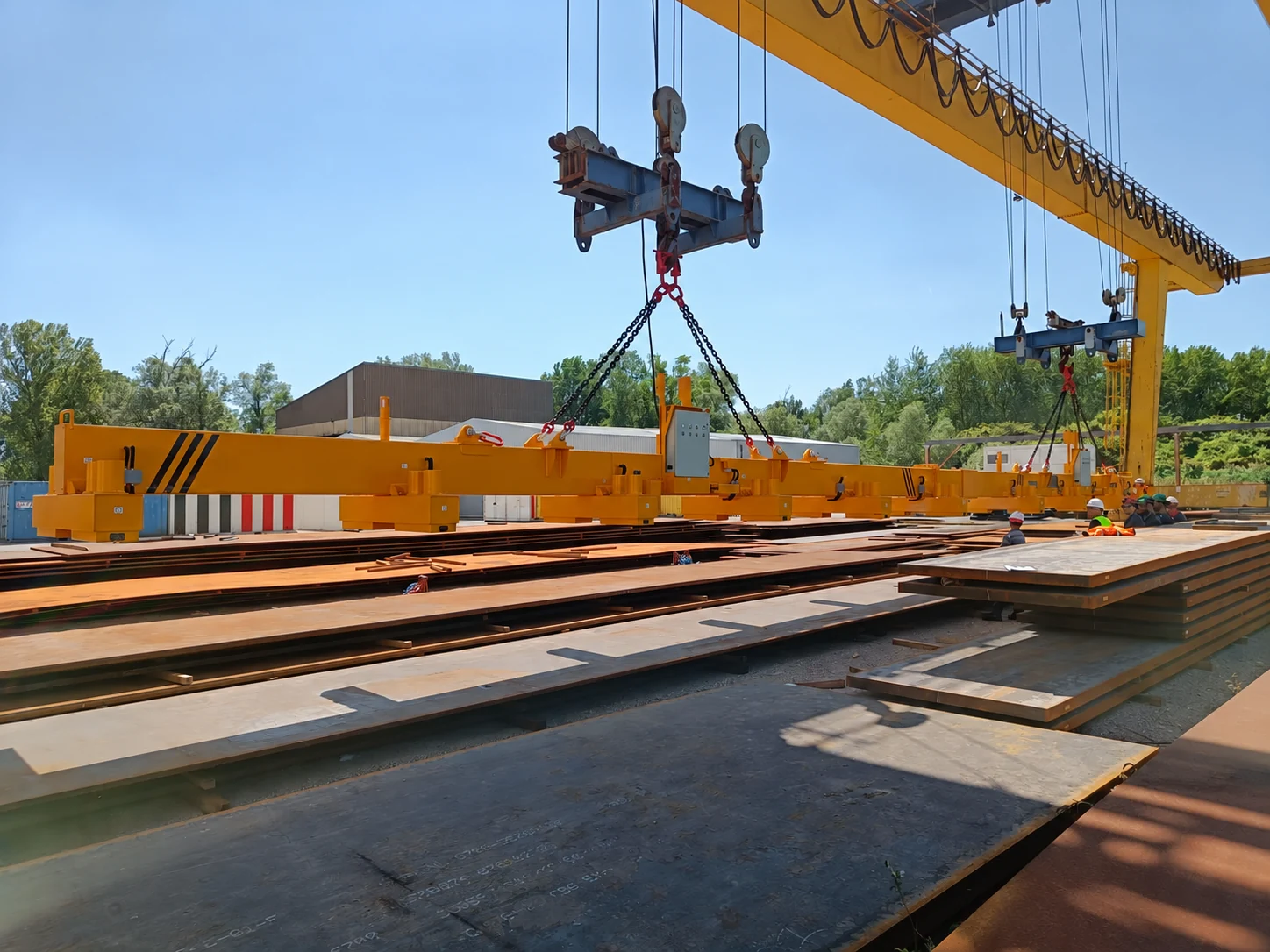
Three principles.
Different power needs.
Choose the holding principle first. A battery describes the power source; a beam describes how the magnets are arranged.
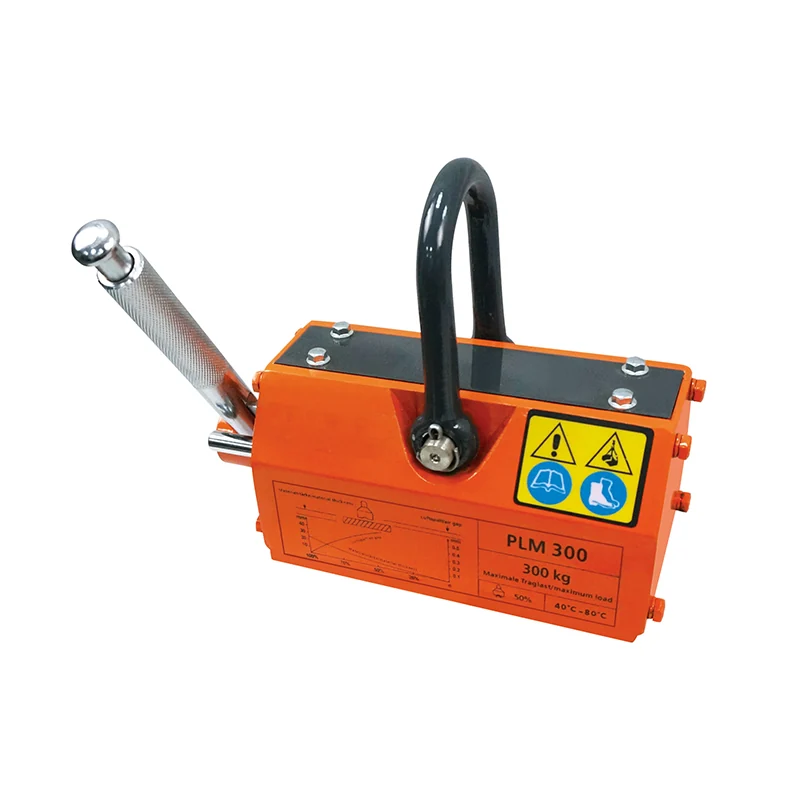
Permanent
Compact lifting magnets for individual steel blocks, plates or suitable round stock. A lever switches the magnetic circuit; no external power is needed.
Selection details
- Match the rated conditions to the steel grade, thickness and available flat or round contact surface.
- Include the lever clearance and access to operate its locking mechanism. A plate-stack pickup needs separate assessment.
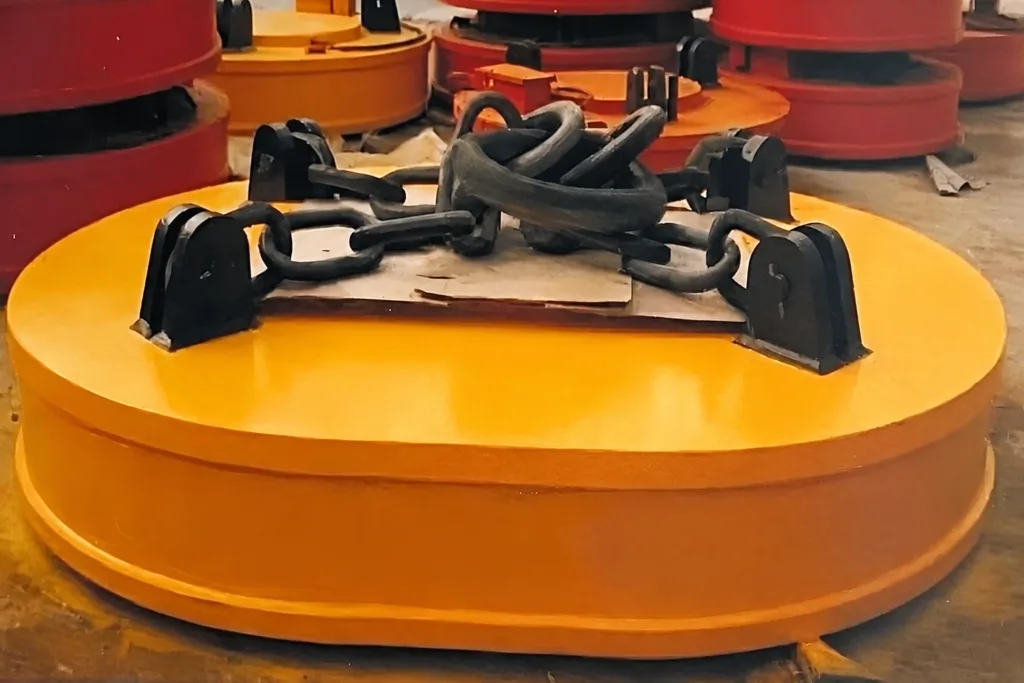
Electromagnetic
Electrically energised magnets for scrap and steel handling. Supply power throughout the holding phase and specify the required operating duty.
Selection details
- Scrap shape, packing and contamination change the pickup. Solid plates, billets and coils require an appropriate pole arrangement.
- Agree backup holding, alarms and the response to supply failure for the actual installation; these are not assumed standard.
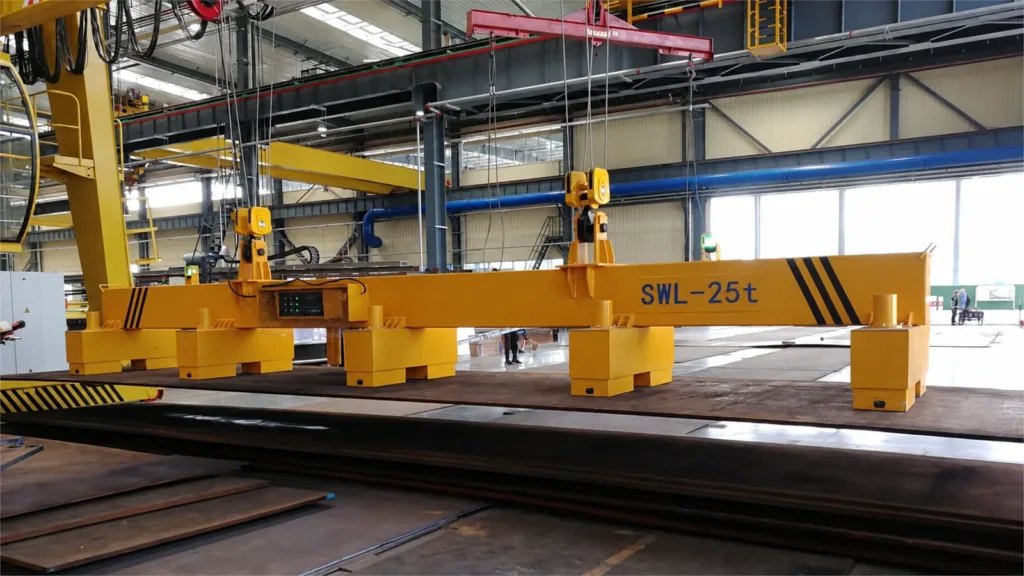
Electro-permanent
Power switches the magnetic state; continuous excitation is not needed to hold. Multi-module beams can suit steel plate, pipe and coil handling.
Selection details
- Select pole spacing, active zones and control functions for the intended loads. Single-sheet pickup and turning are separate requirements.
- Loss of supply does not itself switch the magnet off. Contact, material, load flexing and correct magnetisation still determine whether the load is held.
What do you
need to pick up?
The load shape determines the contact geometry. The handling task determines the beam, magnet zones and controls.
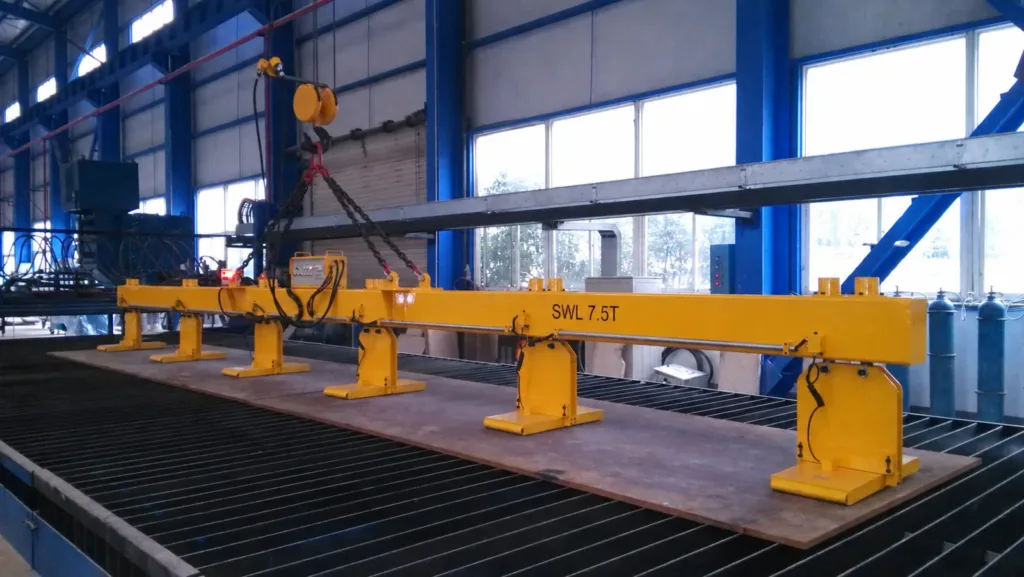
Pick one sheet—or selected parts
A long plate needs enough pickup points to control bending. Loading a whole sheet and unloading cut parts are different tasks.
Selection details
- Give the minimum thickness and say whether exactly one sheet is required. Specify sheet-separation and pickup verification; a general lifting magnet is not automatically a single-sheet lifter.
- Provide the cutting layout, smallest part and skeleton pattern. Magnet zones and pole contact must suit the pieces that remain.
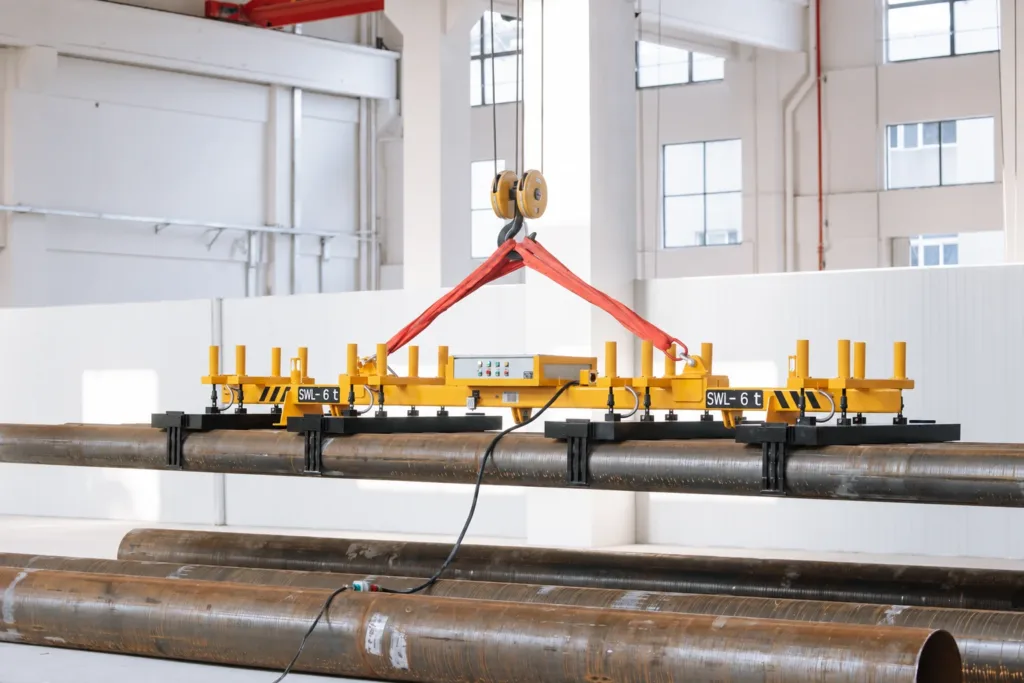
Match the pole to the profile
Use a suitable beam and contact arrangement for pipes, profiles, billets or long plates. Distinguish one piece from a complete row.
Selection details
- Give outside diameter or profile dimensions, wall thickness, length and straightness. A flat-plate rating does not establish the permissible pipe load.
- Confirm how each piece is supported and detected. The system must match the full range of lengths and arrangements.
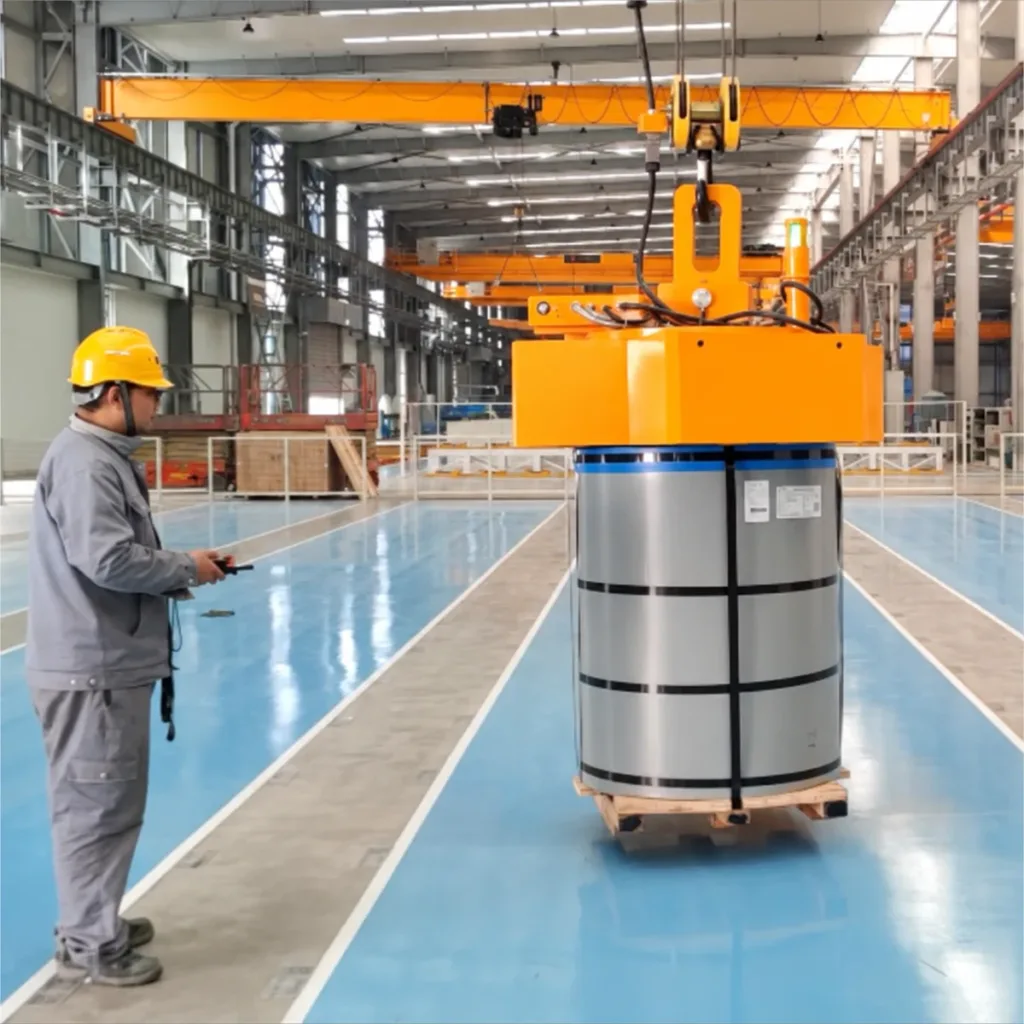
Start with the coil orientation
Coil-eye direction and the available contact face determine the magnet arrangement. End-face pickup and curved-surface pickup use different designs.
Selection details
- Provide eye orientation, outside and inside diameters, width, weight and packaging details. Describe whether coils are banded.
- Check the actual magnetic contact surface, curvature and space between adjacent coils. A plate magnet is not a substitute for a coil design.
01What changes for scrap and recycling?
Specify whether the load is turnings, offcuts, shredded scrap or mixed material. Pickup varies with shape, packing and non-magnetic content; solid-steel ratings cannot predict a scrap load. Include the work cycle, crane connection, electrical supply and discharge location.
02Can the system handle hot billets or other hot steel?
Use equipment explicitly selected for the material temperature, contact duration and operating cycle. Give both normal and maximum conditions. Do not apply a general-purpose magnet’s rating to hot material.
Weight is only
the starting point.
These details let the supplier assess the actual holding conditions and identify where a trial or application-specific design is needed.
| Material grade | Identify the actual steel grade. Magnetic behaviour varies; “stainless steel” alone is not enough information. |
|---|---|
| Thickness & stiffness | Minimum thickness, length, width and weight range. Thin or flexible loads need appropriate pole distribution and support. |
| Contact surface | Photos of rust, scale, paint, wrapping, gaps and unevenness. These can reduce effective magnetic contact. |
| Shape & orientation | Flat plate, round bar, pipe, profile or coil; include dimensions and pickup orientation. Turning requires a specific arrangement. |
| Temperature & duty | Normal and maximum temperature, contact time, lifts per hour and operating hours. |
| Crane capacity & headroom | Include the beam, magnets and connecting gear in total suspended weight. Check available height and the complete hook connection. |
Specify the complete
lifting system.
A magnet, a beam and a controller are not automatically a complete crane installation. Confirm what is included and where it connects.
- 01
Magnet & beam
Confirm magnet quantity, pole arrangement, beam dimensions, suspension and self-weight. Include the range of load sizes and pickup positions.
- 02
Supply & controls
Identify mains or battery supply, charging where applicable, operator controls and crane interfaces. Agree release protection, status feedback and failure response.
- 03
Rating & verification
Request an arrangement drawing, declared load conditions, operating instructions, inspection requirements and agreed test records. State the project’s applicable standards.
01Does a battery-powered magnet use a fourth lifting principle?
No. Battery power may serve an electromagnetic or an electro-permanent design. Ask whether current is needed during holding, what the charge monitoring does and how a low-charge condition is handled.
02Can it lift aluminium or stainless steel?
Conventional lifting magnets do not lift aluminium. Stainless steels differ in magnetic behaviour; provide the exact grade and workpiece details for assessment. Consider a different lifting method if the material or contact is unsuitable.
03Which standards and certificates should I request?
State the destination and project requirements. EN 13155 and ASME B30.20 may be relevant to the agreed equipment and use, but a supplier must confirm applicability and the required documentation. Do not treat a catalogue reference as proof that every configuration complies.
04Can I use the flat-load rating for round stock?
Only use a rating established for that contact geometry and material condition. Check the permitted diameter and, for tubes, wall thickness. Flat and round ratings are not interchangeable.
Send the load details.
Show the pickup.
A drawing and a few clear photos help us assess the magnet arrangement. Include the smallest and thinnest load as well as the heaviest.
Discuss magnetic lifting- Material grade, weight range, dimensions, minimum thickness, surface condition and temperature.
- Single piece or stack, pickup orientation, cutting or turning requirements, travel route and operating cycle.
- Crane capacity, available headroom, hook arrangement, power supply, controls and required documentation.