
Pneumatic / Air Hoists
Air-powered lifting.
Hook or trolley mounted.
Pneumatic chain hoists use compressed air to lift and lower loads. Choose a suspended unit or beam-travelling arrangement, then match the air supply, controls and working environment to the selected equipment.
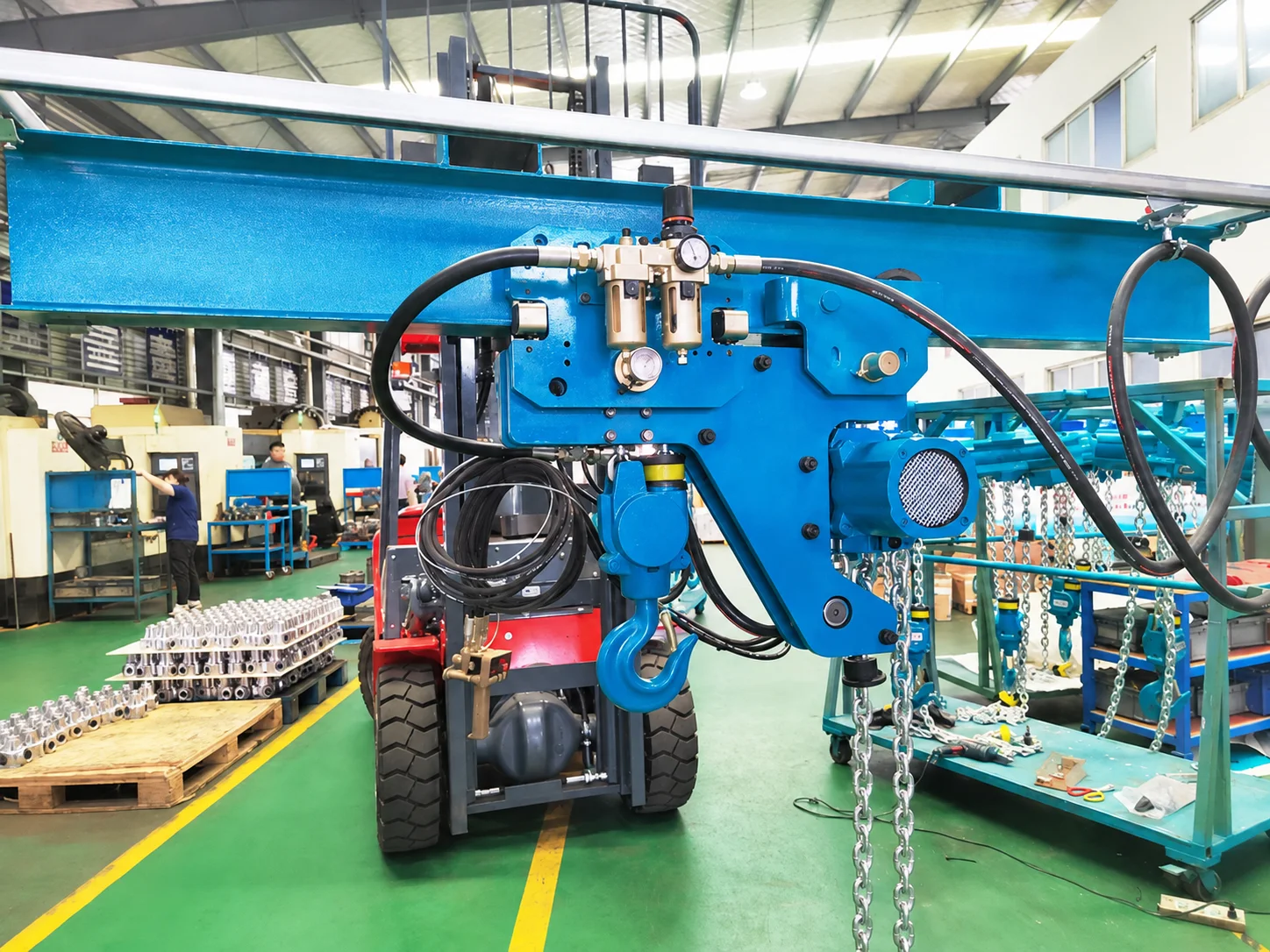
Lift at one position.
Or travel along a beam.
Start with where the load needs to go. Suspension, trolley travel and available headroom determine the physical arrangement.
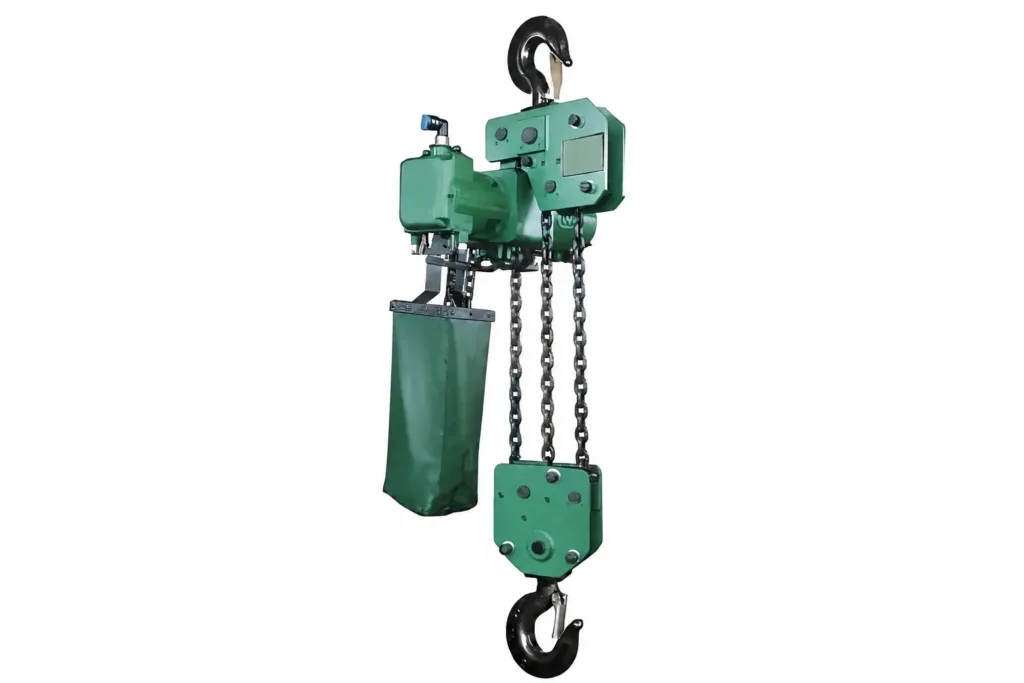
Hook-suspended hoists
A suspended unit serves a lifting position for assembly, equipment removal or maintenance. Check the support, hook travel and space needed for the hoist and chain container.
Check suitability
- Provide the support height and highest required load position. The hoist body, hooks and lifting attachment occupy space above the load; chain length alone does not establish the usable lift.
- Choose a suitable pull control or pendant and its drop length. Show where the operator stands and whether the load remains visible throughout the movement.
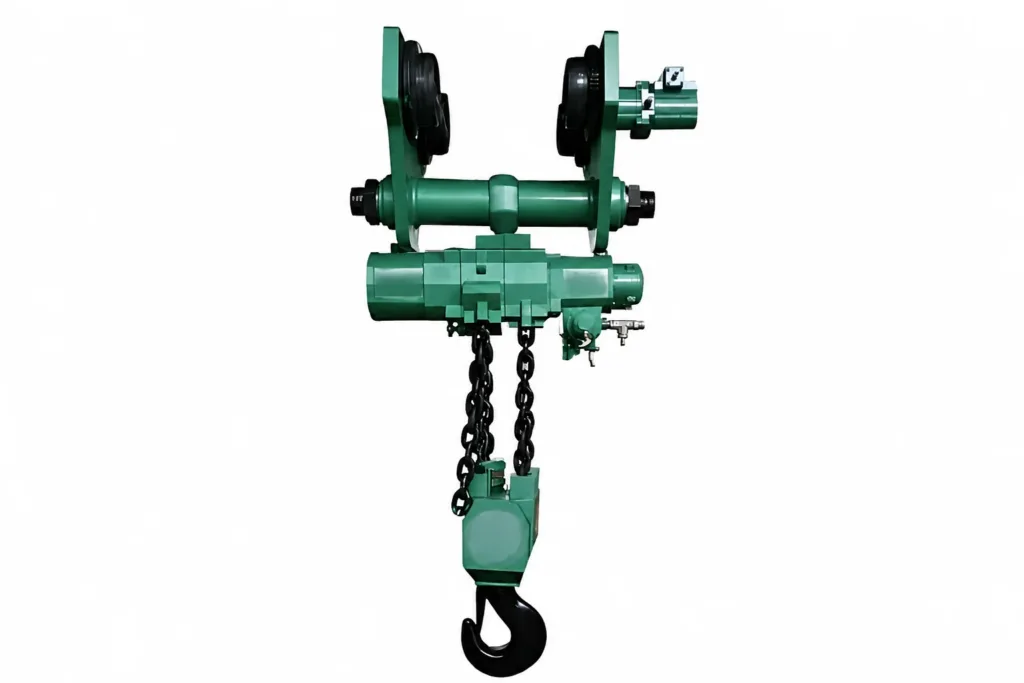
Trolley-mounted hoists
A trolley adds horizontal travel between working positions. Select the travel drive and beam fit alongside the hoist, and allow the air hose to follow the full route.
Check suitability
- Provide the beam section, flange dimensions, route length and any curves. Manual push, geared and air-powered travel are separate choices; confirm the available combination for the selected hoist.
- A dedicated low-headroom arrangement may bring the load closer to the beam. Compare the actual installed dimensions and hook approaches; simply adding a trolley does not make a hoist low-headroom.
More than an air hose.
Check the complete route.
This low-headroom equipment example makes three installation questions visible. Select a marker to see what information is needed.
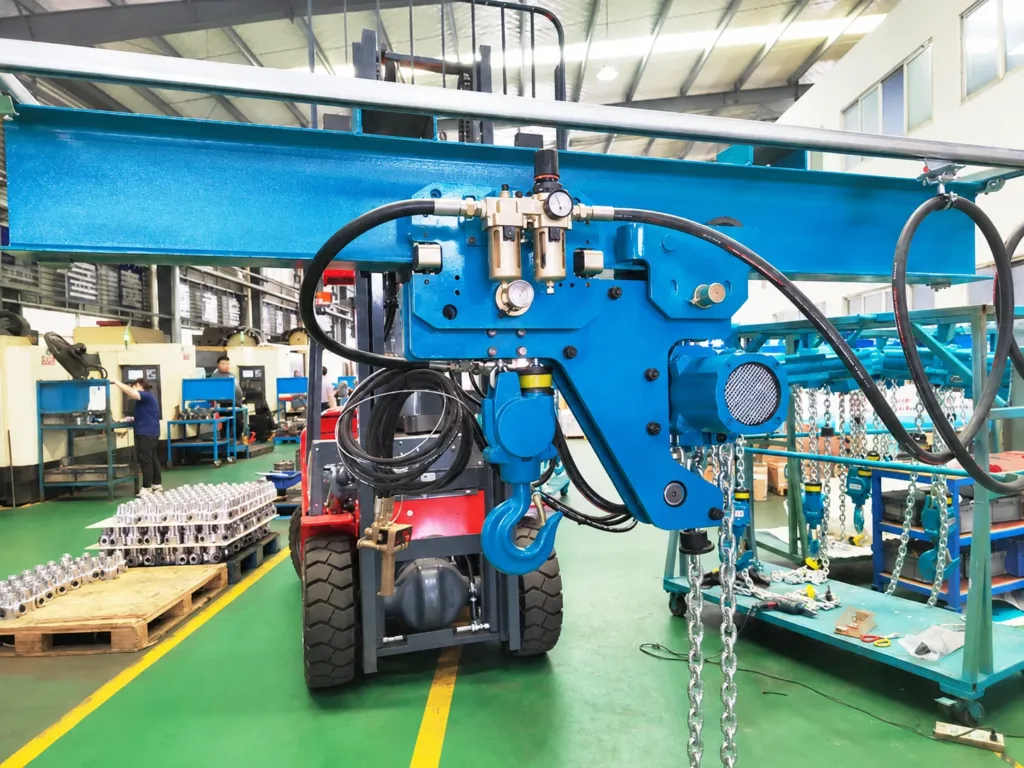
Check the lift.
Check the air available.
A suitable hoist needs both the right lifting arrangement and a supply that can support the working cycle.
| Load and movement | Load including the lifting attachment, required hook travel, positioning needs and expected lifts or running time. Add trolley travel where needed. |
|---|---|
| Available compressed air | Operating pressure and available flow at the connection point, supply hose length and bore, and other equipment sharing the air line. Identify existing filtration, drying and lubrication. |
| Installation and controls | Support or beam dimensions, headroom, operator position and control drop. Include hose routing and access for chain and motor servicing. |
| Working environment | Indoor or outdoor exposure, moisture, dust, corrosion and temperature conditions. For a classified hazardous area, provide the site classification and required equipment documentation. |
01What should the quotation include?
Agree the hoist, controls, chain length and container, trolley if needed, air preparation equipment and hose arrangement. Identify responsibility for the support, air connection, installation and commissioning so that a hoist-only price is not compared with a complete installation.
02What performance should be confirmed for the selected model?
Ask for capacity, lifting speeds under the stated load, required inlet pressure and air consumption, duty limits and installed dimensions. Confirm the control functions and load-holding response when the air supply is interrupted. These details belong to the selected model and configuration.
Pneumatic does not mean
one specification fits all.
Resolve these practical differences before selecting the equipment.
01Is every air hoist suitable for an explosive atmosphere?
No. Select equipment with the appropriate documented suitability for the actual classified area and operating conditions. An air motor alone is not evidence that the complete hoist, trolley and controls meet the site requirements.
02Is compressor pressure enough to choose the hoist?
No. The supply also needs sufficient flow while the hoist operates. Long or restrictive hoses and simultaneous demand can reduce the air available at the equipment; compare the actual supply with the selected model requirements.
03Are all air hoists oil-free or suitable for continuous operation?
No. Lubrication requirements and permitted duty depend on the design. State the working cycle and air quality, then confirm the selected model instructions rather than applying another manufacturer's claim to the whole category.
Considering an electric hoist?
Compare electric chain hoists when selecting the power source and installation for your lifting task.
View electric chain hoistsShow the lifting point.
Describe the air supply.
Send the information you have. We can review the installation options and identify the remaining inputs for an equipment proposal.
Discuss an air hoist- Load, hook travel, working cycle, positioning needs and any horizontal movement
- Site photos, support or beam dimensions, headroom and operator position
- Available pressure and flow, hose route, air preparation and site conditions