
Gantry Cranes
Across the yard.
Beside the machine.
Compare rail-mounted, rubber-tyred and portable gantries for production, storage and maintenance. Choose the travel route first, then match the supports, girders and hoist to the job.
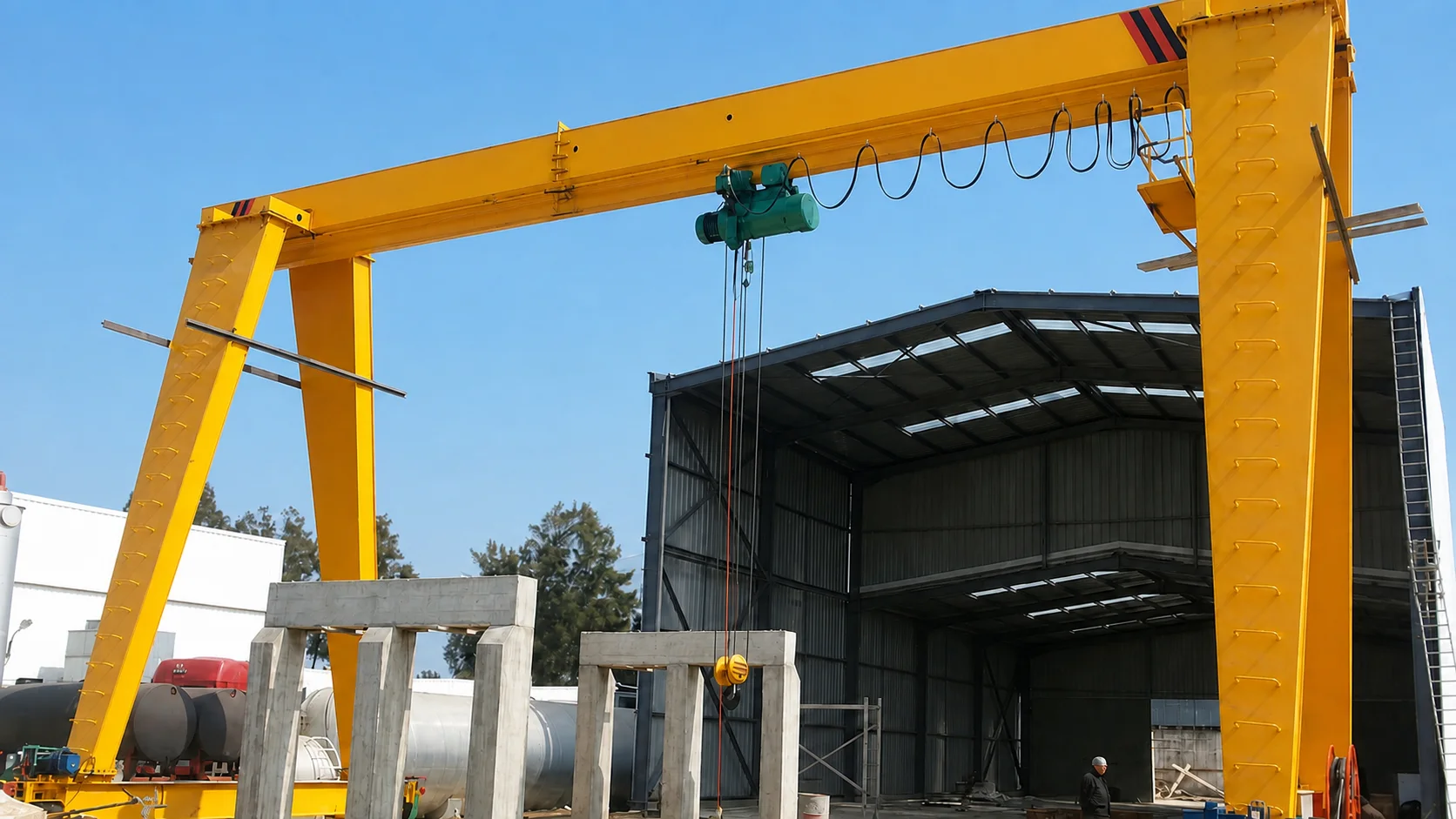
Fixed rails. Free travel.
Or a portable frame.
Start with where the crane must work and how it gets there. Then choose the support, girder and lifting arrangement within that equipment family.
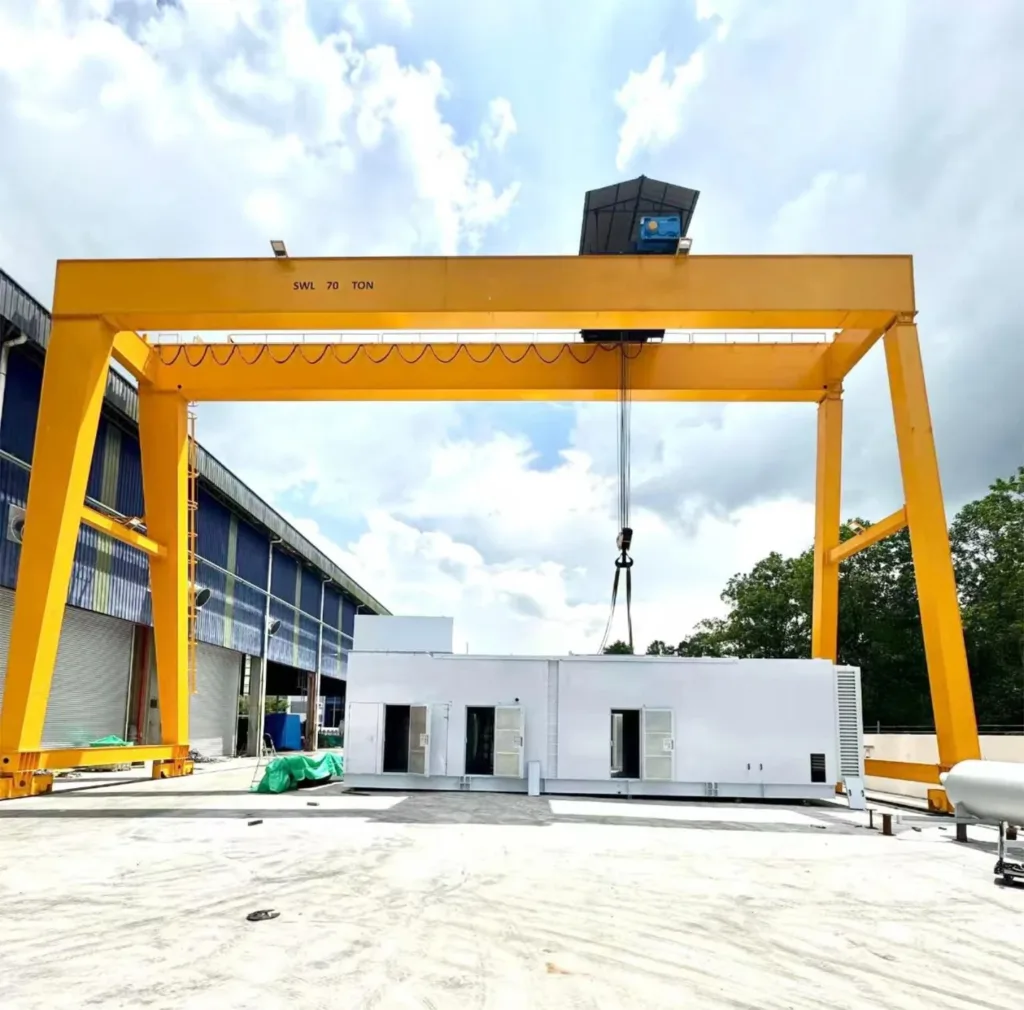
Rail-mounted
For repeated lifting across a yard, production bay or storage lane. Ground rails define the travel path. Full and semi-gantry arrangements suit different support layouts.
What changes the choice
- Check rail foundations, crossings, hook coverage and access around the legs.
- Single or double girders can carry a suitable packaged hoist or open winch trolley.
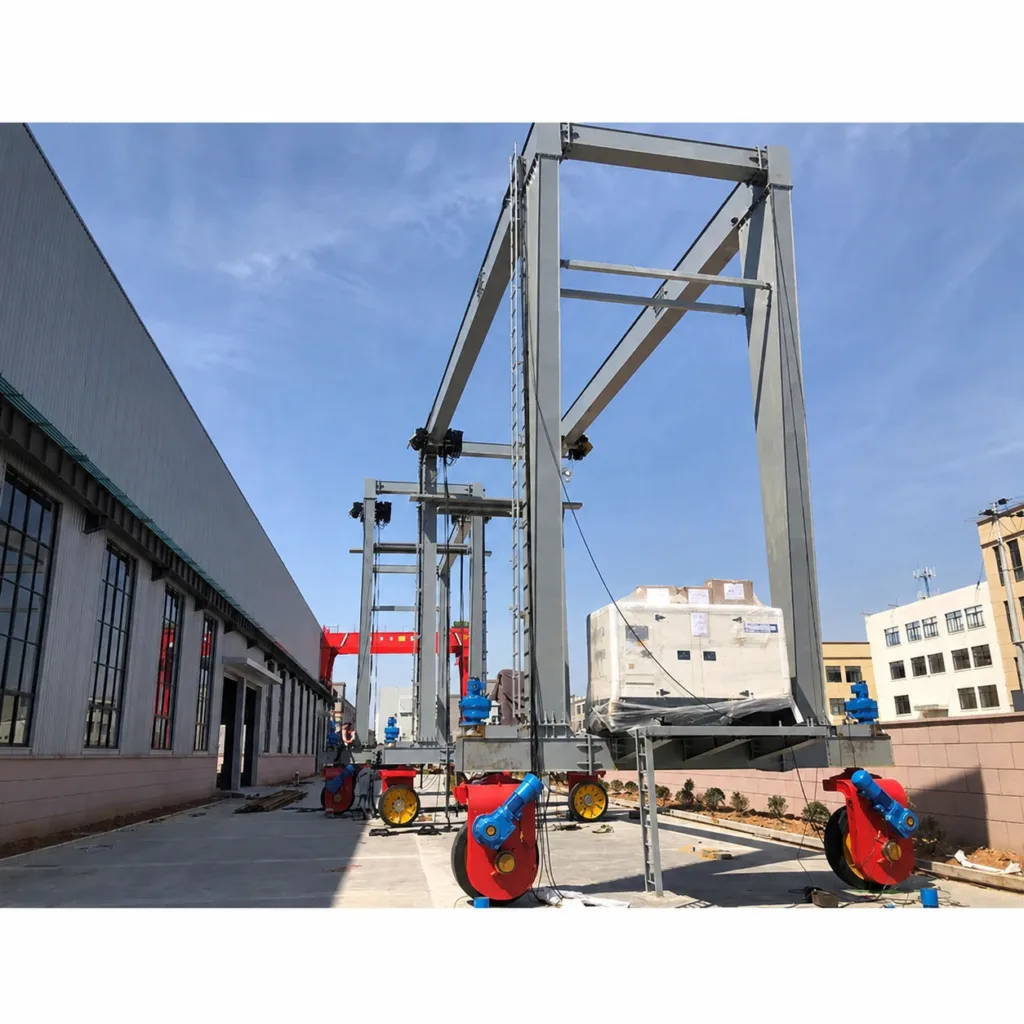
Rubber-tyred
Steerable gantries can move industrial loads between work areas without a fixed rail route. Select the wheel and steering arrangement for the load and site.
What changes the choice
- Check wheel loads, ground bearing, gradients, clearances and the full swept path with the load.
- Agree travel power, operator position and permitted lifting and travelling conditions for the selected machine.
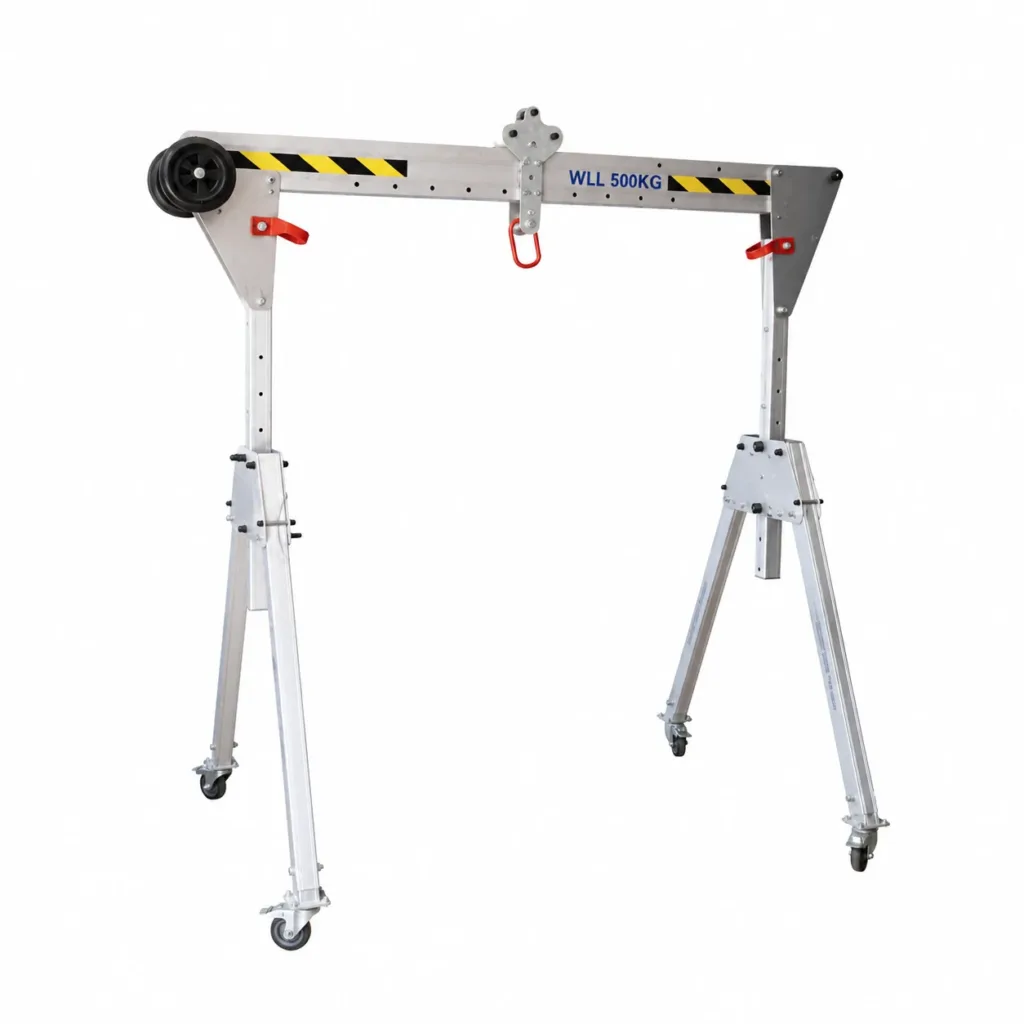
Portable gantries
Compact steel or aluminium frames for maintenance, assembly and equipment removal. Adjustable or folding designs can be moved between suitable lifting positions.
What changes the choice
- Check clear span, usable hook height, leg footprint, castors, floor condition and access to the load.
- Castors alone do not establish permission to travel with a suspended load. Follow the selected model’s operating instructions.
Moving containers in a terminal?
Container-yard RTGs and rail-mounted stacking cranes have their own equipment guide.
View container yard cranesBox or truss?
Look at the structure.
Box and truss describe how the main girder is built. Single and double describe the number of girders. They are separate choices.
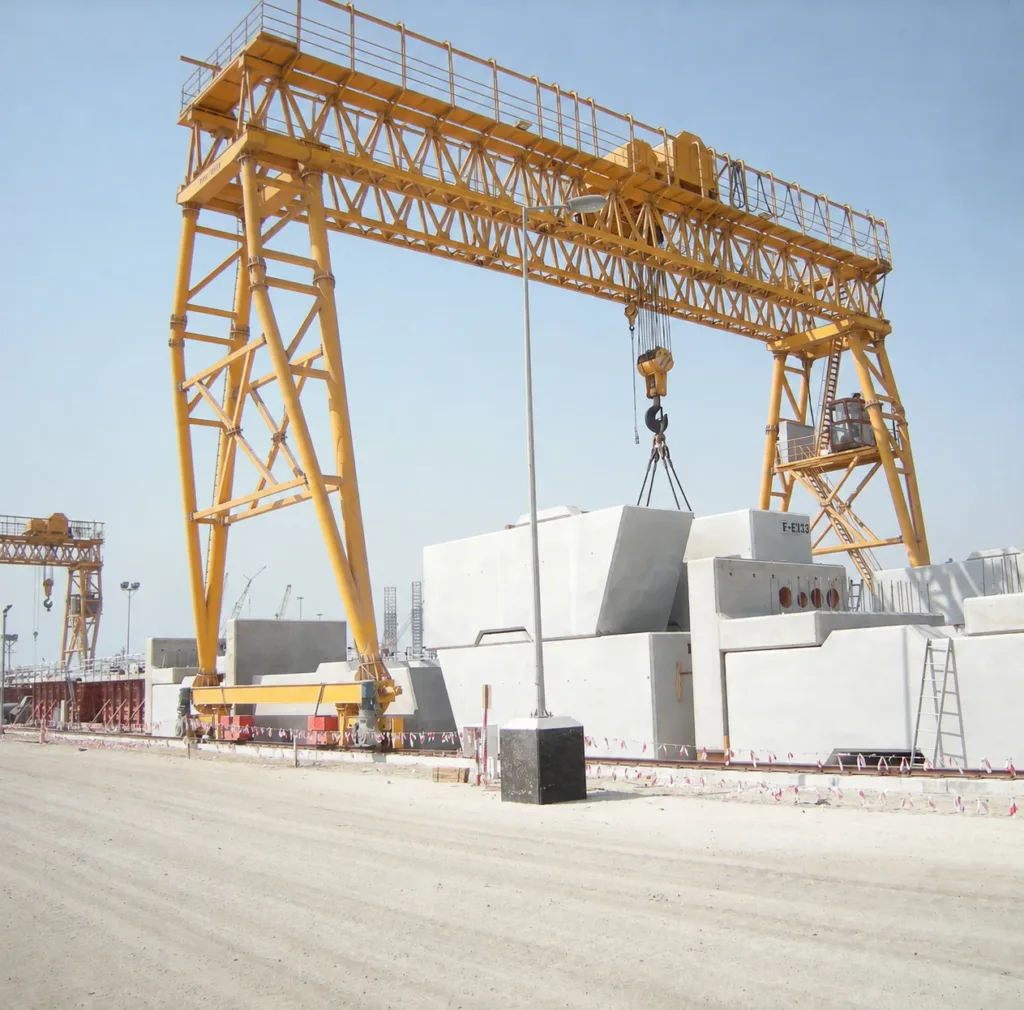
An open lattice carries the trolley.
The triangulated members are visible in this precast-yard example. A truss can be considered for an outdoor or long-span gantry; the load, stiffness, wind exposure and erection plan determine the suitable structure.
01Does a truss girder remove the need for wind restraints?
No. Open construction does not establish a safe operating wind limit. The complete crane, suspended load, parking arrangement and anchorage must be assessed for the actual site.
Lift the load.
Reach the landing point.
This rail-mounted example shows the three main motions. Mark pickup and landing positions, including any point outside the legs. Portable and tyre-mounted machines have their own permitted travel arrangements.
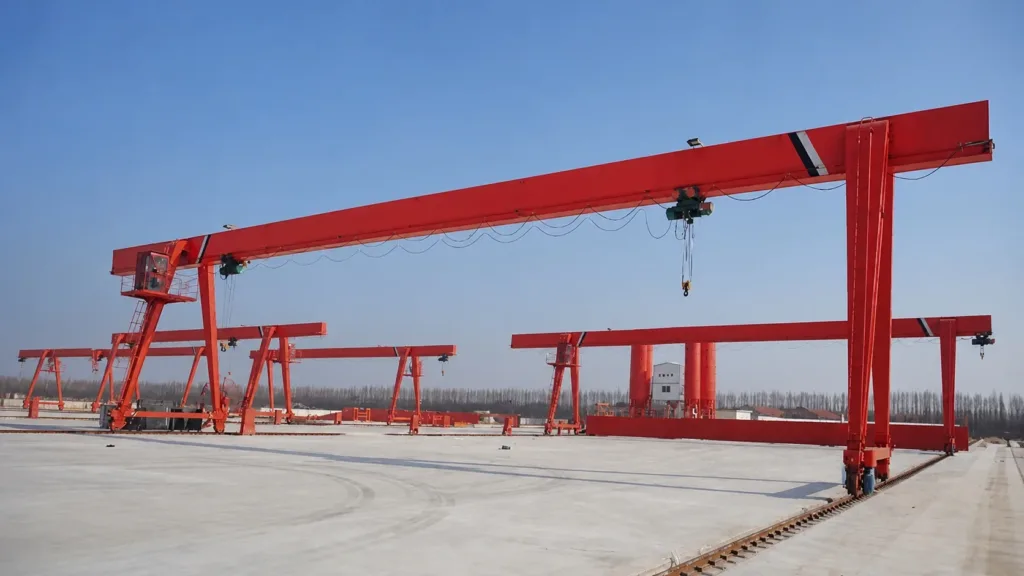
Vertical lift
The hoist raises or lowers the hook directly below the trolley.
- Lift height, headroom, speed and reeving.
Cross travel
The trolley positions the hook across the bridge span.
- Side approach, service access and working width.
Long travel
The complete portal moves along both ground rails.
- Travel length, rail geometry, wheel loads and moving power feed.
See what supports
and moves the load.
Click a number or a component name to expand its explanation. The original equipment view shows the bridge, legs, lifting mechanism and ground-running system together.
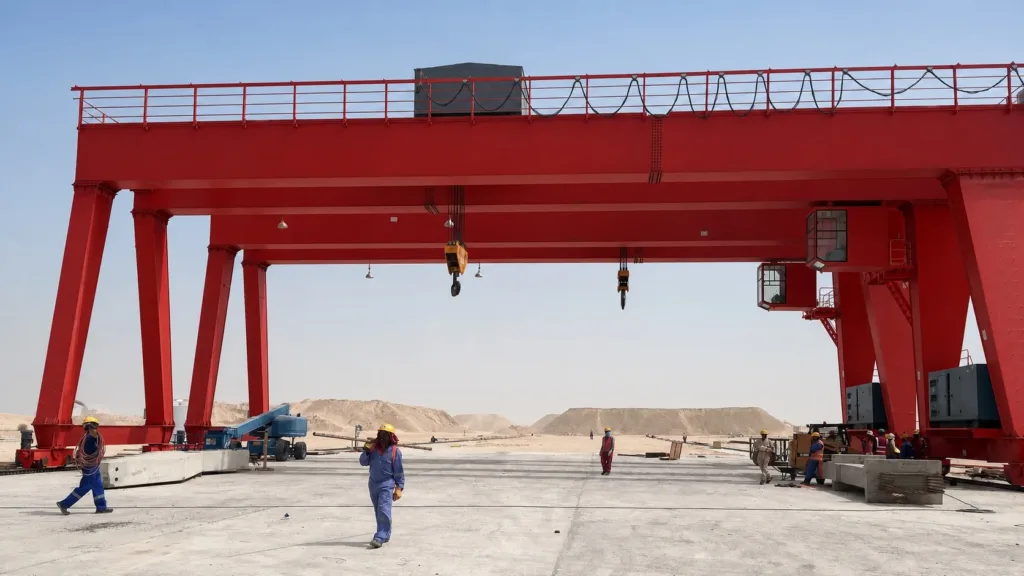
The rails need support.
The legs need clearance.
A flat yard is not enough to establish that it can carry a gantry. Coordinate the rail route, foundations and everyday vehicle movements.
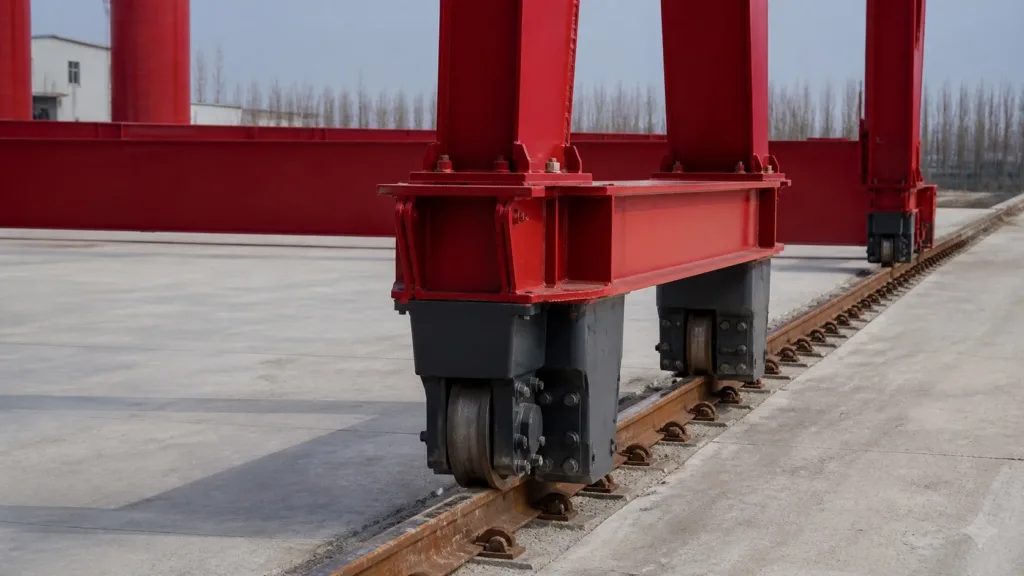
Check the ground beneath the travel line.
Provide rail and foundation drawings where available. The crane wheel loads and travel forces must be checked against the actual support. Show road crossings, drainage, stored materials and the proposed parking position.
01Can the crane use an existing concrete yard or rail track?
Only after the support and track have been checked against the proposed crane. Rail section, gauge, alignment, levels, joints and foundation condition all matter. An existing slab or matching rail spacing does not establish sufficient capacity.
02What changes when the gantry works outdoors?
Define wind exposure, rain, temperature, corrosion and drainage conditions. Agree the operating limits, wind monitoring where required, parking position and out-of-service restraints. The selected protection and anchorage must suit the crane and site; there is no universal wind limit for all gantries.
Where will you
use the crane?
For rail-mounted cranes, the site determines the supports and hook outreach. Full and semi-gantry are support layouts; a cantilever adds reach beyond a leg.
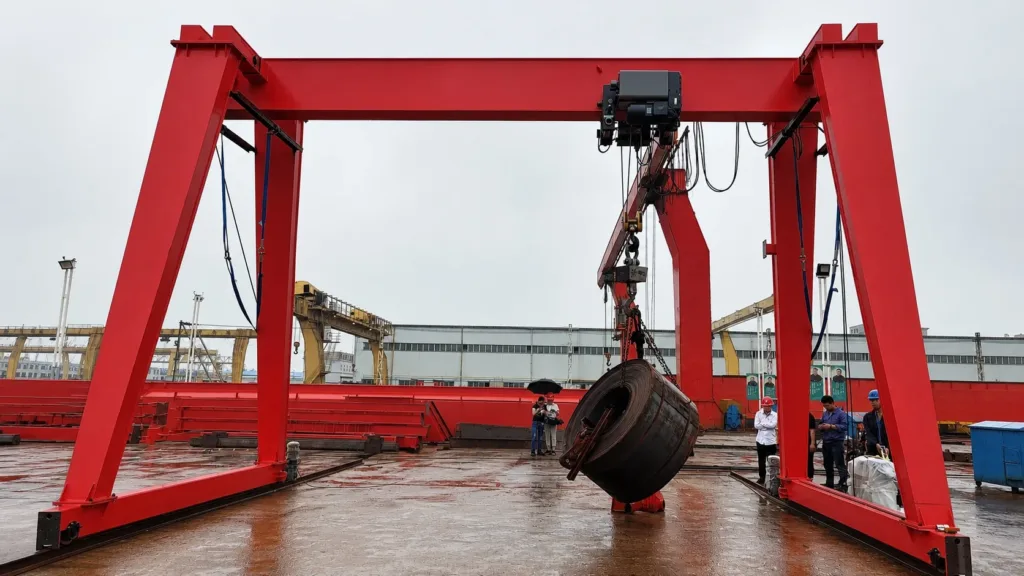
Load and unload the yard
Move stock between storage positions and vehicles. Keep the rail route, vehicle access and outdoor parking arrangement clear.
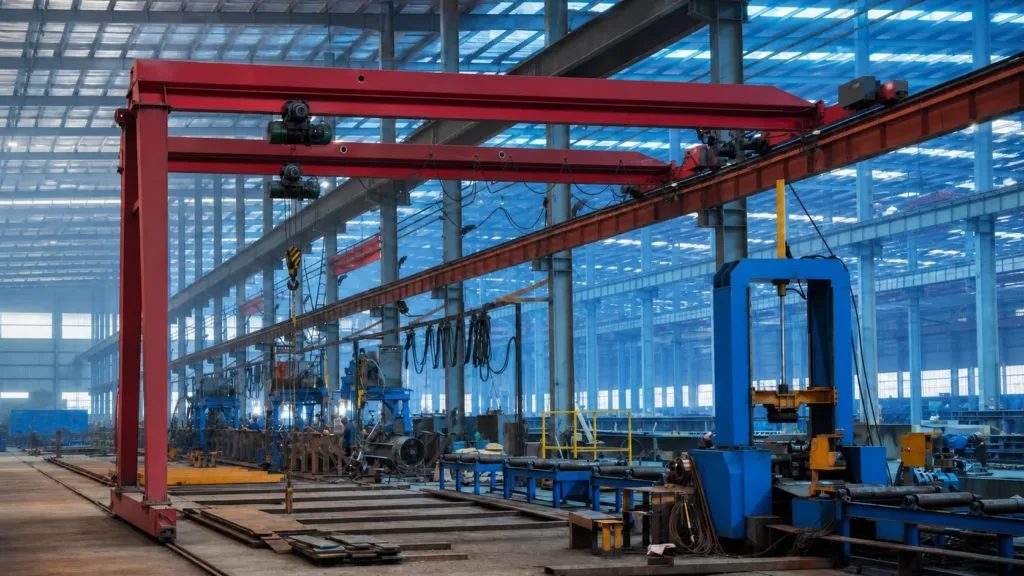
Serve a bay beside the building
A semi-gantry can serve a work strip beside an elevated runway. Check the building support and keep the ground-running side clear of people and equipment.
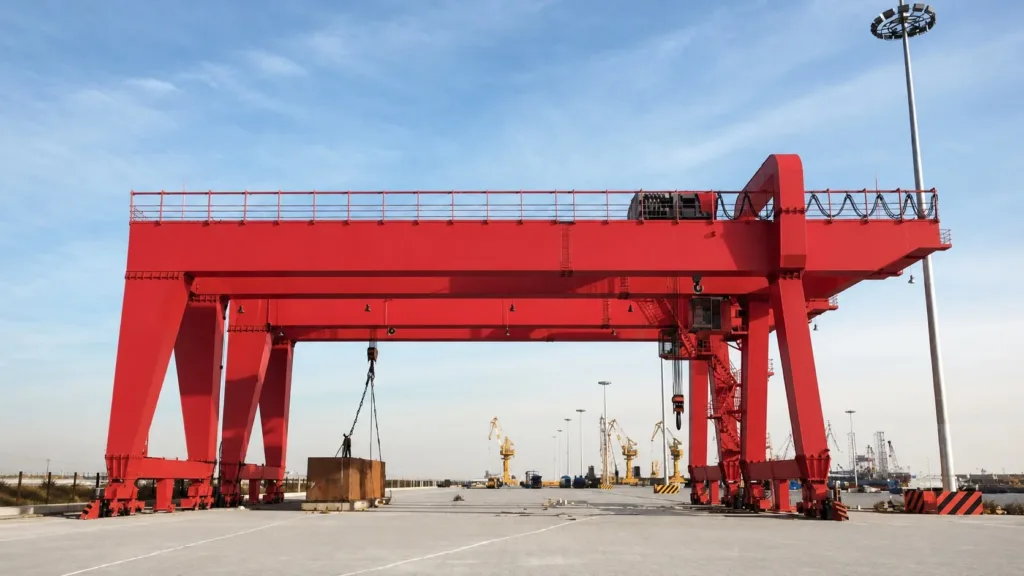
Reach the loading lane
A cantilever can reach a transfer position beyond the legs. Check the hook approach, vehicle clearance and permitted load at that position.
Compare the equipment.
Compare the complete scope.
Crane-only prices can leave out substantial site work. Resolve the installation boundaries before comparing quotations.
01Is a cantilever gantry a separate alternative to a full gantry?
Cantilever describes bridge outreach beyond a leg. Full and semi-gantry describe the support arrangement. A suitable design can combine these choices; specify the required hook position outside the legs and confirm the rated working envelope for that arrangement.
02What should the quotation include?
Identify the crane, hoist, trolley, moving power feed, rails, foundations, wind-restraint anchorage, lifting attachments, installation and commissioning. Agree who supplies and checks each interface. Request an arrangement drawing and wheel-load information for the civil review.
03How do I choose the hoist, speeds and controls?
Describe typical and heaviest loads, lifts per hour, shift length and positioning needs. Include the attachment and whether the operator walks with the crane or works from another position. These inputs determine the proposed duty, hoist and controls more reliably than maximum load alone.
Need repeatable positioning?
Explore operator assistance and automation for new cranes or existing equipment.
View crane automationSend the load.
Mark the working area.
A site plan and photos are useful even before the civil design is complete. Show what must be moved and where it must land so the arrangement and missing inputs can be reviewed.
Discuss a gantry crane- Typical and heaviest load, lifting attachment, hook travel, operating cycle and positioning needs
- Span, travel length, pickup and landing points, outreach, rails and available ground or building drawings
- Location, weather exposure, power supply, vehicle routes and responsibilities for civil work and installation