
Overhead Cranes · Bridge / EOT cranes
Lift across the workshop.
Keep the floor clear.
Overhead bridge cranes lift and move materials above a workshop, assembly area or store. Start with the runway support, then compare single- and double-girder layouts for your load, hook height and operating cycle.
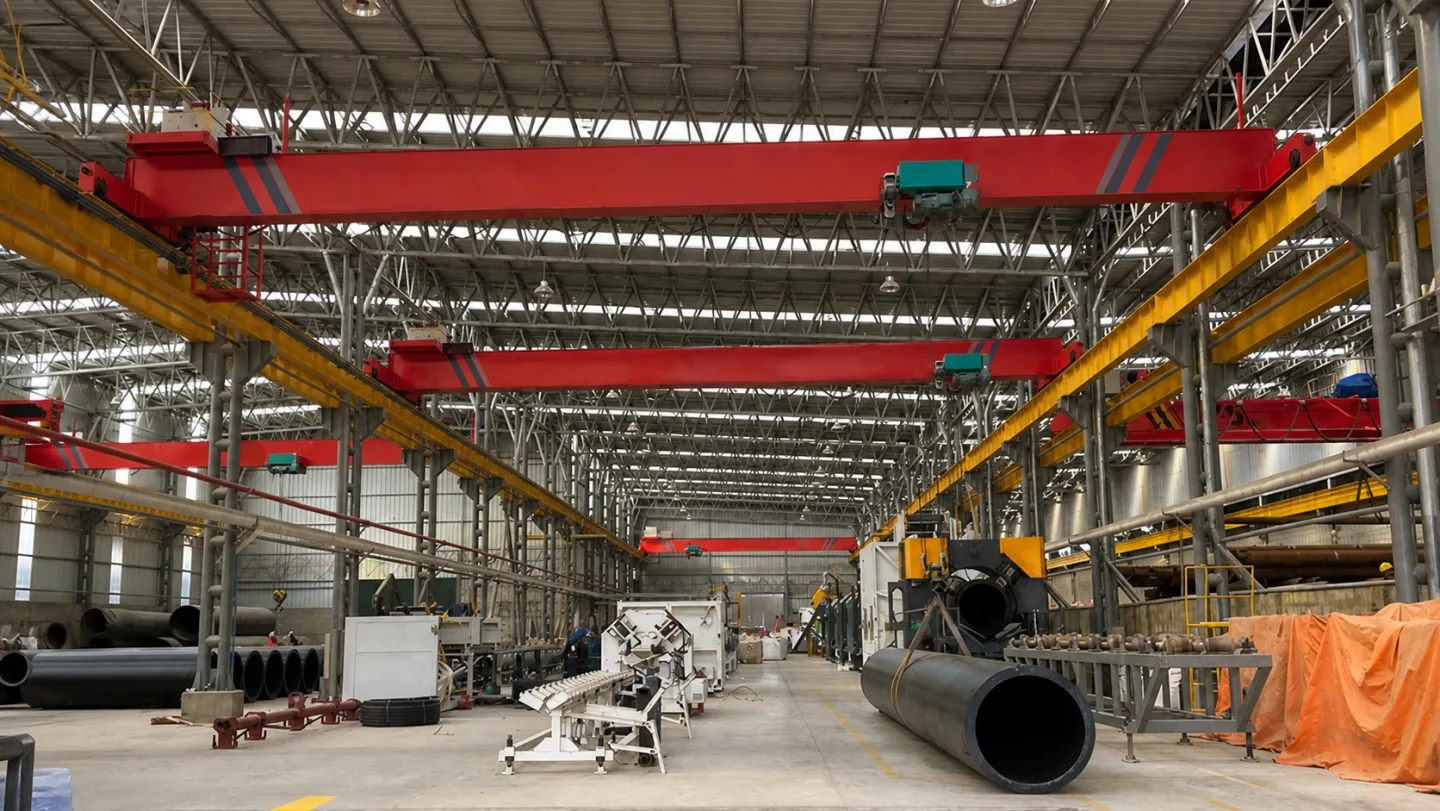
Above the runway.
Or suspended below.
Top-running and under-running describe where the crane wheels travel. Single and double girder describe the bridge itself. Choose both around the building and lifting task.
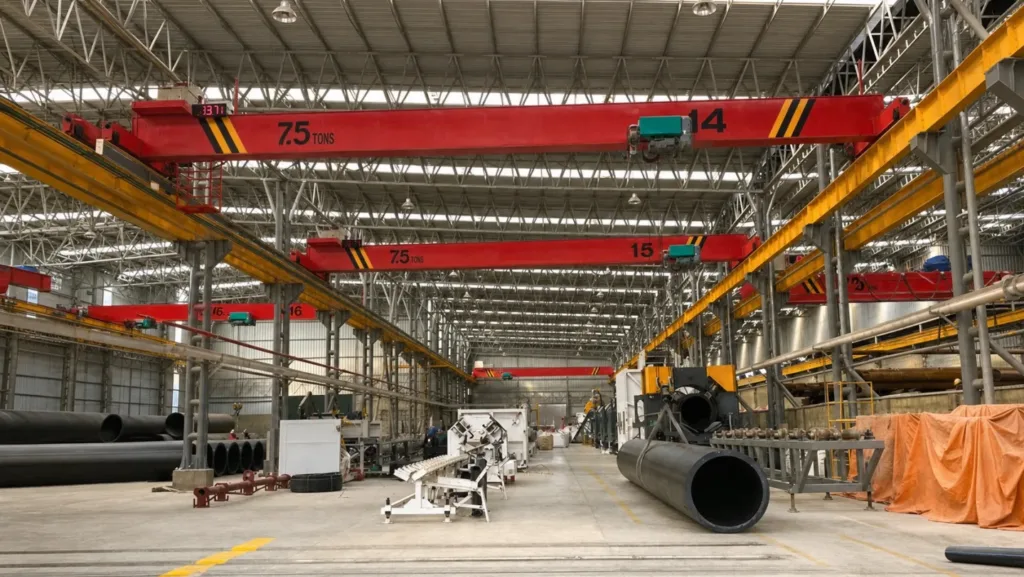
Top-running
End trucks run on rails fixed above the runway beams. The bridge spans the bay, with a single- or double-girder layout selected for the lifting task.
Check the building interface
- Confirm runway elevation, rail profile, wheel loads and the supporting columns or structure.
- Allow room for the girder, trolley, maintenance access and nearby roof members or services.
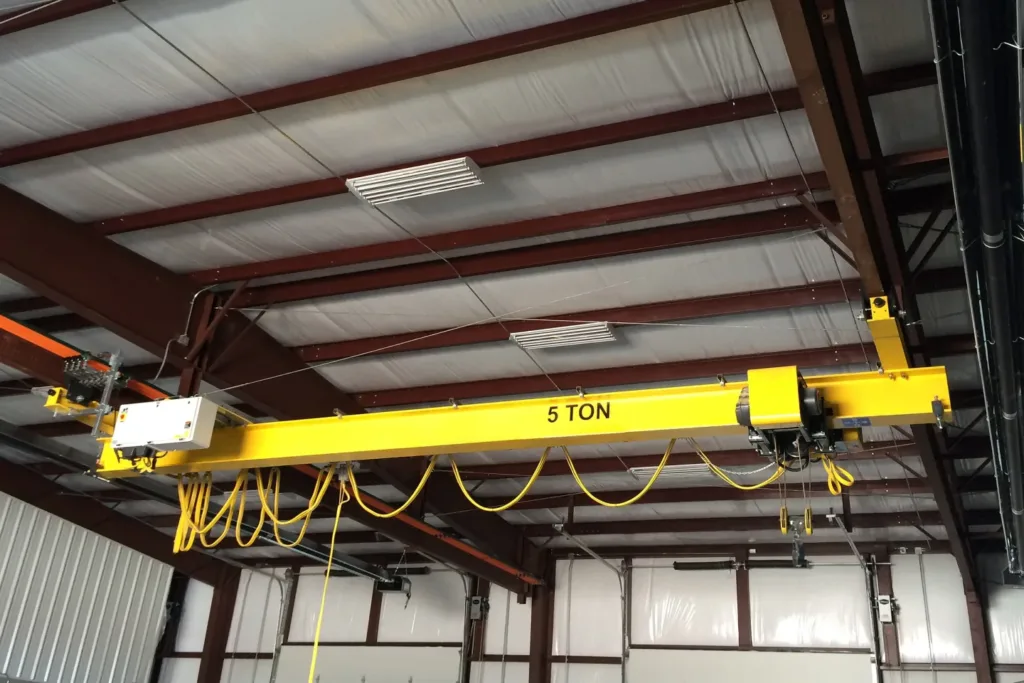
Under-running
End trucks travel on the lower flanges of overhead runway beams. The runway can hang from a verified building structure or use separate supports.
Check the building interface
- Check flange dimensions, wheel contact and support reactions together; ordinary roof beams are not automatically suitable.
- Confirm the bridge overhang, hoist approach and permitted working envelope for the selected arrangement.
One girder or two?
Look at the hoist layout.
The main girder count changes where the lifting unit sits and how the load reaches the hook. Capacity alone does not determine the better arrangement.
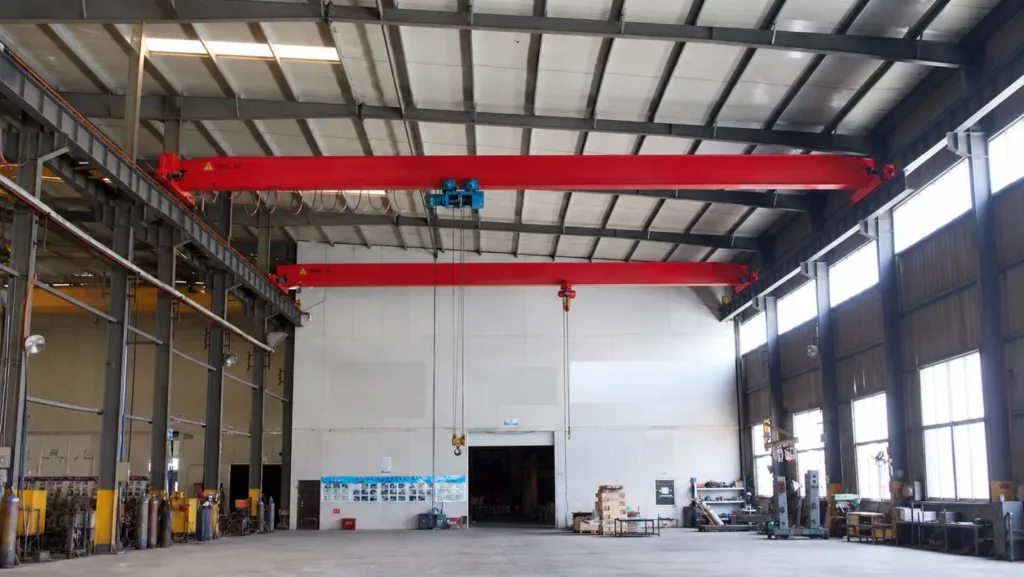
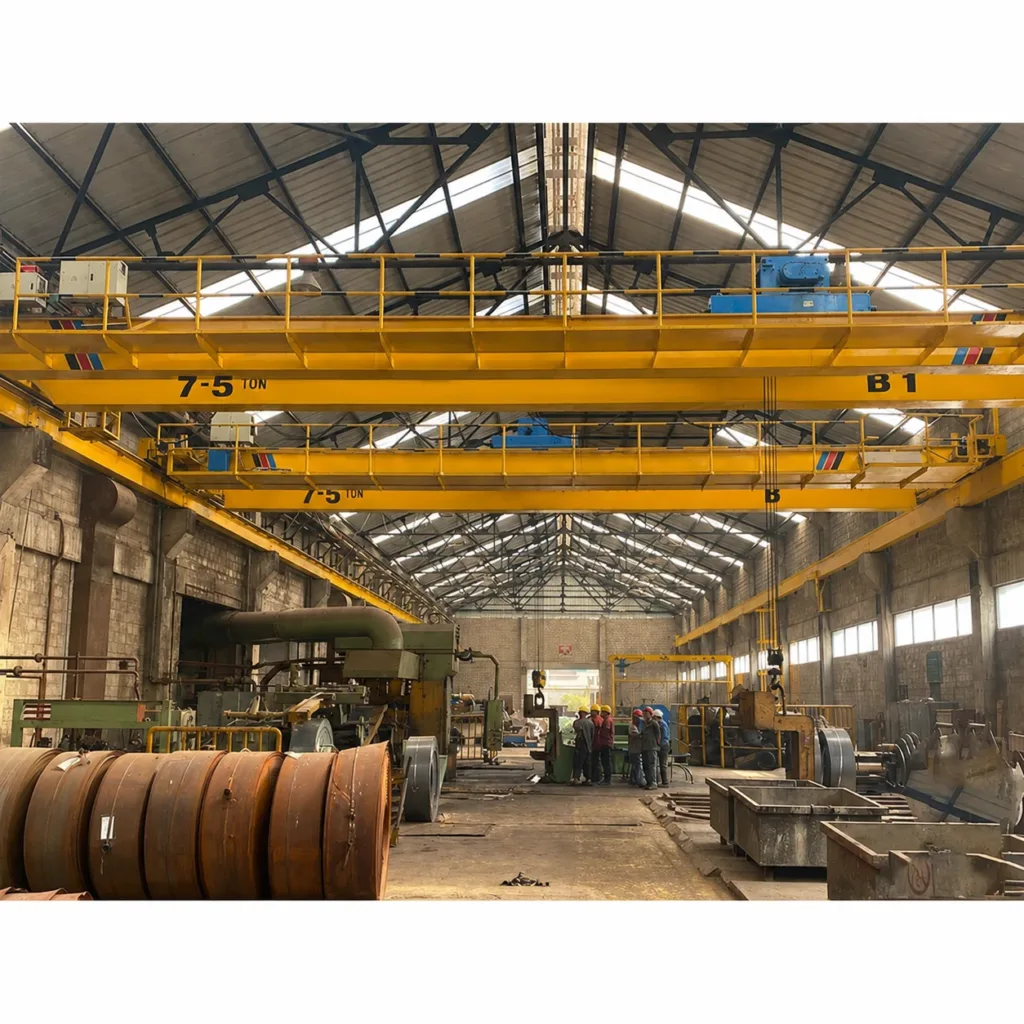
Single girder
A wire-rope or chain hoist commonly travels beneath one girder. Low-headroom and side-mounted arrangements can change the available hook height.
Compare the complete arrangement
- A common option for workshop handling and maintenance; select the hoist for the actual load cycle and positioning needs.
- Include the hoist, hook block, attachment and rigging when checking usable lift and access to the load.
Double girder
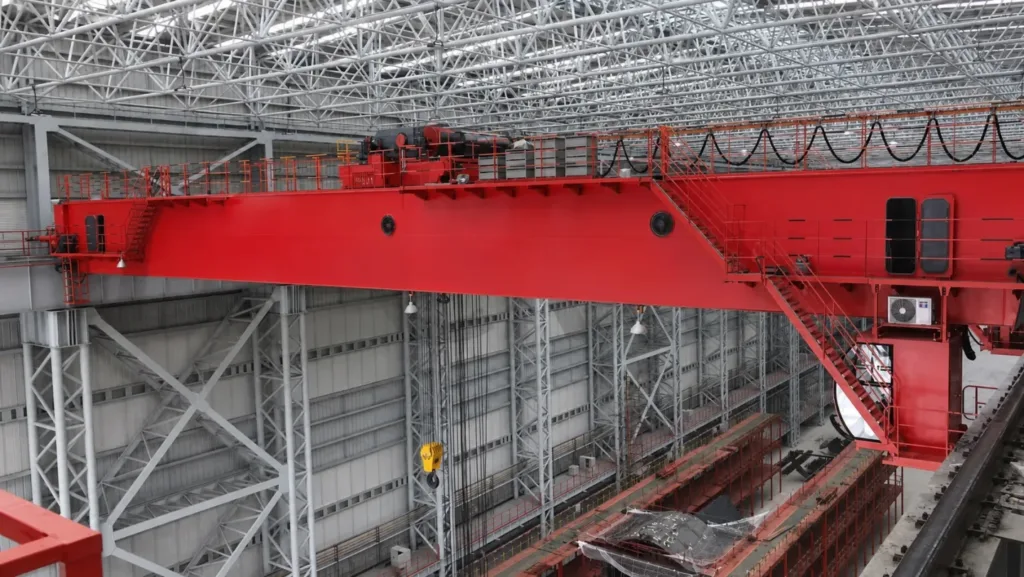
A trolley commonly travels on top of two girders. It may carry a packaged hoist or an open winch, with the arrangement chosen for duty, lift and service access.
Compare the complete arrangement
- Compare the lifting mechanism, trolley rail layout and any required platform or maintenance access.
- Check available space above the runway as well as hook height, crane mass and wheel loads.
Lift. Cross the bay.
Travel along it.
Select a motion to see the moving equipment. The hook must reach the pickup and landing positions while clearing the load, machinery and services.
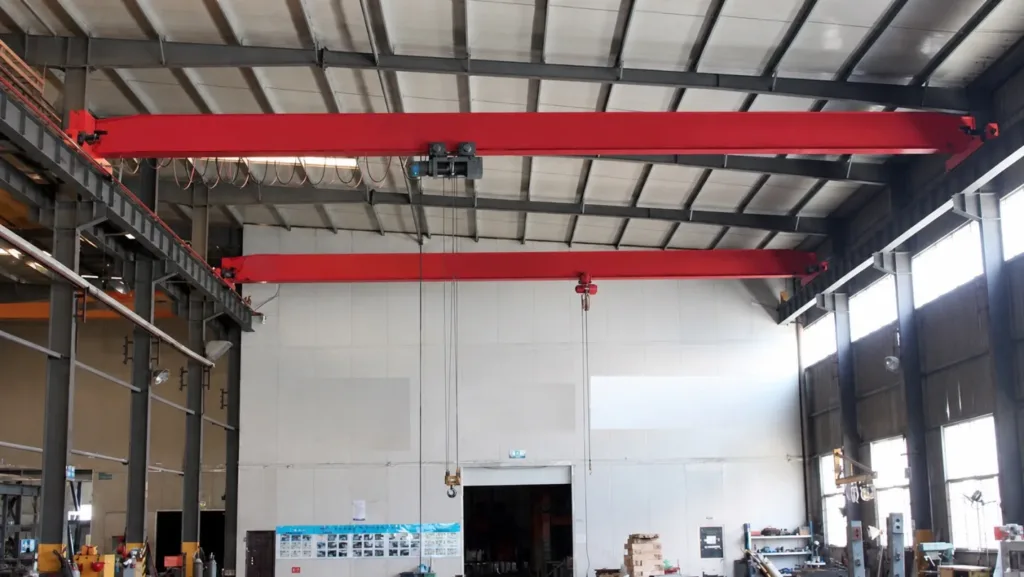
Vertical lift
The hoist raises or lowers the hook directly below the trolley.
- Lift height, headroom, speed and reeving.
Cross travel
The trolley positions the hook across the bridge span.
- Side approach, service access and working width.
Long travel
The complete bridge moves along both runway rails.
- Bay coverage, runway length, wheel loads and power feed.
See what carries
and moves the load.
Click a number or a component name to expand its explanation. The six-part view connects the equipment to the site and operating details needed for a proposal.
Limited headroom?
A particularly wide bay?
These layouts address specific building constraints. Compare the actual hook envelope and support arrangement, not just the crane span.
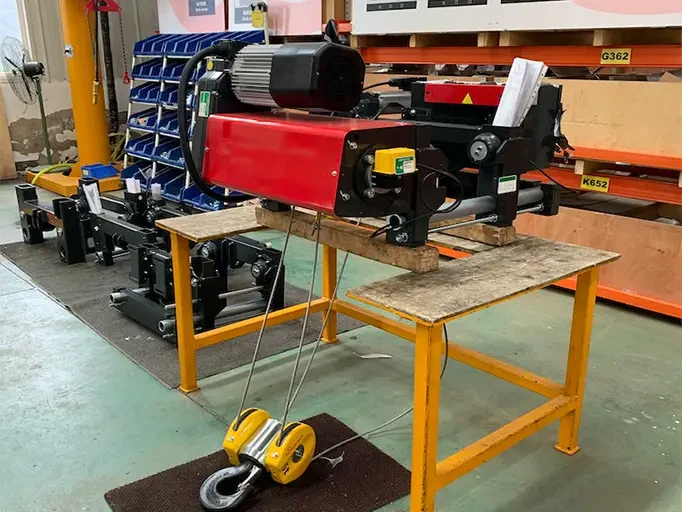
Low-headroom hoist
A compact hoist-and-trolley arrangement reduces the space needed above the hook. Compare the minimum headroom dimension at the required load and beam size.
Check the available hook height
- Confirm trolley flange compatibility, upper hook position and side approaches. Include the hook block, lifting attachment and rigging; the hoist alone does not determine usable lift.
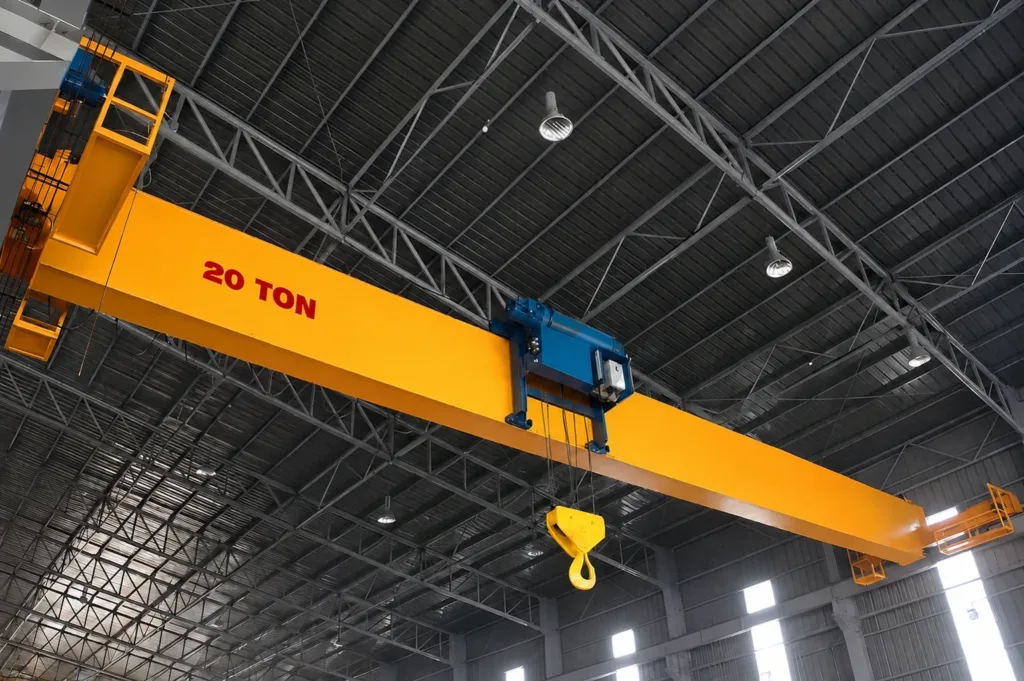
Side-mounted hoist
Moving the lifting unit beside a single girder can change the hook envelope. Compare it with a standard or low-headroom hoist layout at the same runway elevation.
What to show in your enquiry
- Send the roof and runway elevations, required hook height and the load with its lifting attachment. The complete drawing determines the usable gain.
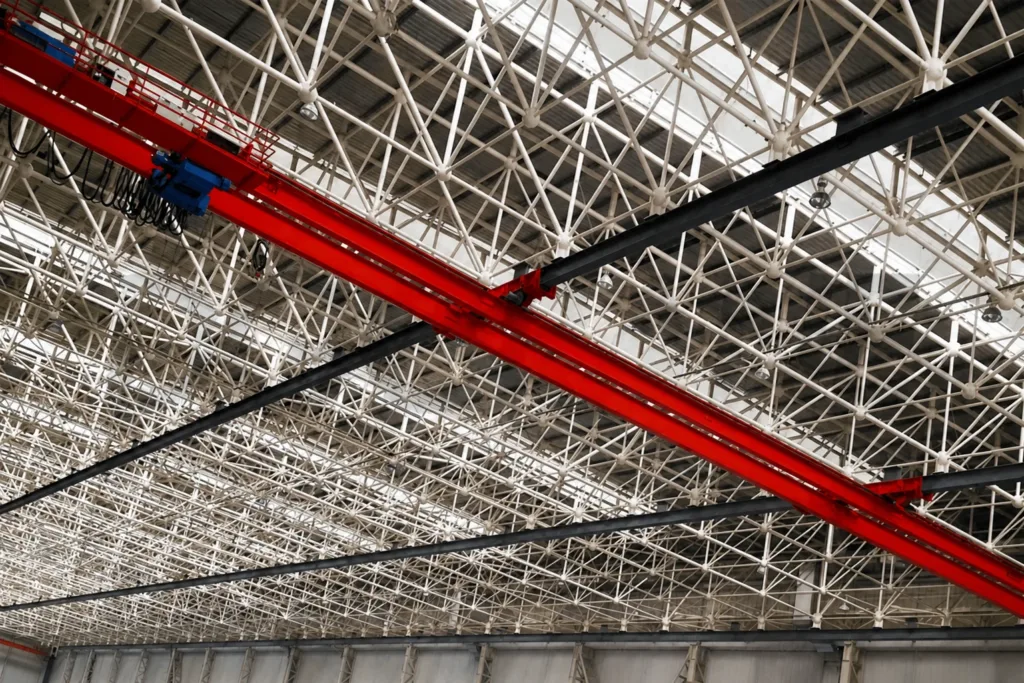
Multi-point bridge
A long suspended bridge can use more than two runway lines. The bridge, drives and suspension points must be coordinated with the complete supporting structure.
What to show in your enquiry
- Provide the runway spacing, roof structure and required working coverage. Support reactions, deflection and coordinated travel need a project-specific design.
01Can a new crane use the existing runway?
Possibly, after its geometry, rail condition and supporting structure have been checked against the proposed wheel loads and travel forces. Matching the span is not enough. If the existing structure is unsuitable, review strengthening or a separate support arrangement before ordering the crane.
02What should the quotation include?
Identify the crane and hoist, power feed, runway rails or beams, supporting structure, lifting attachments, installation and commissioning. Specify who supplies and verifies each interface. Ask for an arrangement drawing and wheel-load data so the crane and building proposals can be checked together.
Where will you
use the crane?
The handling task changes the attachment, operating environment and layout. These equipment examples illustrate the differences.
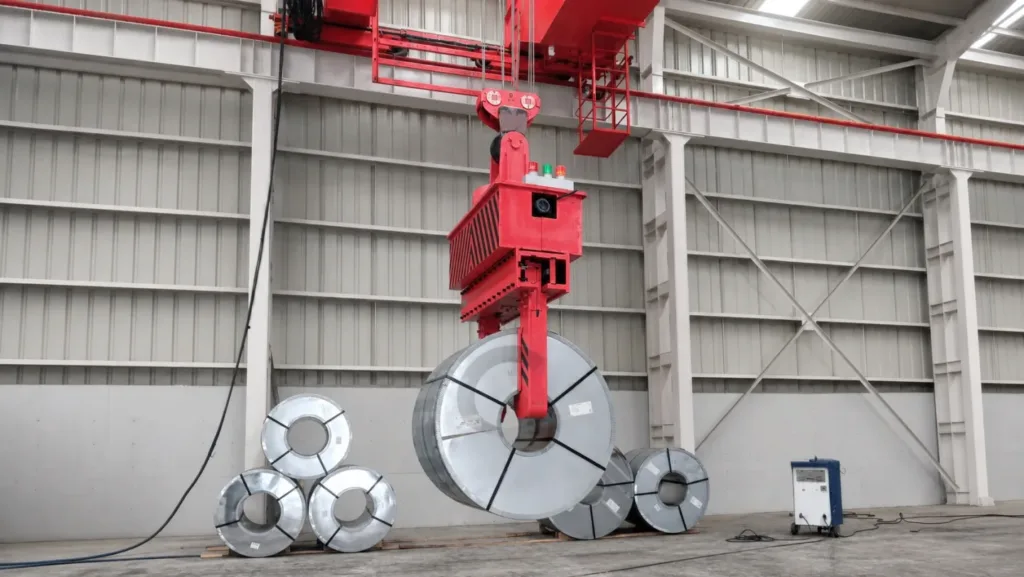
Move coils between process stations
Match the lifting attachment to coil size and orientation. Include attachment weight and the frequency of transfers when selecting the crane.
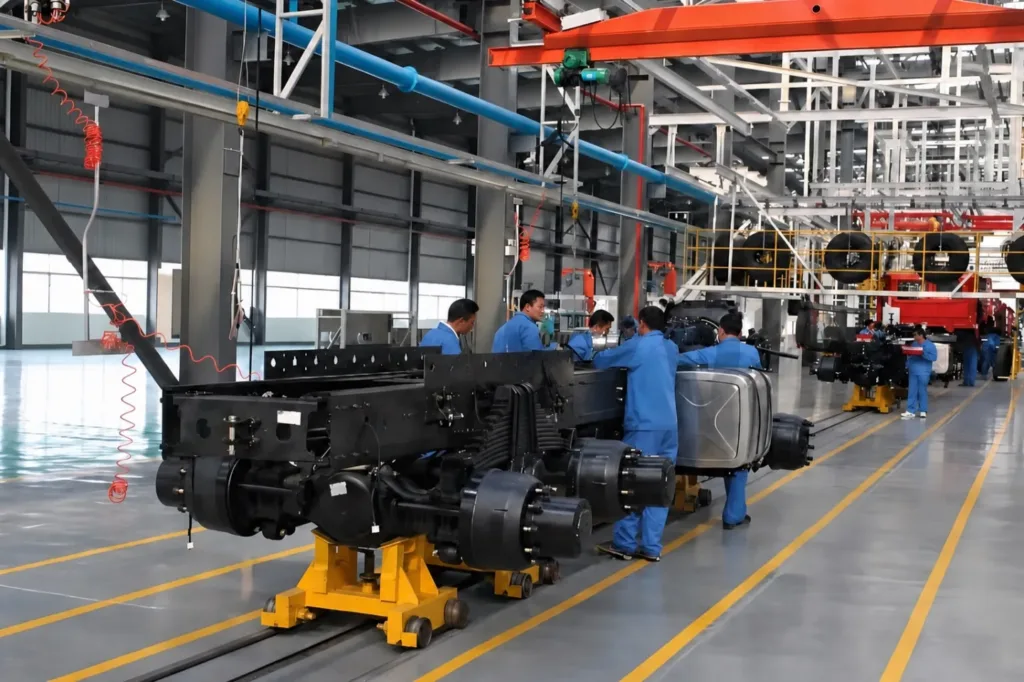
Place assemblies at the workstation
Check hook access around jigs and machines, operator visibility and the control needed for final positioning.
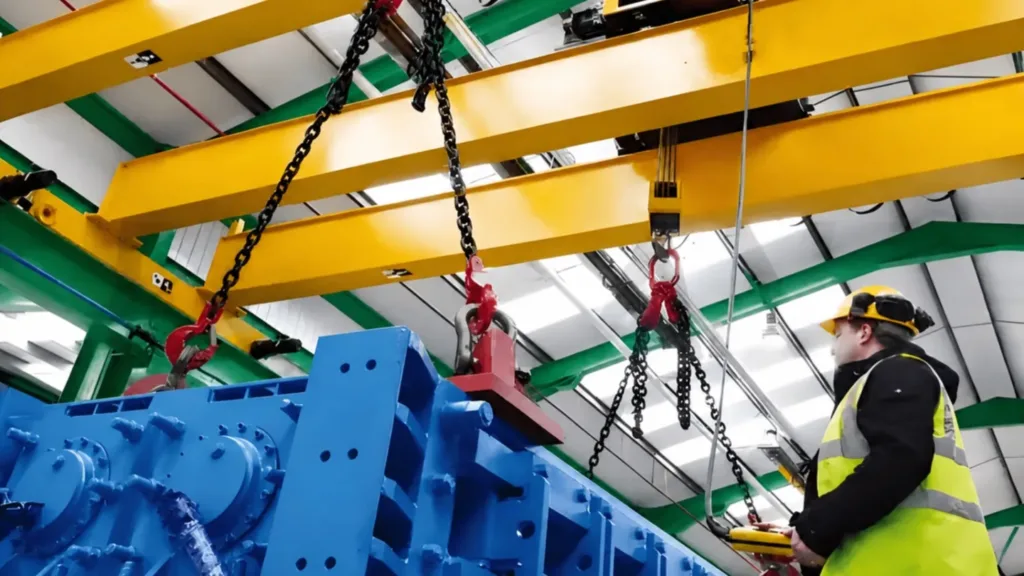
Feed the next production step
Define pickup and landing positions, required placement accuracy and how the receiving equipment is made ready.
More than the
maximum load.
Operating hours, the mix of loads and the way operators position them help determine a suitable hoist and control arrangement.
01What changes the price of an overhead crane?
Rated load and span are only the starting point. Hoist and trolley arrangement, lifting height, duty, controls, environment and supply scope also affect the proposal. Compare quotations against the same arrangement and inclusions, especially rails, electrification and site work.
02How do I describe the duty if I do not know the classification?
Describe the typical and heaviest loads, lifts per hour, shift length and time spent lifting or positioning. Include unusually hot, dusty, wet or corrosive conditions. The supplier can then propose the relevant duty classification and equipment selection for confirmation.
03Can the crane have two hoists or positioning assistance?
These can be considered for long loads, assembly or repeated handling. Specify whether hoists work independently or together and what the operator needs to control. Coordinated lifting, load sharing and protective functions require a defined design; two hoists do not automatically double the usable rating.
Need more precise handling?
Explore operator assistance and automation for new cranes or existing equipment.
View crane automationSend the load.
Show the workshop.
Photos and incomplete drawings are useful for a first review. Include the handling task and available site information so the proposal can identify the crane arrangement and remaining checks.
Discuss an overhead crane- Typical and heaviest load, attachment, lifts per hour and working shifts
- Span, lift and travel needed; pickup and landing positions; building or runway drawings and photos
- Site location and power supply, new or existing installation, required date and installation responsibilities