
Workstation Cranes & Aluminium Track Systems
Bring the lift
to the work.
Move parts across a work cell, support a tool or carry a test rig along a defined path. Choose the coverage, track and lifting device around the work your operator needs to do.
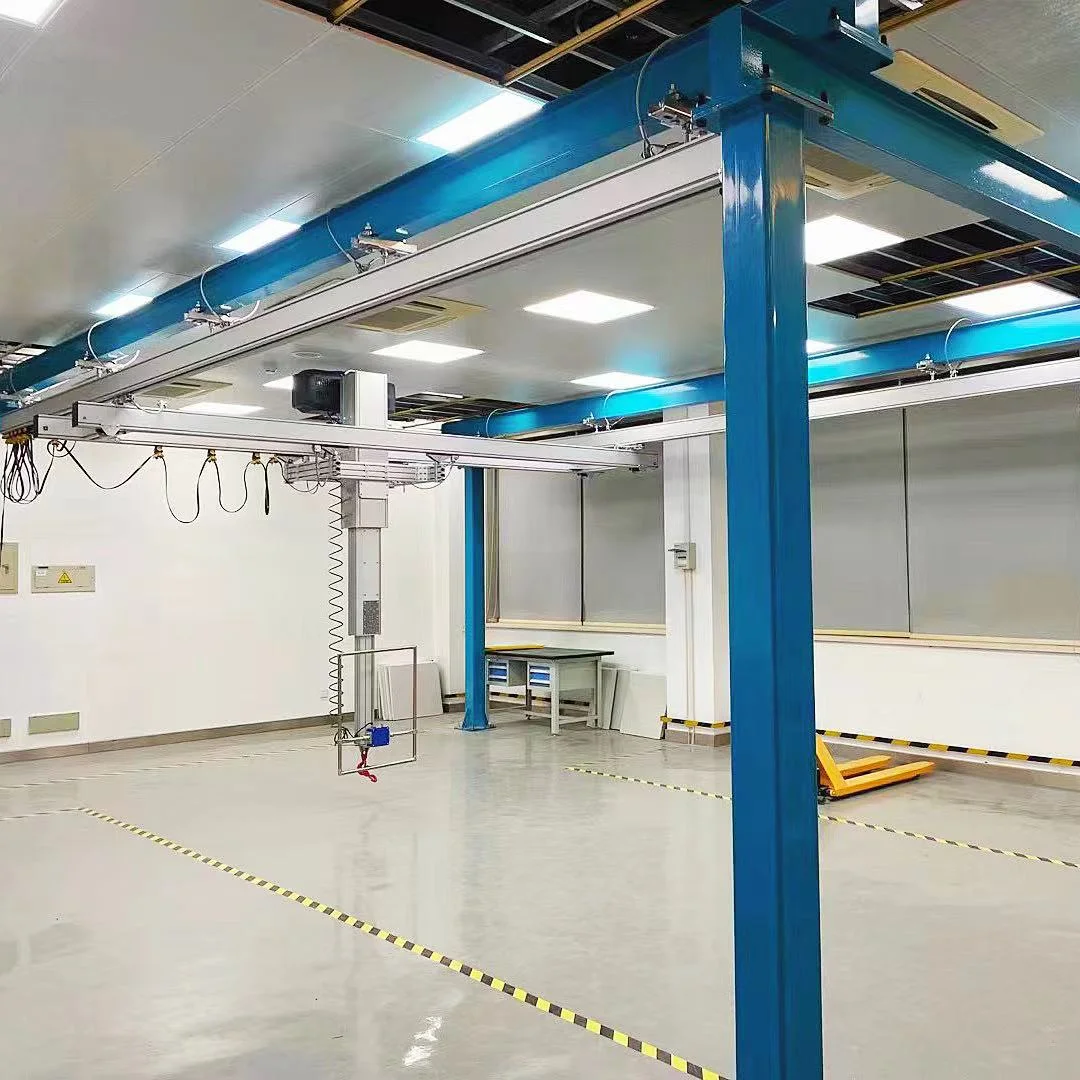
Across an area.
Or along a route.
Mark the pickup and placement points first. These layouts answer where the load needs to move; the support structure and track material come next.
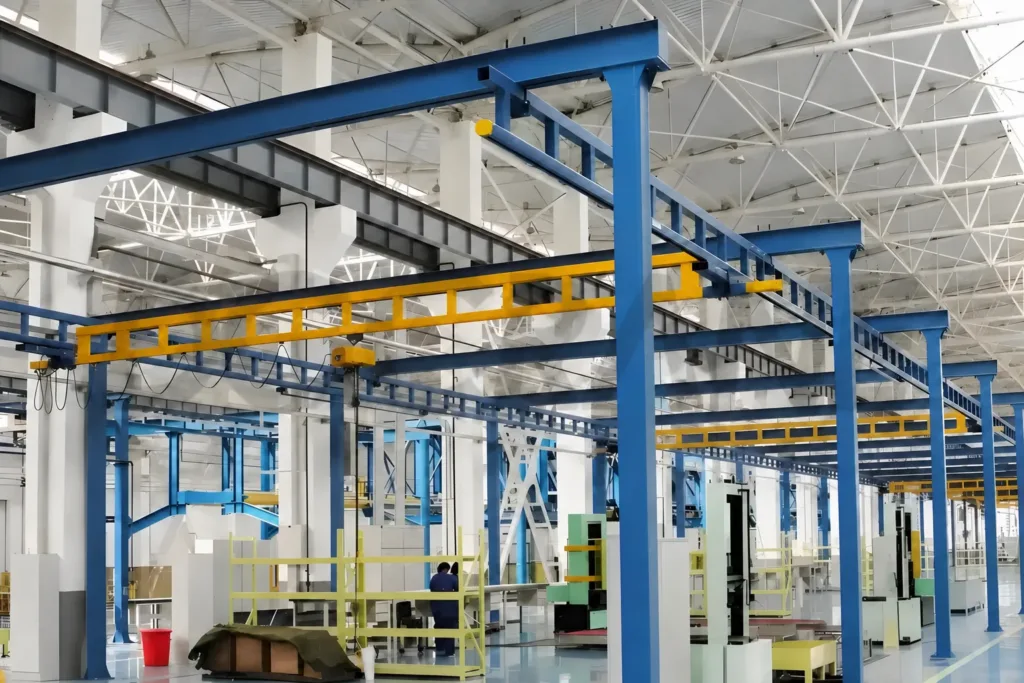
Bridge systems
A travelling bridge and trolley reach positions across a work cell. Useful when parts move between benches, machines and assembly positions.
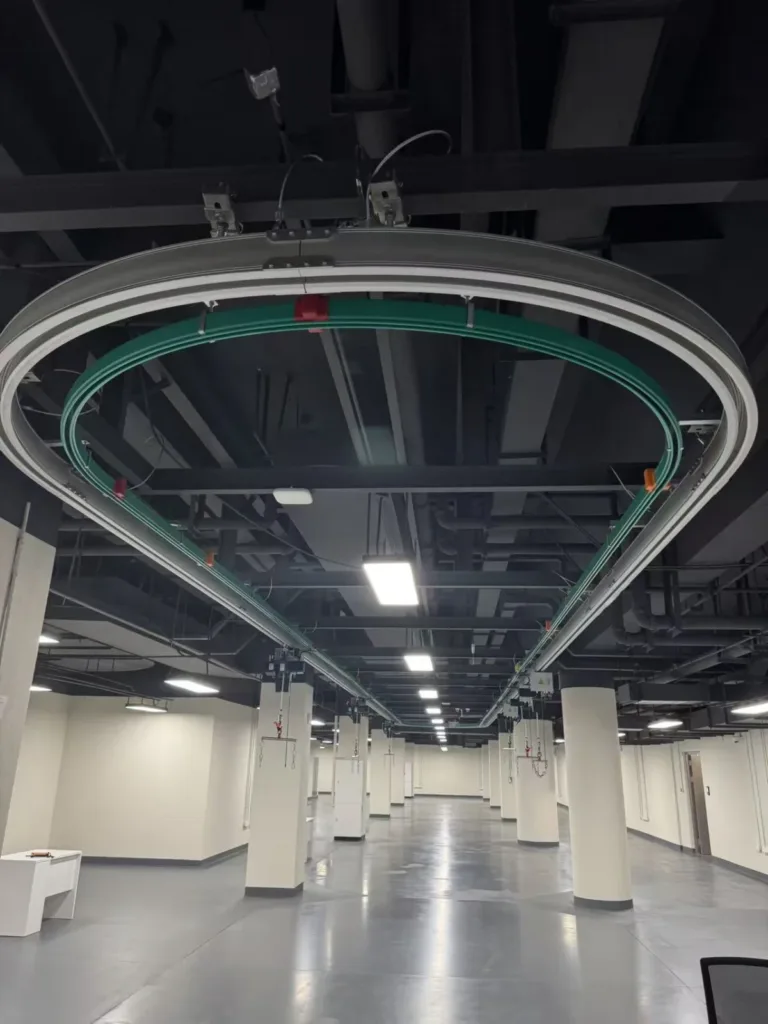
Monorail systems
A trolley follows one track between defined positions. The route may be straight or curved; this loop-track example serves a repeated test path.
What carries
the workstation?
A light track still transfers forces into the building or floor. Choose the support arrangement from the site information, then size the track for the actual load and suspension spacing.
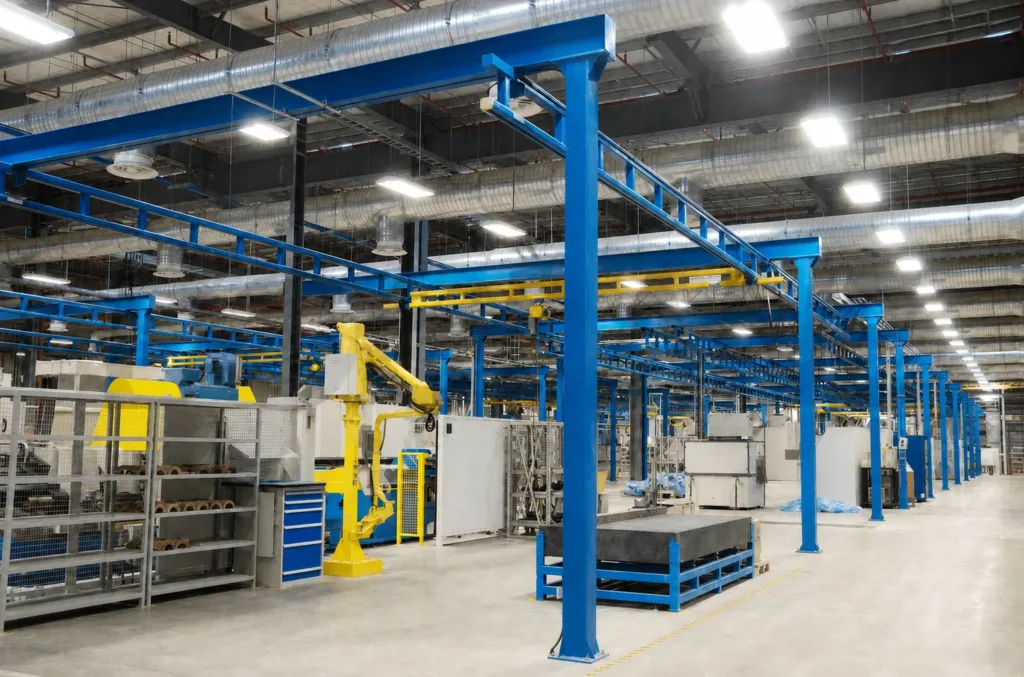
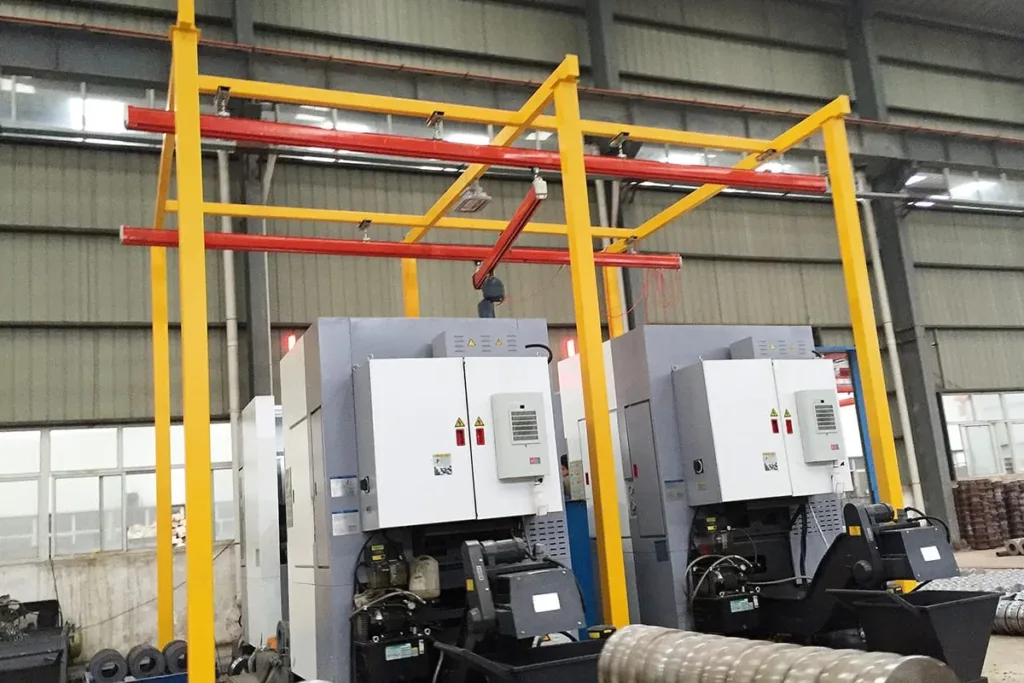
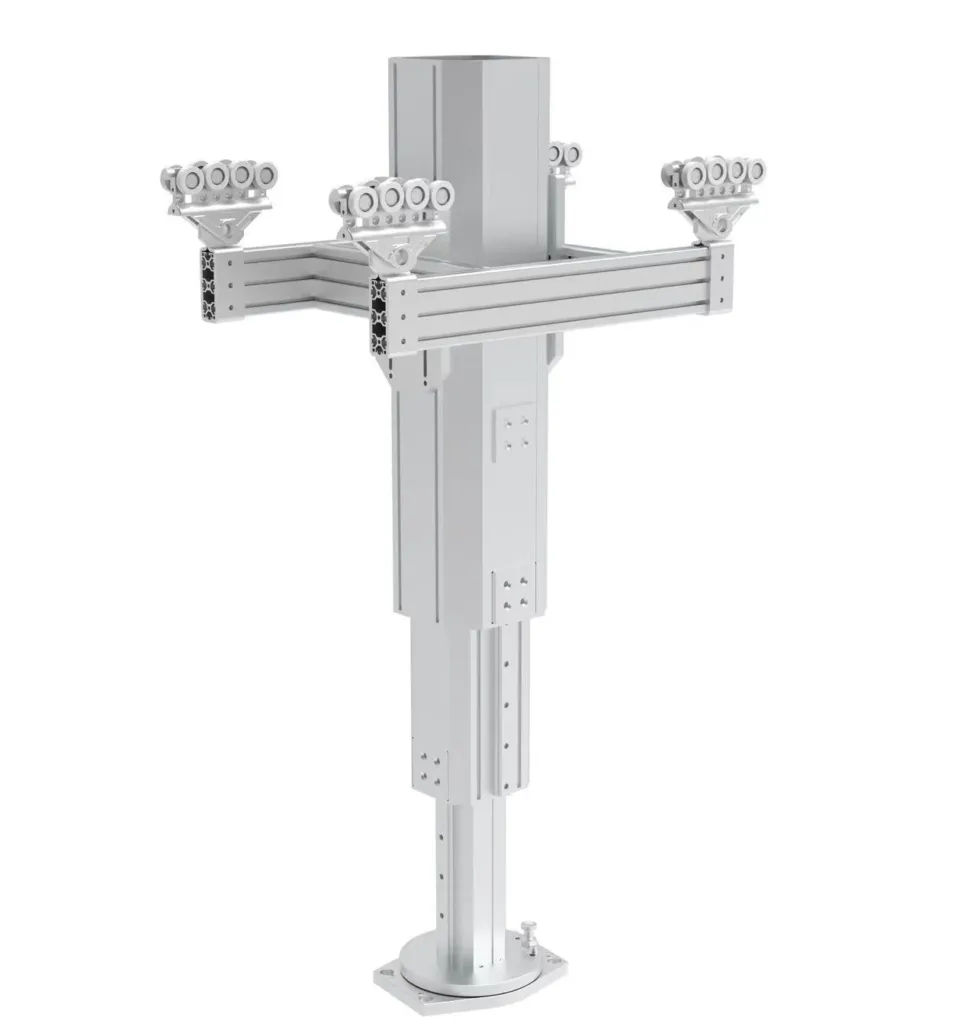
Freestanding frames
Dedicated columns carry the runways. Useful when the work cell needs its own structure or the building cannot provide suitable suspension points.
Check suitability
- Column positions, base plates and anchors must suit the verified slab or foundations.
- Allow for doors, aisles, machine maintenance and the complete movement of the load.
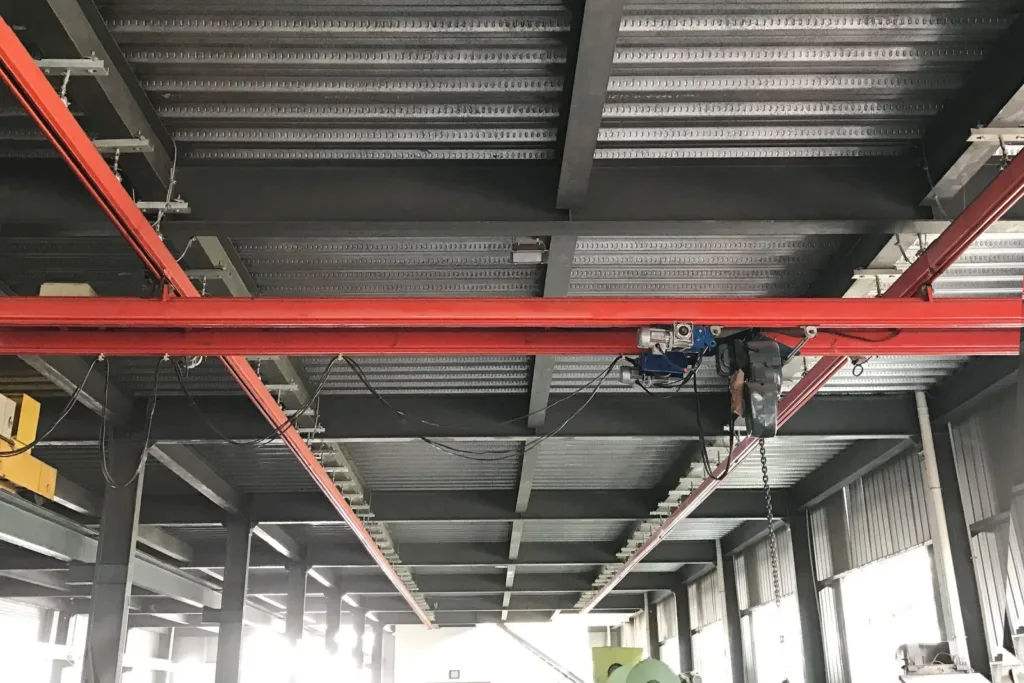
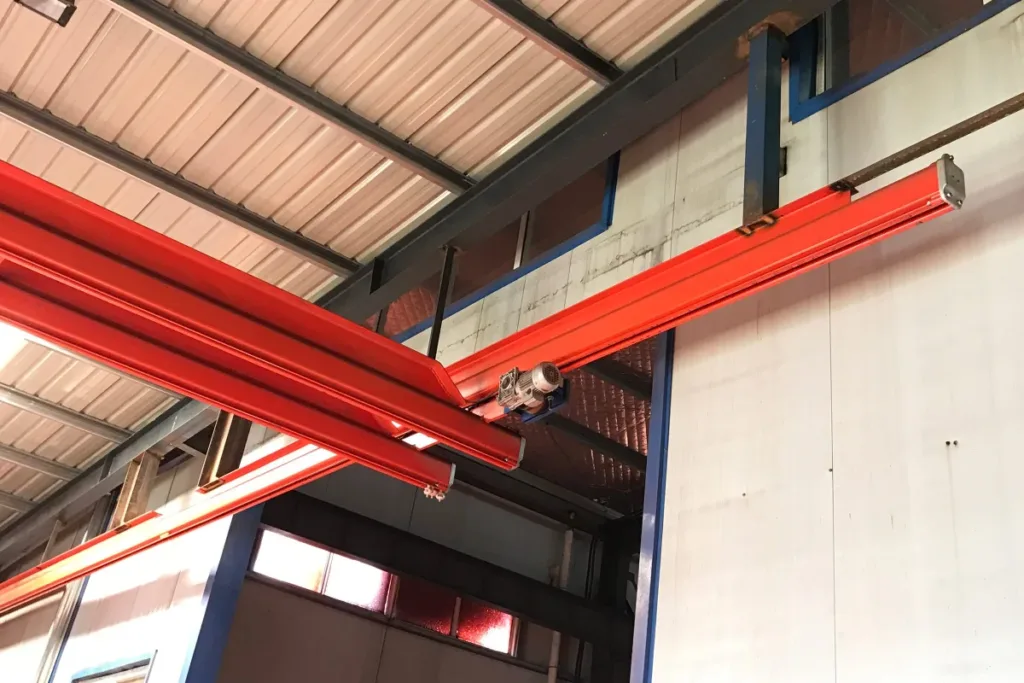
Suspended systems
Hang the track from verified overhead supports to keep floor space clear. Coordinate suspension positions with the building structure and services.
Check suitability
- Obtain support details and allowable reactions. Roof cladding and an available beam are not proof of suitability.
- Include the suspension, track, lifting device and attachment when assessing usable lifting height.
01Aluminium or steel track?
Aluminium track can reduce the mass of moving bridges and is widely used for manual workstations and tool handling. Steel track offers another modular system choice. A steel support frame can carry aluminium track. Compare the complete arrangement, including trolley design, operating force, support spacing and environment.
02Can we order the rails and components separately?
Ask for the required track sections, curves, joints, hangers, trolleys and end stops as a matched set. Provide an existing profile drawing or part identification for replacements. Similar-looking enclosed tracks are not necessarily interchangeable.
See how the system
carries the load.
Select a numbered component to see its role. This bridge-system example includes parts that a simple monorail does not need.
Same overhead principle.
Different work below.
The attachment and controls change with the job. These examples show why a lifting hook, tool-support arm and robot test suspension need different specifications.
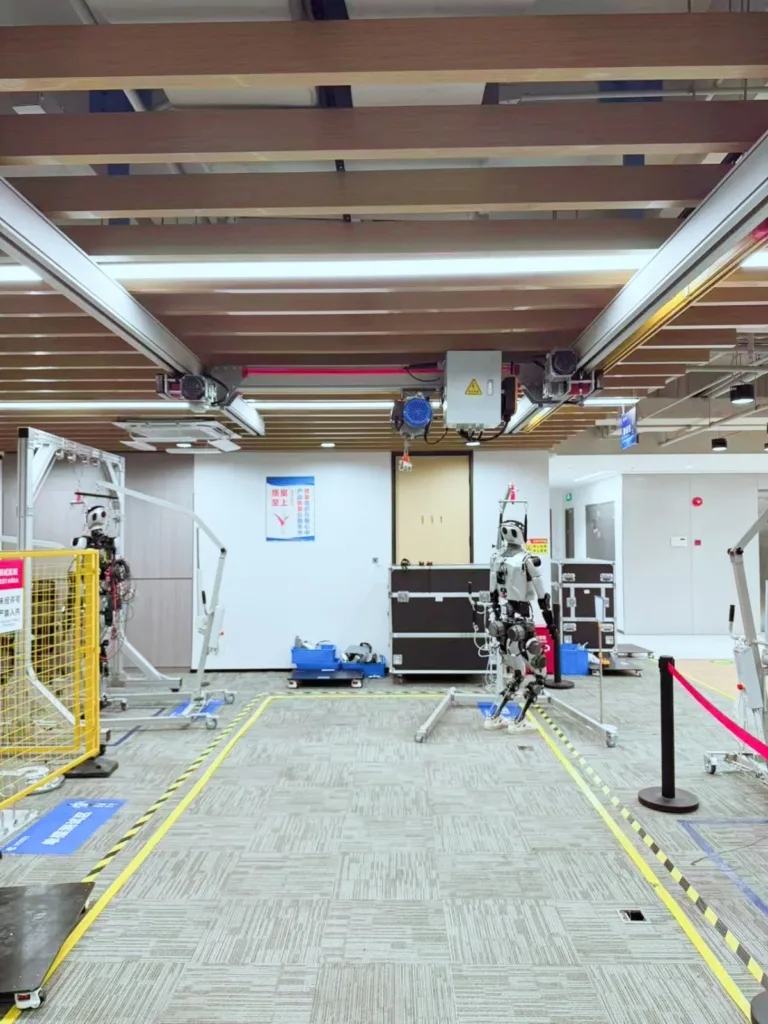
Humanoid robot support
Overhead tracks can carry a robot suspension during setup and testing. Bridge layouts cover a test area; loop tracks follow a repeated route.
Check suitability
- Share robot mass, attachment points, movement envelope and whether the rig supports weight continuously or restrains a fall.
- Following motion, arrest loads and emergency response require a designed system. An ordinary lifting hoist is not automatically a robot fall-protection device.
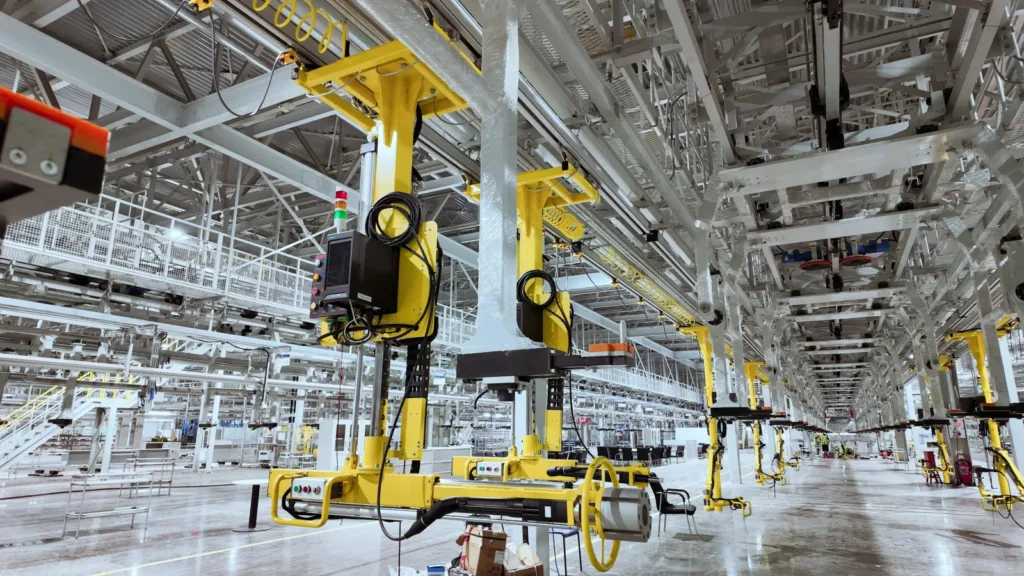
Present the part
Support a part while the operator brings it into an assembly. A dedicated gripping or balancing device can suit repeated positioning better than a hook alone.
Check suitability
- Review its weight range, grip surfaces, orientation changes and the required release action.
Support the tool
Carry a tightening tool above the work. A torque-reaction arm supports and guides the tool while providing a designed path for reaction forces.
Check suitability
- Specify reaction torque, vertical stroke, working positions and the tool mounting interface.
Load and service machines
Bring fixtures, components or service items to a machine without dedicating a large bay crane to the task.
Check suitability
- Show the machine opening, guards and final placement point. Check the attachment and hook can reach without fouling the machine.
Specify the parts
that must work together.
A track profile is only one part of the system. Drawings and component identification help establish compatibility before a quotation.
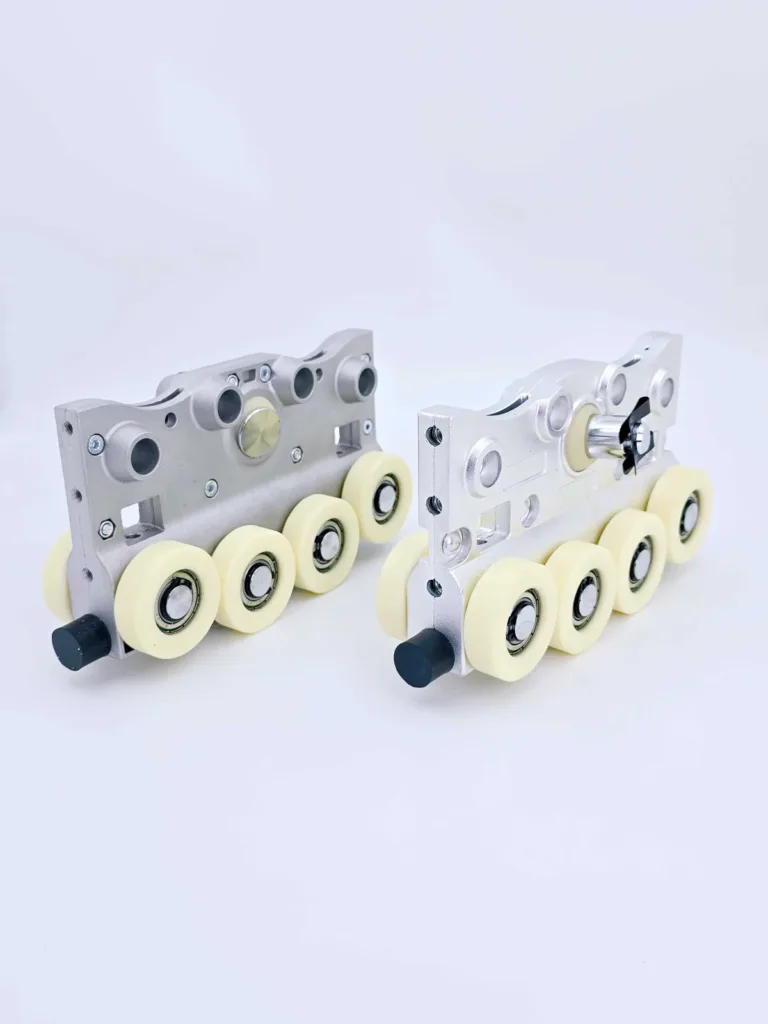
Track trolleys
Match the trolley wheels, track section and connection to the suspended equipment. Curves and paired-track arrangements need compatible trolleys.
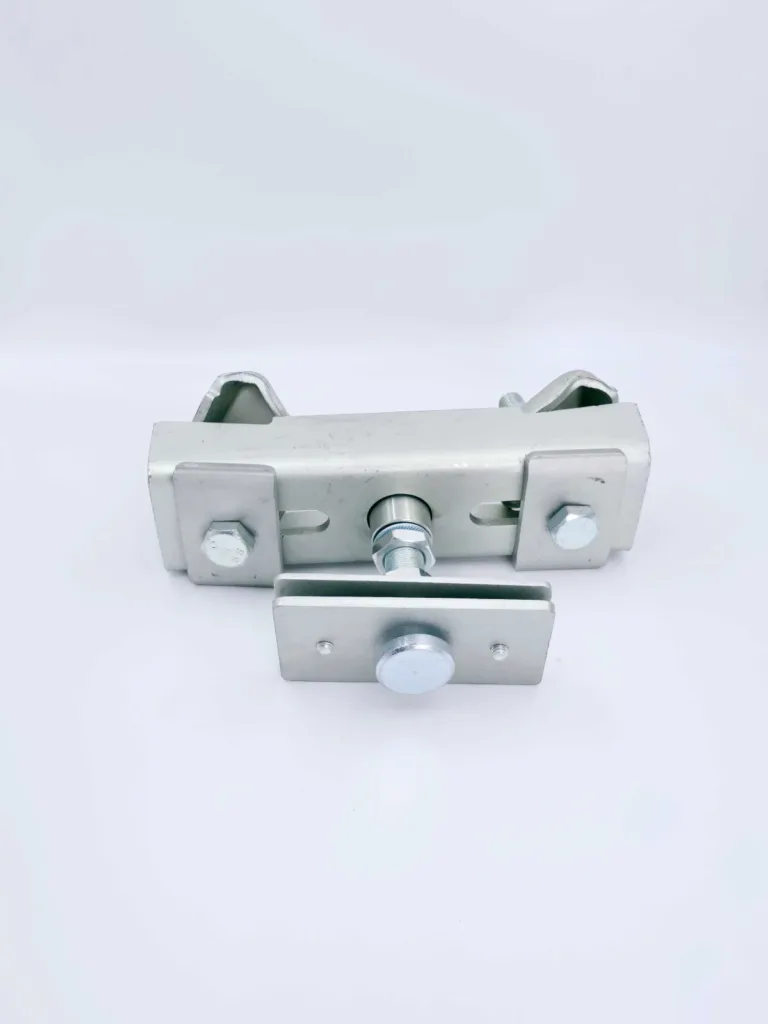
Suspension fittings
Connect the track to the supporting structure. Select the hanger and joint details around the support arrangement and permitted movement.
Torque arms
A telescopic arm guides the tool vertically and transfers reaction forces into its supporting arrangement. Specify stroke and torque as well as tool weight.
01Chain hoist, balancer or manipulator?
A chain hoist raises and lowers a suspended load. A balancer can support a load during frequent hand-guided positioning. A manipulator adds a defined gripping and handling arrangement. Choose from the load range, required movements, attachment and available electric or air supply.
02What information should a technical proposal include?
Request a layout with coverage and clearances, the specified load and operating conditions, track and support details, lifting-device data and the attachment interface. The quotation should identify responsibility for steelwork, anchors, power or air, installation and commissioning.
03Can the workstation move automatically?
Powered travel and automatic positioning can be considered when the task needs them. Define the route, positioning requirements, load behaviour and operator access first. A manual workstation photo does not establish automatic following or positioning performance.
Show the load.
Mark where it moves.
A work-area photo and a simple sketch are enough to start. We can review coverage, support options and the equipment needed for the task.
Discuss your workstation- Part, tool or test rig; weight range; attachment; frequency and required movements
- Pickup and placement points, coverage dimensions, usable height and nearby obstructions
- Floor or overhead support information, available power or air, and any existing track identification