
Quayside Container Cranes · STS
Move containers.
Between ship and shore.
Rail-mounted ship-to-shore cranes load and unload container vessels at the berth. Match the crane to the ships it must reach, the quay that supports it and the vehicles receiving each container.
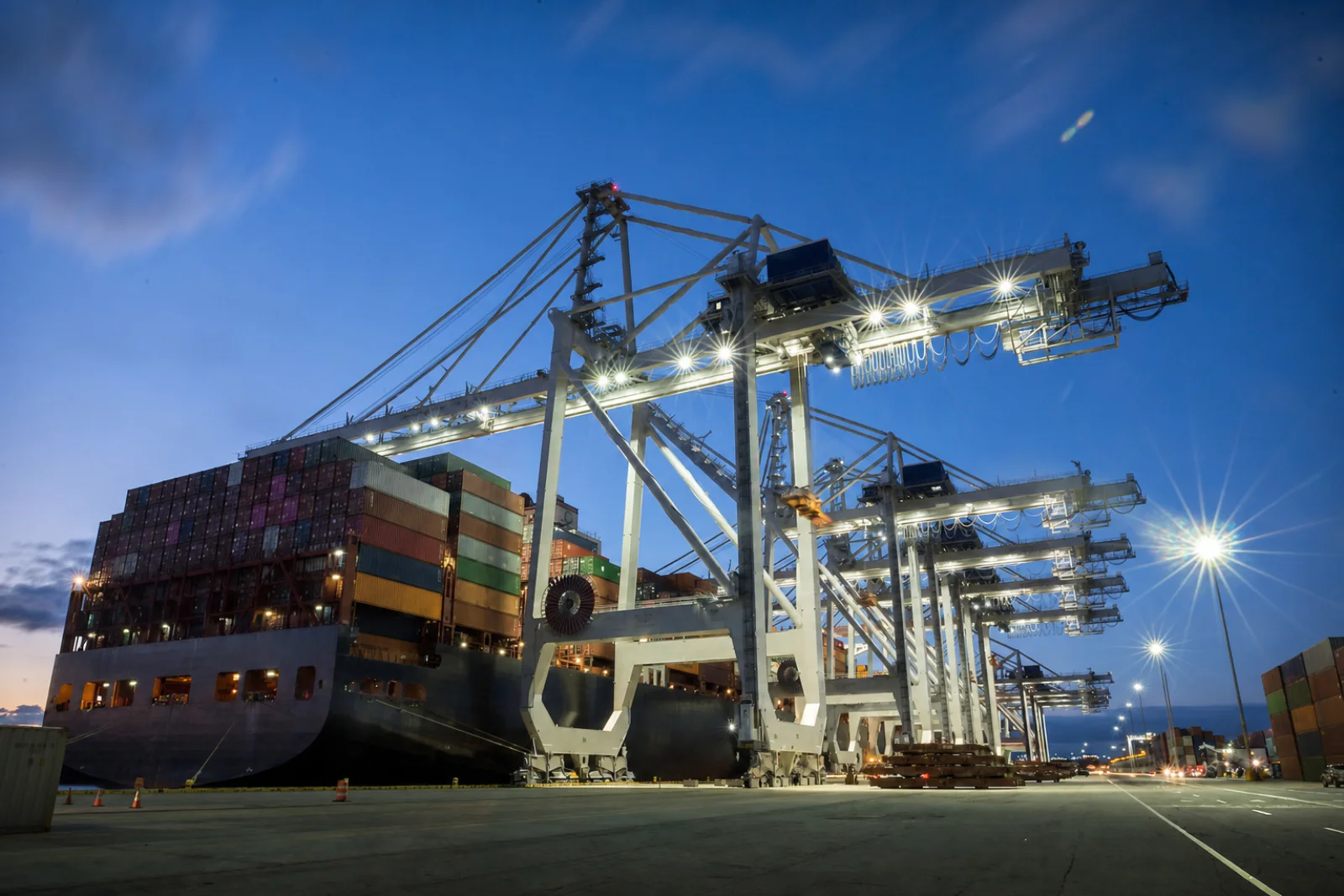
Reach the vessel.
Fit the quay.
Select a marker on this terminal view. These three interfaces establish the crane layout before lifting speeds or automation options are compared.
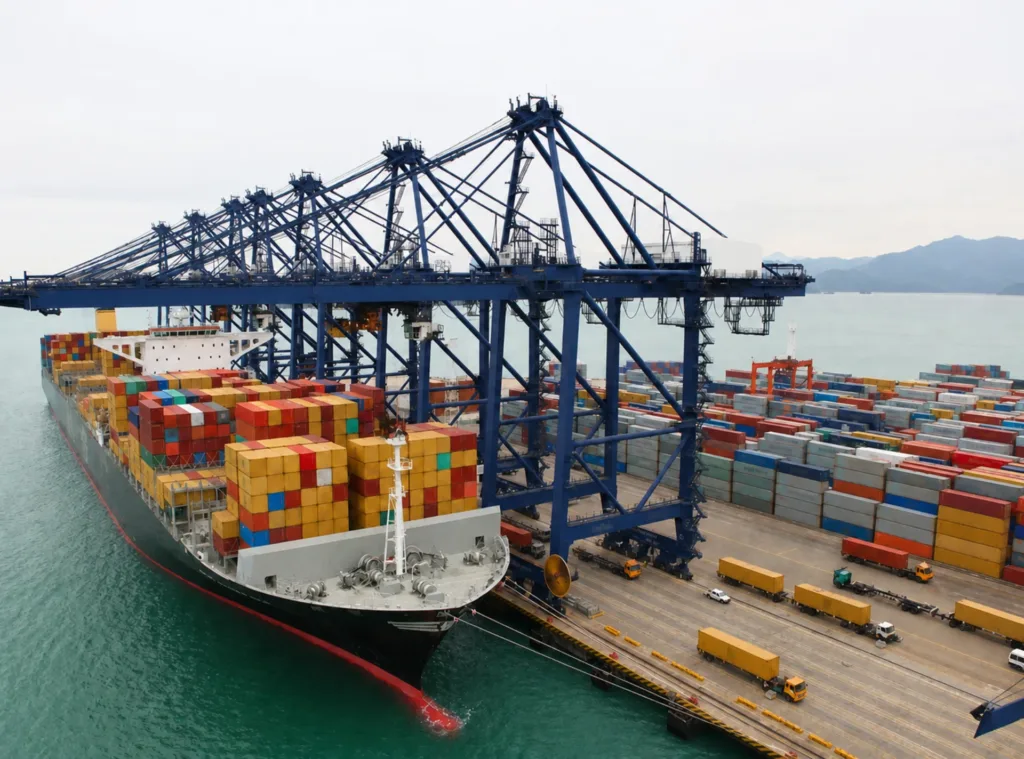
One transfer.
Or a divided cycle.
Trolley arrangement determines how the ship-side and vehicle-side movements connect. Container spreader capacity is a separate selection.
01Single lift, twin lift or tandem lift?
A single-lift spreader handles one container. A suitable twin-lift arrangement can lift a pair of 20-foot containers; tandem systems are a different multi-container arrangement. Confirm the container mix, combined weights, load distribution, spreader design and handling procedure. Two trolleys do not automatically mean two containers per lift.
02Cabin operation, remote control or automation?
Choose which movements remain operator-controlled and which are automated. Remote operation needs an effective camera view and feedback; automated transfer also needs positioning, protection and coordination with terminal vehicles and systems. Define how exceptions and recovery are handled rather than treating all three options as equivalent.
Define the crane.
Include its interfaces.
An equipment offer should show what is included at the berth and who provides the remaining work.
| Vessels and cargo | Target ships, container sizes and weights, deck and hold profiles, fender offsets and operating water levels. State any planned future vessel envelope. |
|---|---|
| Quay and services | Rail arrangement and allowable loads, travel limits, power connection, storm parking and site environmental conditions. Identify who verifies the quay structure. |
| Terminal operation | Receiving vehicles, handoff lanes, twistlock handling, operating hours and required cycle scenarios. Identify terminal-system interfaces and operator responsibilities. |
| Delivery and support | Transport and erection route, site lifting access, commissioning responsibilities, operator training, service access, documentation and initial spare parts. |
01Which functions should be reviewed with the equipment proposal?
Review container engagement and release indications, load protection, spreader positioning and the applicable collision-protection functions. Agree working and parked wind conditions, storm restraint, access and recovery arrangements for the selected crane and berth.
02What makes a useful acceptance test?
Define the test loads, vessel and landside positions, operating mode and required handoff sequence. Verify the agreed crane functions and terminal interfaces, including interruption and recovery. Assess any productivity target against stated operating conditions and vehicle availability, not hoist speed alone.
Resolve the scope
before fixing a specification.
These distinctions keep the enquiry focused on the right equipment.
01Is an STS crane the same as a container yard crane?
No. An STS crane transfers containers across the ship-to-shore interface at the berth. RTG and RMG yard cranes stack or transfer containers in the yard. Their operating envelopes and civil interfaces are different.
02Can a larger crane be added to an existing quay?
Only after checking the existing structure and layout against the proposed crane loads and dimensions. Rail spacing, wheel loads, power, clearances and storm restraint all need review. A suitable outreach does not establish that the berth can support the crane.
03Does higher lifting speed guarantee more container moves per hour?
No. Actual output also depends on vessel stowage, trolley travel, positioning, twistlock work, vehicle readiness and interruptions. Compare performance using the same defined working cycle and terminal conditions.
Plan the wider terminal.
Explore yard handling, horizontal transport and other port equipment alongside the quayside crane.
View port equipmentSend the vessel profile.
Show the berth.
Share the drawings and operating information available. We can review the crane arrangement and identify the inputs needed for a project-specific proposal.
Discuss a quay crane- Target ships, container mix, deck and hold profiles, and operating water levels
- Quay drawings, rail arrangement, allowable loads, power and site conditions
- Receiving vehicles, handoff locations, operating mode and delivery requirements