
Metal Stock Handling Cranes
Move the stock.
Protect its value.
Cranes for coils, plate, slabs and long products. Match the lifting attachment, storage layout and handling cycle to the stock you move.
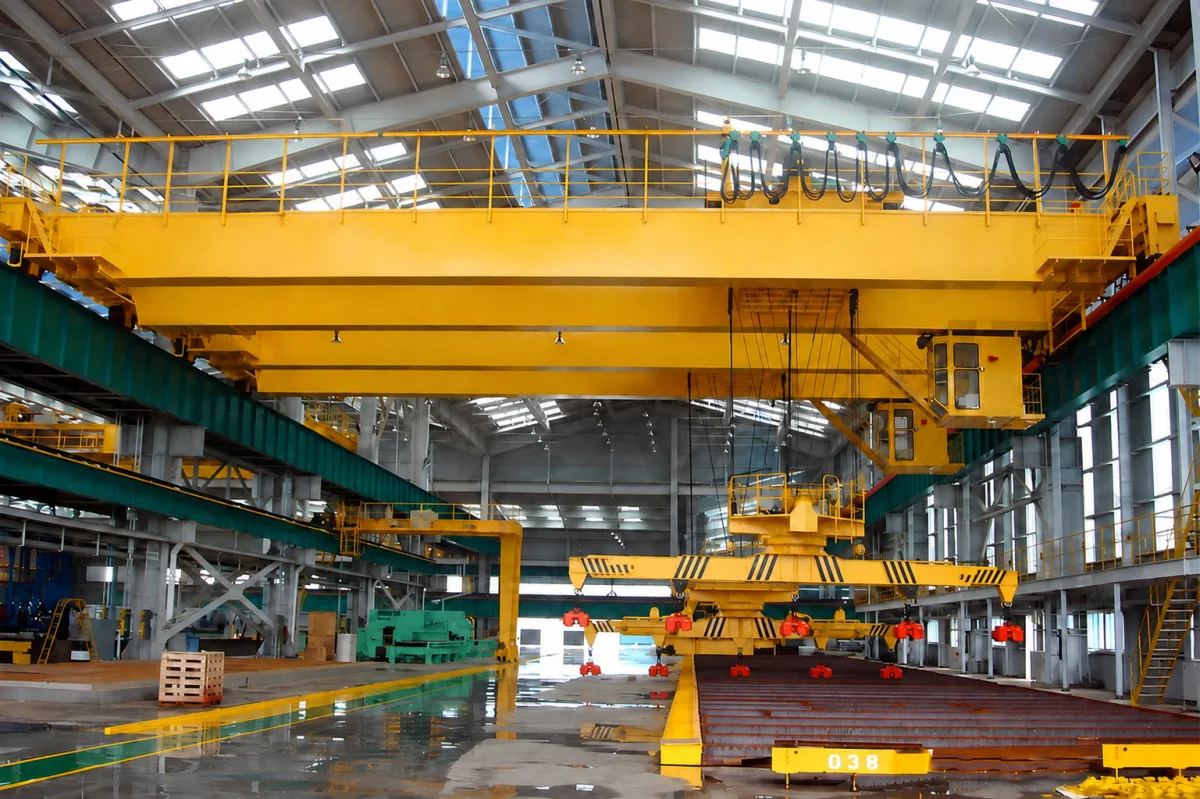
Start with the shape of the load.
Coils, flat products and long stock need different pickup arrangements. Choose the load first, then the crane and attachment.
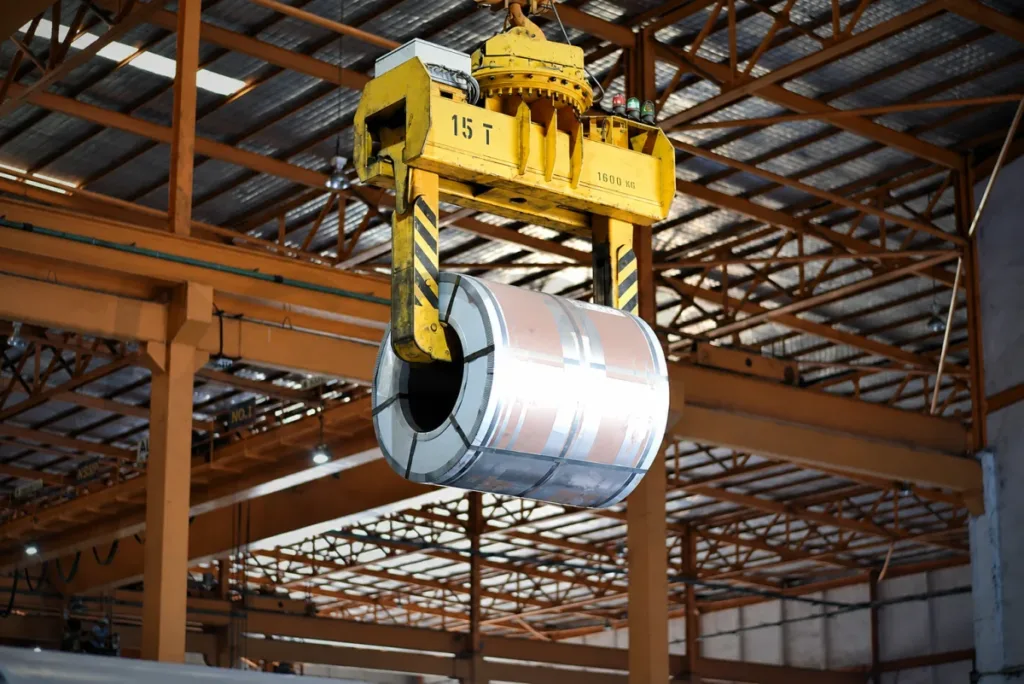
Coils
Match the pickup to the coil eye. Size, surface finish and access between stored coils determine the attachment.
View attachment & conditions
- Compare a coil tong or C-hook for the actual eye direction, dimensions and lifting task. Neither suits every coil arrangement.
- Allow space to engage and release the attachment. Identify any rotation needed between storage, transport and the processing line.
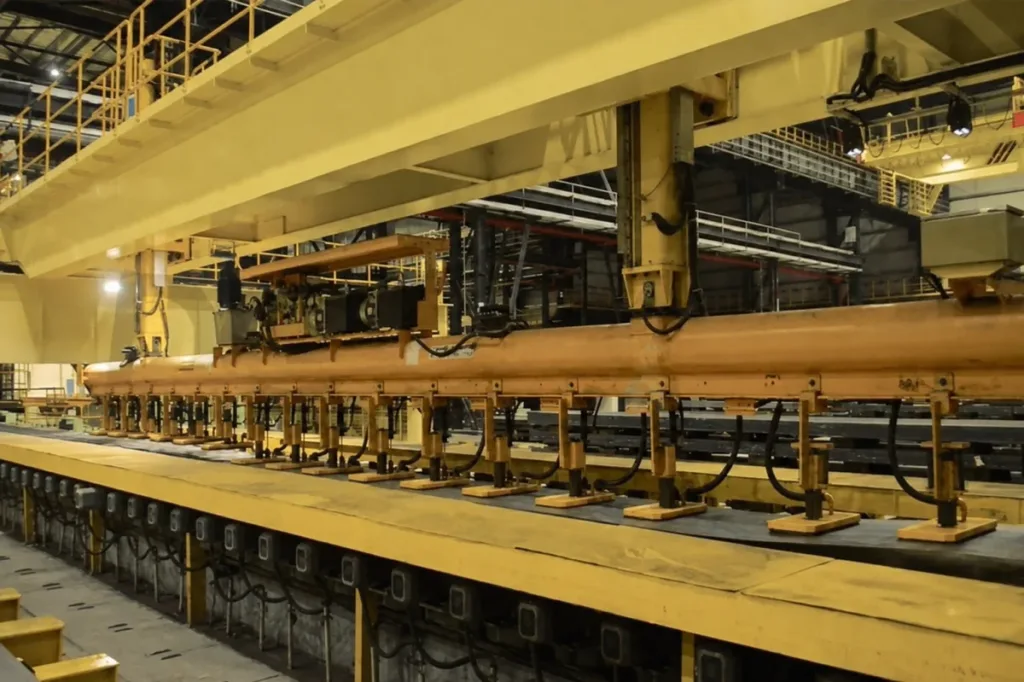
Plate and sheet
Specify single-sheet or grouped pickup. The lifting method must suit the material, thickness and surface.
View attachment & conditions
- Separating one sheet requires a suitable lifting arrangement and pickup checks; it is not guaranteed by a general plate-crane description.
- Match pickup spacing to plate size and support needs. Surface condition and any gap at the contact affect selection.
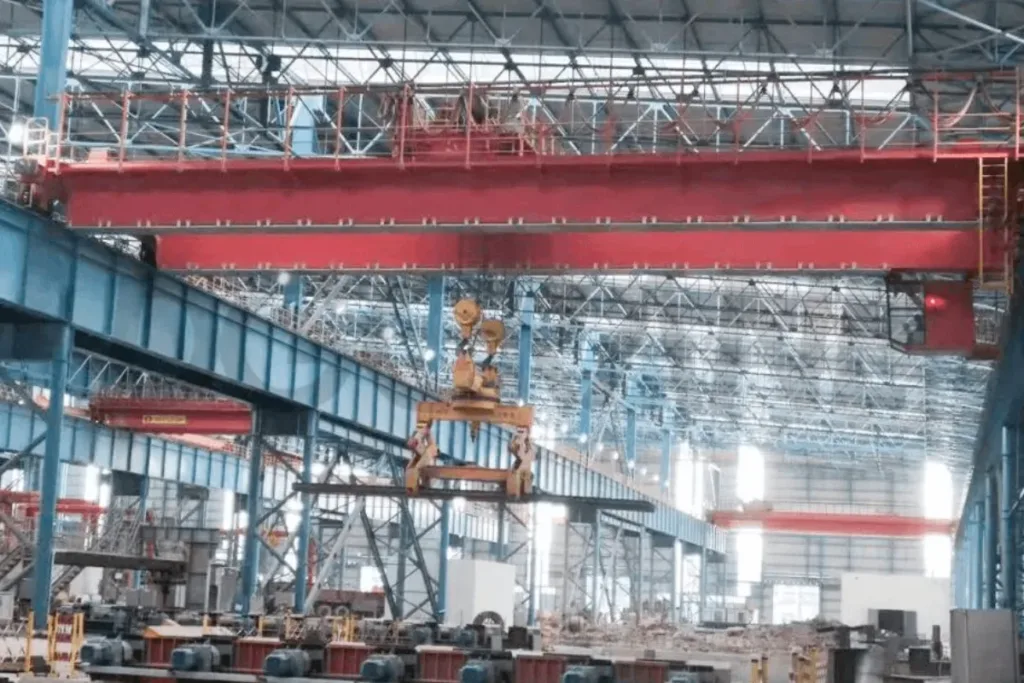
Solid slabs
Transfer and stack solid slabs. Actual stock temperature, gripping dimensions and the route define the equipment.
View attachment & conditions
- Provide the slab temperature range and dimensions so the attachment and surrounding crane equipment can be selected together.
- Show the pile arrangement, pickup clearance and receiving position. Molten-metal handling is a different duty.
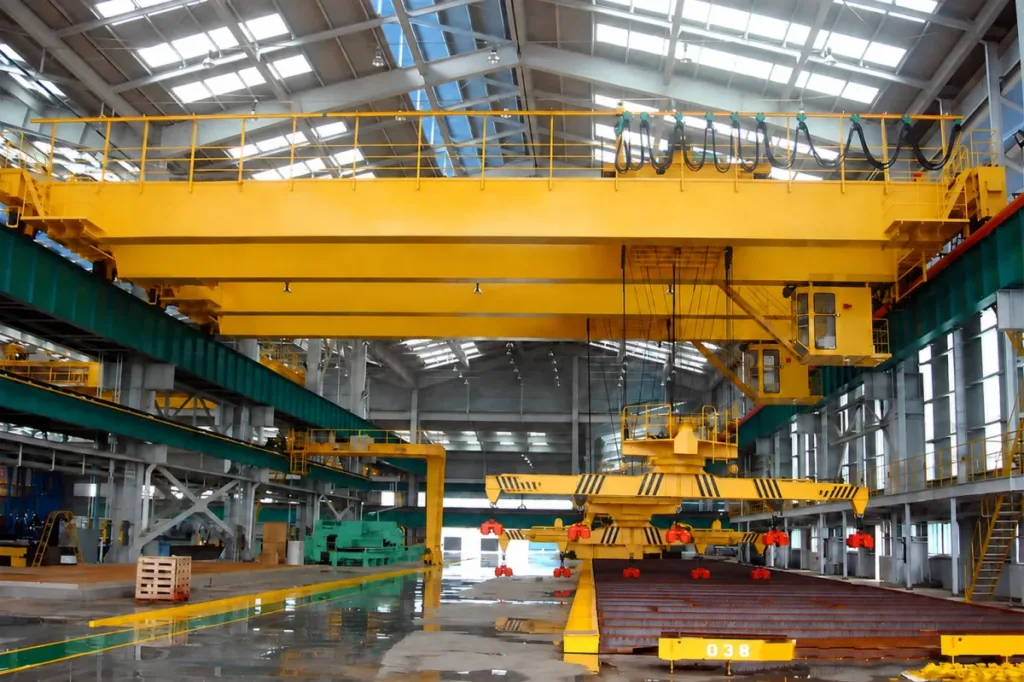
Long products
Support bars, sections or bundles along their length. Leave room to turn and place the complete load.
View attachment & conditions
- Select the lifting beam and attachment around load length, balance and support. Magnetic pickup is an option only for suitable stock.
- The full load envelope matters during rotation and setdown, including nearby stock, vehicles and structures.
Material and contact change the choice.
Magnetic lifting requires suitable ferromagnetic stock. Aluminium is not suitable; stainless steels vary. Do not select a magnet from load weight alone.
Spread the pickup across the load.
Plate dimensions and the handling task determine the pickup arrangement. A single sheet and an agreed stack are different requirements; specify which the system must handle.
One agreed handling package.
Fissure Tech is your contract partner for the agreed equipment and delivery scope. We coordinate the crane, attachment and controls with your storage or processing equipment team.
01Equipment and storage interfaces
The proposal identifies the crane, lifting attachment, controls and processing-line or warehouse interfaces. Manufacturing partners are audited on site before cooperation.
02Site work and commissioning
Runway work, erection, power connections and machine modifications are assigned in the proposal. Installation supervision and commissioning support can be included in the agreed scope.
03Tests and handover
Agree equipment checks and installed handoff trials for the selected duty. Handover includes the agreed drawings, manuals and inspection or test records.
Before you specify the system.
Pickup requirements and warehouse interfaces can change the scope.
01Should we use coil tongs or a C-hook?
Compare the coil eye direction, size range, weight, surface finish and available access. Both are possible for suitable tasks, but neither fits every coil or storage arrangement. Include any need to turn the coil.
02Can the crane pick one sheet from a stack?
That requirement must be specified. The lifting system needs to suit the sheet thickness and surface and provide the agreed separation and pickup checks. A general plate-handling description does not establish single-sheet capability.
03Can it connect to our warehouse system?
A suitable control package can exchange handling tasks and stock-position data. Define the interface, operating zones, positioning needs and manual recovery process. Automation is a project option, not a feature of every stock crane.
Show us the stock.
Mark the pickup and destination.
Start with a stock photo or drawing and your storage layout. We can discuss the attachment, crane arrangement and missing information needed to develop a proposal.
Discuss your crane- Material, weight and size ranges, temperature and surface condition
- Storage positions, pickup and destination, clearances and existing crane
- Single or grouped pickup, handling rate and required automation