
Paper, Roll & Woodyard Crane Systems
From the woodyard
to the finished roll.
Cranes for log handling, paper-machine maintenance and roll transfers. Match the lifting arrangement to the load and the place it needs to go.
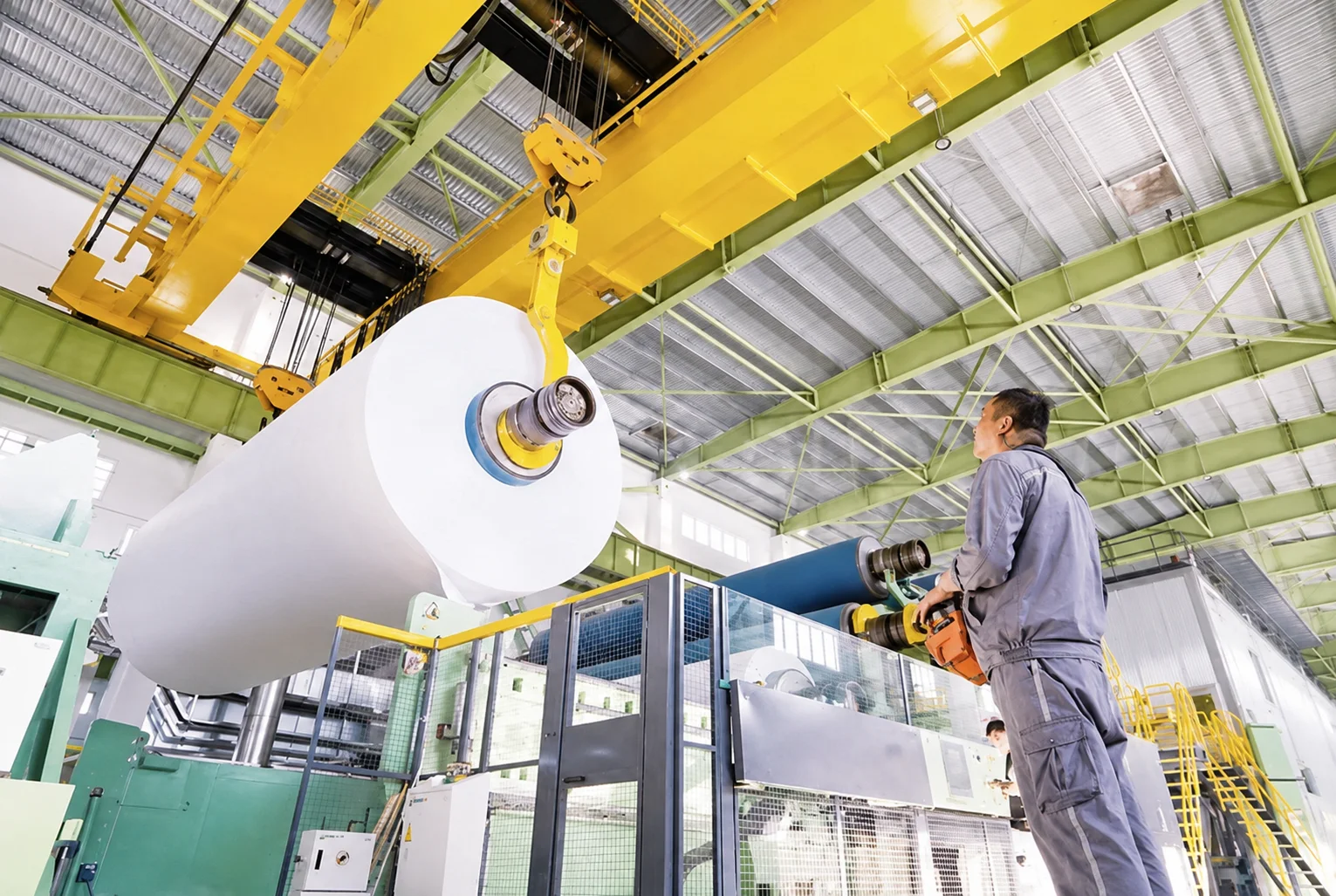
Which job does your crane do?
Four common mill applications. Maintenance lifts and regular production transfers need different arrangements.
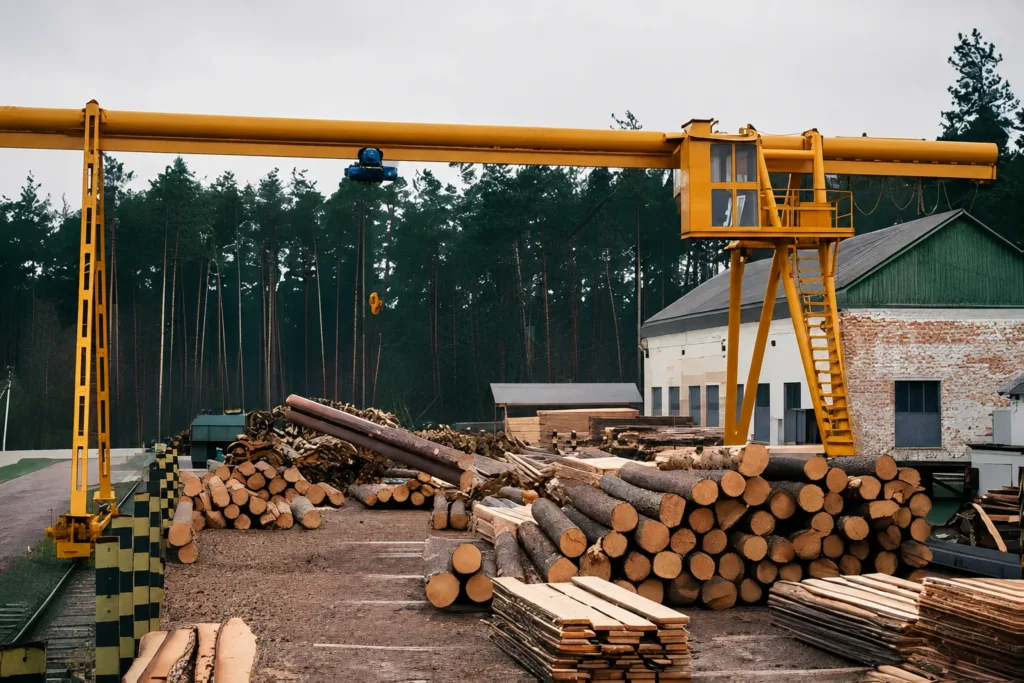
Log handling
Unload, stack and feed logs or bundles. The attachment follows the timber size and the yard layout.
View equipment & conditions
- Match the grab or lifting device to log length, bundle size and pickup conditions.
- Check the unloading route, stack access and outdoor operating conditions.
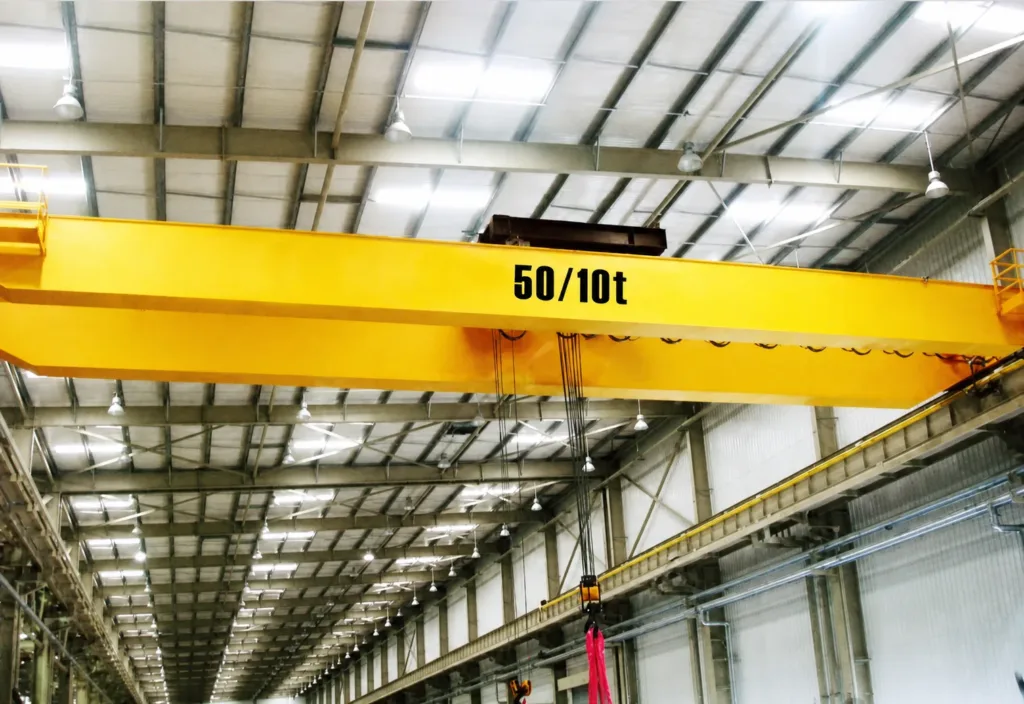
Machine service
Remove rollers and machine components during maintenance. Lifting points and the removal route determine the arrangement.
View equipment & conditions
- Use the machine drawings to identify lifting points and the space needed to engage the attachment.
- Check the route to the service position and the headroom above the component, including any shared lifting duties.
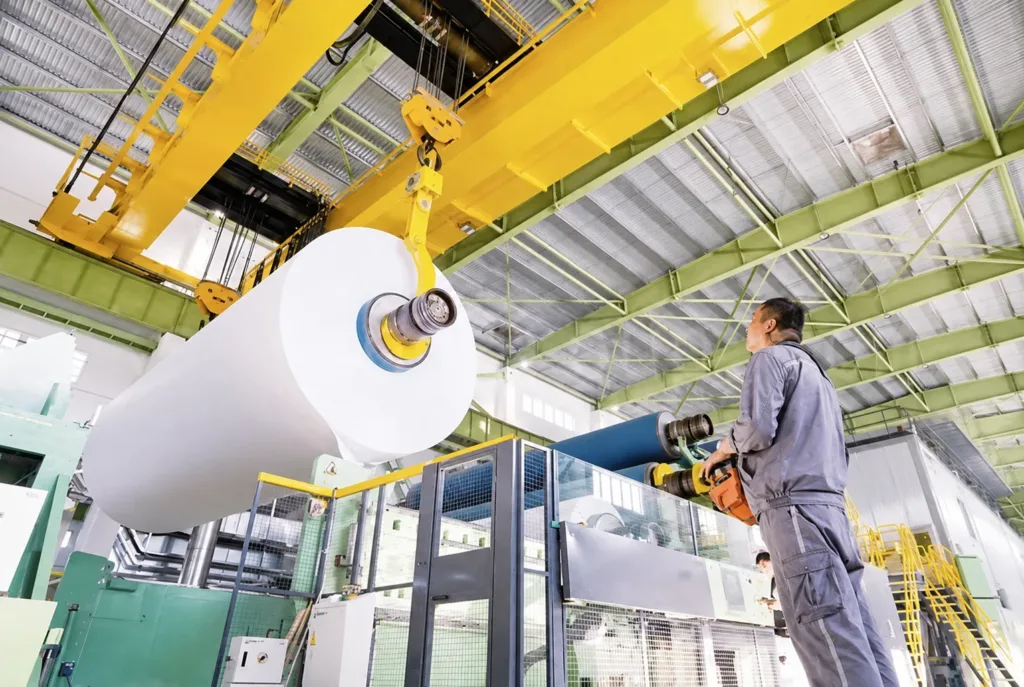
Parent-roll transfer
Move full parent rolls and return empty reel spools. The pickup arrangement must fit the spool ends and receiving stands.
View equipment & conditions
- Hook spacing and any coordinated hoists follow the lifting points. Separate hoist ratings cannot simply be added.
- Include the full-roll transfer, empty-spool return and the machine handoff when defining the handling rate.
Finished-roll handling
Store and retrieve finished rolls. Roll orientation, wrapping and allowable surface contact determine the gripper.
View equipment & conditions
- Confirm the permitted contact pressure or suitable sealing surface. Paper grade, porosity and wrapping affect the choice.
- Identification, storage locations and conveyor handoffs must agree with the warehouse system. Define how interrupted tasks are recovered.
The roll changes. So does the attachment.
A parent roll, a machine roller and a wrapped finished roll are different lifting tasks.
Protect the roll at the pickup.
This mechanical gripper contacts the outside of an upright roll. The permitted pressure, wrapping and roll condition affect selection. A parent roll on a reel spool uses a different pickup interface.
One agreed equipment package.
Fissure Tech is your contract partner for the agreed delivery scope, coordinating the crane, attachment and controls with your mill equipment team.
01Equipment and mill interfaces
The proposal identifies the crane, lifting attachment, controls and machine or warehouse interfaces. Manufacturing partners are audited on site before cooperation.
02Site work and commissioning
Runway work, erection, power connections and machine modifications are assigned in the proposal. Installation supervision and commissioning support can be included in the agreed scope.
03Tests and handover
Agree equipment checks and installed handoff trials for the selected duty. Handover includes the agreed drawings, manuals and inspection or test records.
Before you specify the crane.
Resolve the load interface and operating duty before choosing the final configuration.
01What is the difference between wet-end and dry-end crane duties?
Wet-end work commonly involves paper-machine maintenance, including access for changing machine components. Dry-end and winder duties include full parent-roll transfers and empty-spool returns. Confirm the actual tasks and backup duties for each crane.
02When is vacuum lifting suitable for paper rolls?
It depends on the roll-end surface, paper grade, porosity and wrapping. Verify the seal and lifting conditions with the attachment supplier. Specify vacuum monitoring and the response to a loss of power or suction; do not assume all rolls are suitable.
03Can roll storage be automated?
An agreed system can coordinate roll identification, storage positions and conveyor handoffs. Define the required handling rate, warehouse software interface and recovery procedures. Automation is a project option, not a standard feature of every paper crane.
Show us the load.
Mark the pickup points.
Start with a load photo or drawing and the mill layout you have. We can discuss a suitable lifting arrangement, the interfaces involved and the missing information needed for a proposal.
Discuss your crane- Roll, spool or machine part: weight, dimensions and pickup points
- Pickup, destination, available headroom and existing crane details
- Production transfers or maintenance lifts; required handling rate