
Transfer Carts & Heavy-Duty AGVs
Move heavy loads.
Connect the workstations.
Move dies, coils and large assemblies between bays, stores and production stations. Compare rail carts, steerable platforms and driverless vehicles around your load and route.
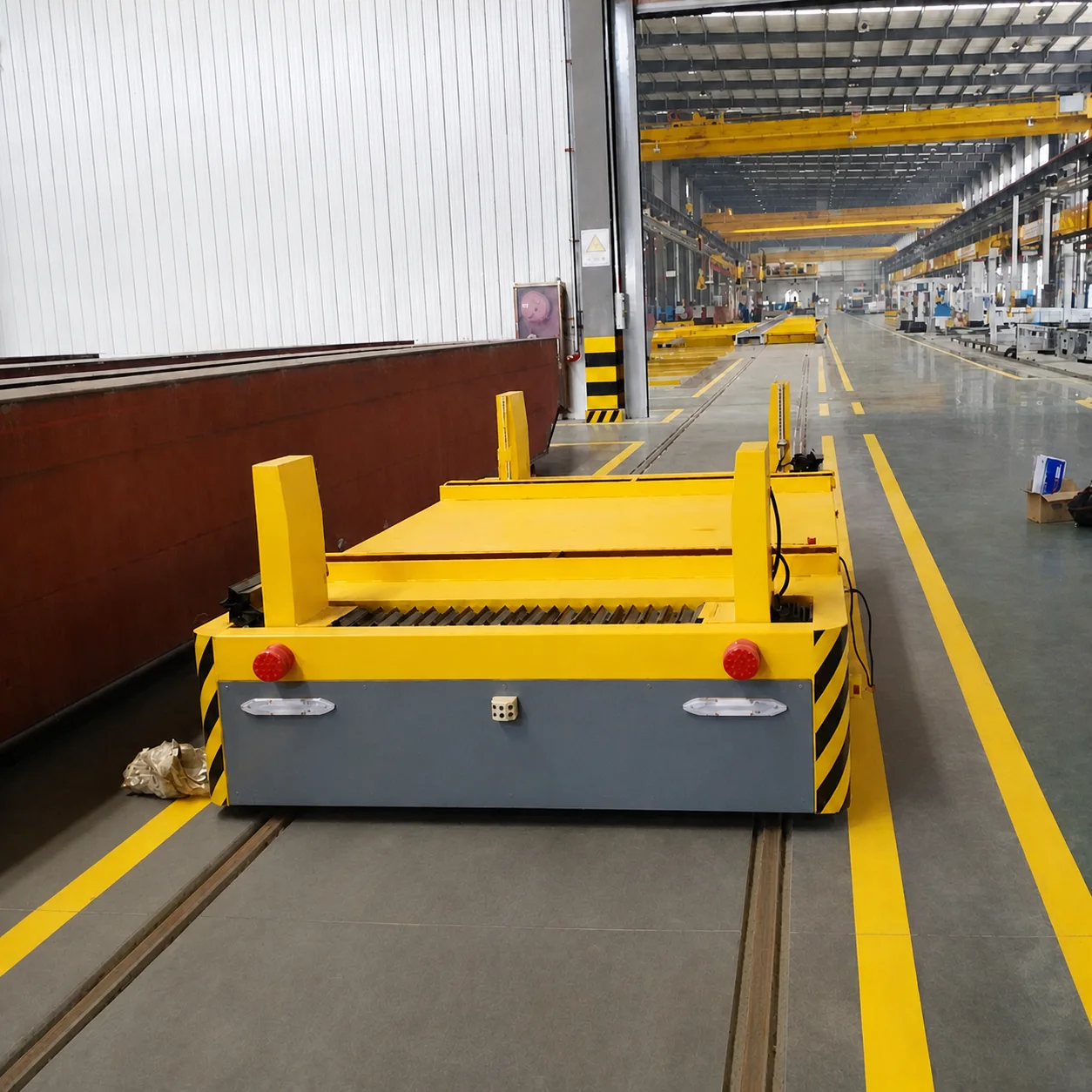
Rails or floor?
Operator or automatic?
These are four common purchase options. An automated RGV is a rail vehicle with an automatic task sequence; a trackless cart can still be driven by an operator.
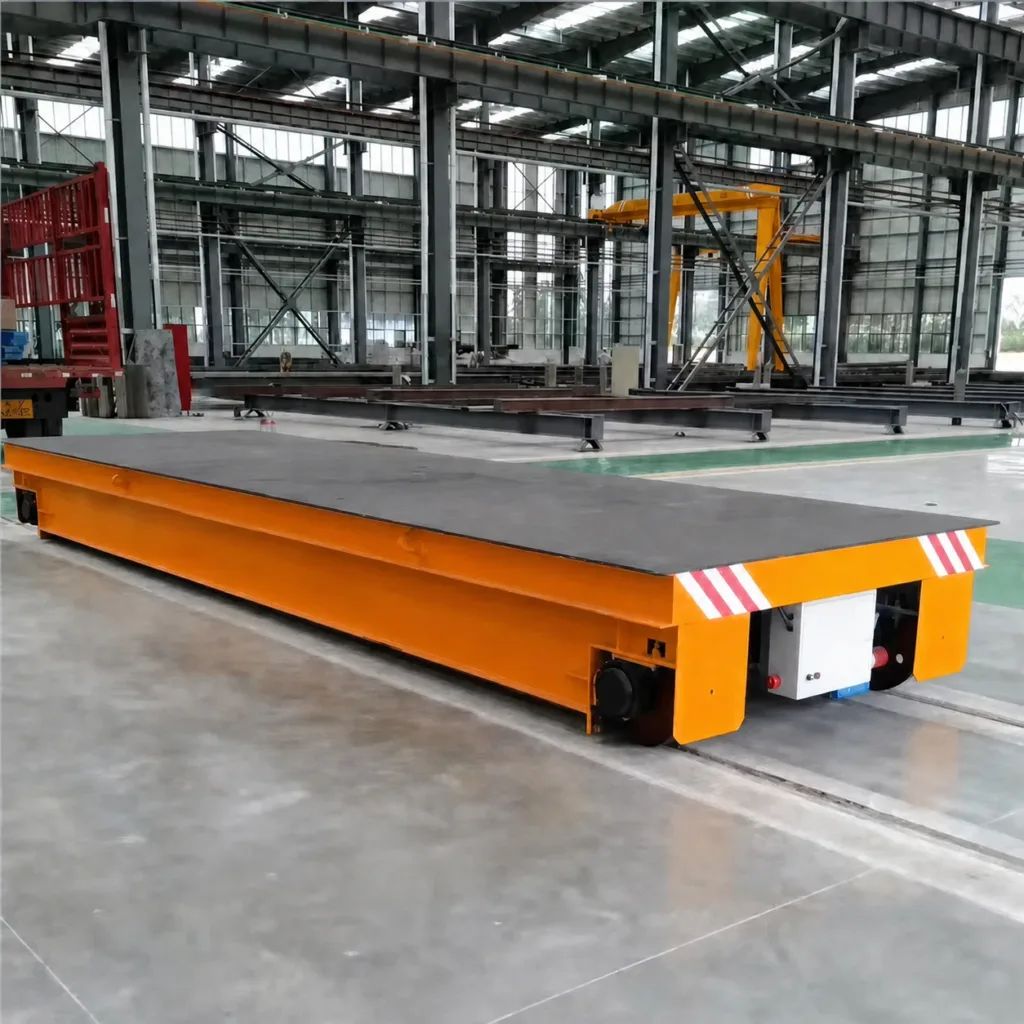
Rail transfer carts
A fixed route between crane bays or work areas. The cart carries the load on floor-mounted rails; the operator commands the move.
Check suitability
- A repeated route with defined endpoints and space to install rails. Loading can remain with a crane or forklift.
- Review rail installation, crossings, stopping points and power supply. Changing the route may require civil work.
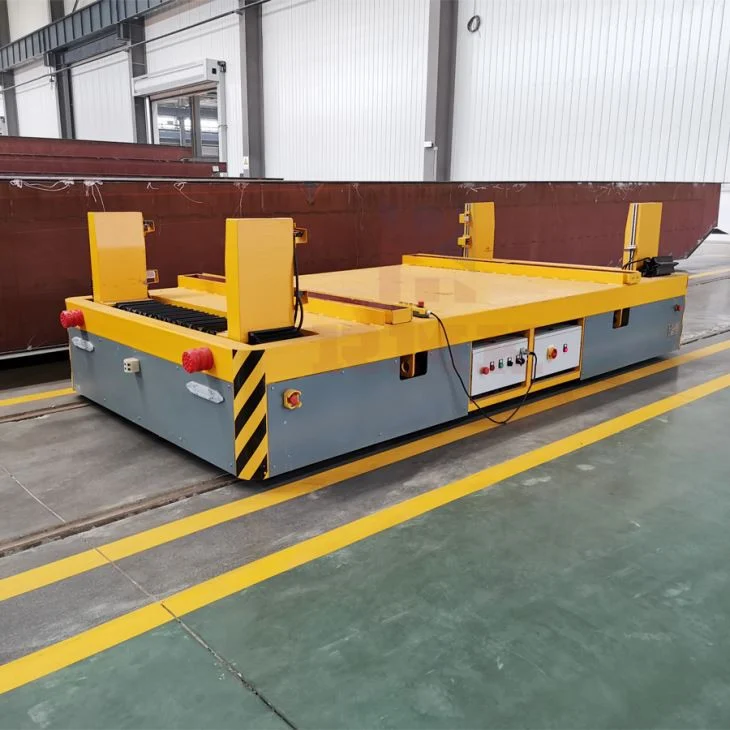
Automated RGVs
Repeat transfers between defined stations, with stopping positions and equipment signals built into the cycle.
Check suitability
- A repeat production transfer where the vehicle and receiving station can exchange ready and completion signals.
- Define loading, unloading and interrupted-cycle recovery. Automatic travel alone does not automate the handoff.
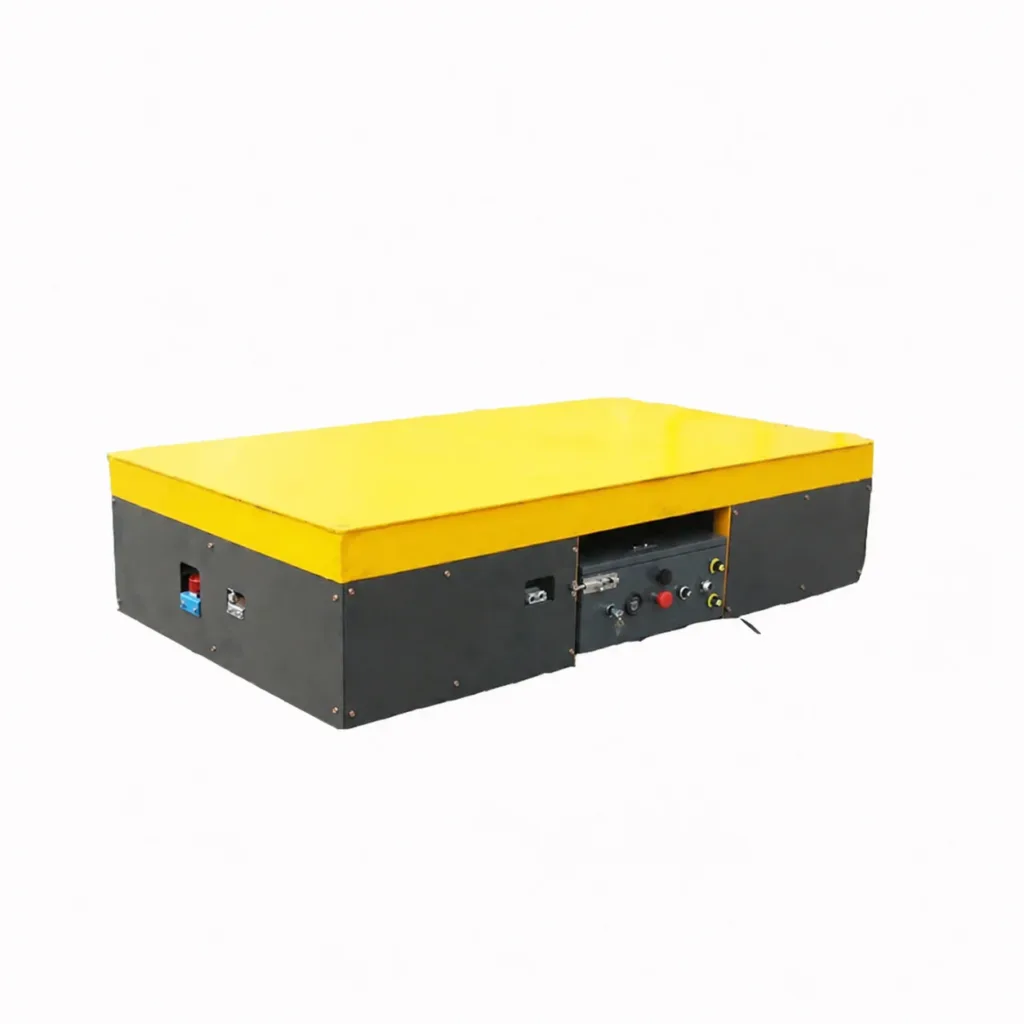
Trackless transfer carts
An operator steers the platform along a suitable factory floor. Useful when the route needs turns or several destinations without installing rails.
Check suitability
- Heavy or awkward loads moved under local or remote operator control. Select the steering arrangement around the route.
- Review wheel loads, floor joints, gradients and the full turning envelope. No rails does not mean any floor will work.
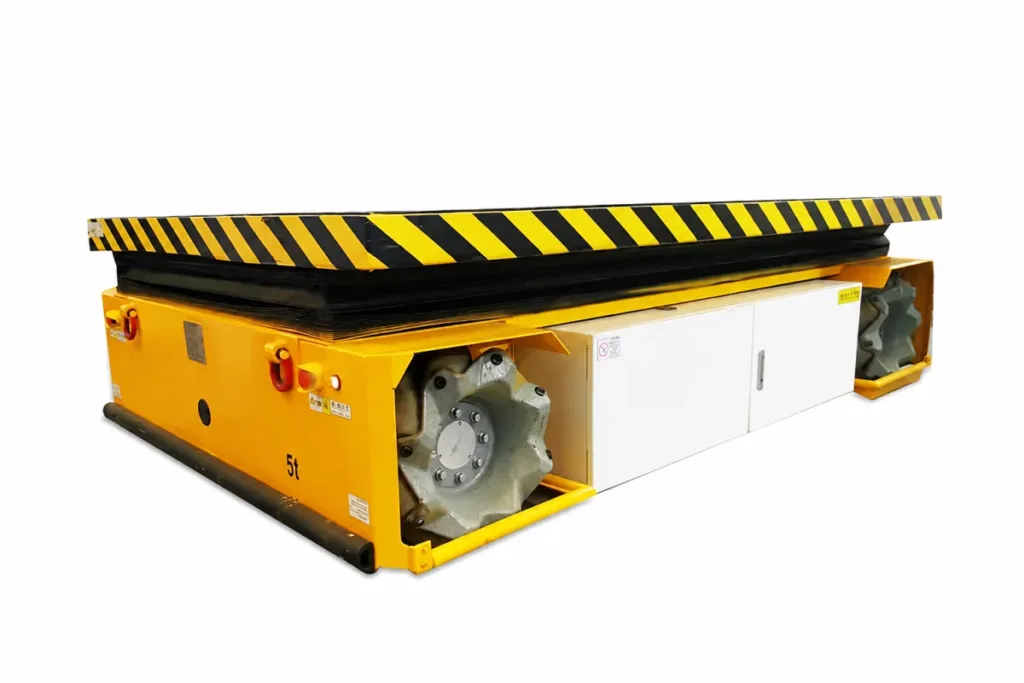
Heavy-duty AGVs
Carry a defined load along a configured route using onboard guidance and controls. Include the stations and charging plan in the system design.
Check suitability
- Repeat movements where pickup, destination and traffic conditions can be defined. Manual loading may remain at either end.
- Confirm guidance, stopping or rerouting behaviour, docking and recovery. Sideways travel and automatic loading are separate options.
How does the load
get on and off?
The deck is part of the handling system. Select a numbered area to see what must match the load and the receiving station.
01Do we need a flat deck, lifting deck or powered transfer?
A flat deck may be sufficient when a crane or forklift loads and unloads the vehicle. Fixtures or cradles support a specific load. A lifting deck or powered roller transfer can serve a compatible station, but transfer height, load support and movement permissions must be designed together.
Check the whole route.
Not just the load weight.
A short route sketch can expose the constraints that change the vehicle, installation and quotation.
| Floor or rail conditions | Wheel loads, joints, slopes and thresholds affect floor suitability. Rail vehicles need a suitable track and foundation arrangement. |
|---|---|
| Doors, bends and crossings | Allow for the vehicle, load overhang and clearance through the entire turn. Identify pedestrians and other vehicles sharing the route. |
| Pickup and destination | Show how the load is supported, transferred and released. Match stopping position and deck height to the station. |
| Trips and shift pattern | Include loading, waiting, return travel and charging in the cycle. Peak demand may differ from the average work rate. |
02What should be included in the quotation?
Separate the vehicle and load fixtures from rails or floor work, power or charging equipment, station modifications and control interfaces. Identify who installs and commissions each part, and agree the drawings, operating instructions, training and service scope.
03What should be demonstrated before acceptance?
Agree a representative load and route, including turns, stopping, loading and unloading. Check the specified operating modes, protective functions and recovery from an interrupted transfer. For automatic systems, demonstrate station communication and the planned charging cycle.
Choose the capability
behind the label.
The vehicle name alone does not tell you how it turns, loads or responds to an obstruction.
01Is an omnidirectional cart automatically an AGV?
No. Omnidirectional describes a movement capability, such as sideways travel or rotation. It can be operator-controlled or part of an automatic vehicle. Ask which movements the proposed wheel and control arrangement supports under load.
02Will an AGV automatically drive around people or obstacles?
Do not assume that it will. Some systems stop and wait on a defined route; others can plan an alternative path within an approved operating area. Specify the required behaviour, shared traffic conditions and how a blocked route is recovered.
03Can the same cart run outside or between buildings?
That needs a route-specific review. Gradients, drainage, surface changes, weather exposure and door thresholds may change the wheels, drive, enclosure and guidance design. A vehicle shown inside a workshop is not evidence of outdoor suitability.
Explore transfer equipment
Rail carts, RGVs, steerable platforms and industrial trailers.
View Transfer SystemsExplore Mobile Robotics
AGV and AMR systems, vehicle coordination and interfaces to factory logistics.
View Mobile RoboticsShow us the load.
Mark the two endpoints.
A photo and a route sketch are enough for an initial discussion. We can identify suitable vehicle options and the information needed for a proposal.
Discuss your transfer- Weight, dimensions, centre of gravity where known, and how it is supported or secured
- Distance, turns, doors, floor or rail condition, and pickup and unloading arrangements
- Trips per shift, operator-controlled or automatic movement, and equipment to connect