
Rail Transfer Carts
Heavy loads.
Fixed routes.
Powered carts move dies, coils and production loads along floor-mounted rails, between bays or workstations. Match the deck to the load, then choose the power supply and handoff arrangement.
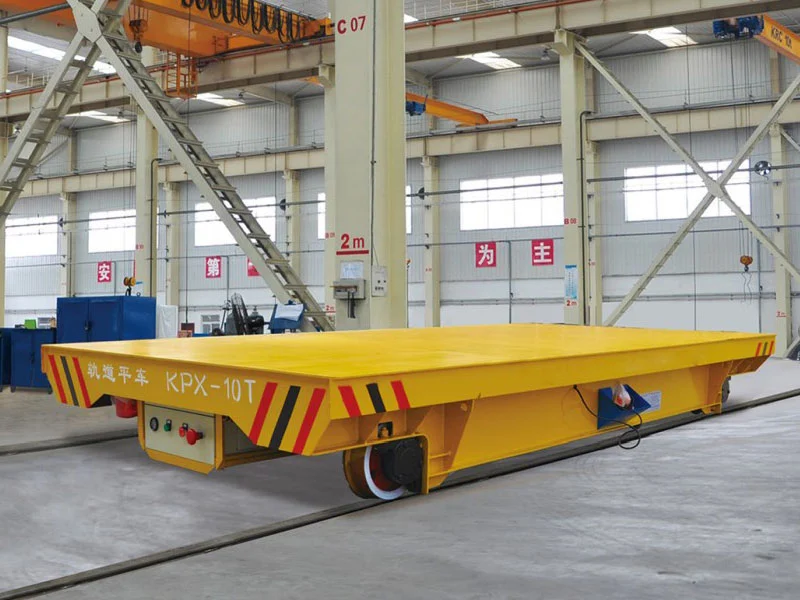
What will the cart
carry and support?
Flat decks suit supported loads and fixtures. Coils and hot vessels need dedicated supports; the payload alone does not define the cart.
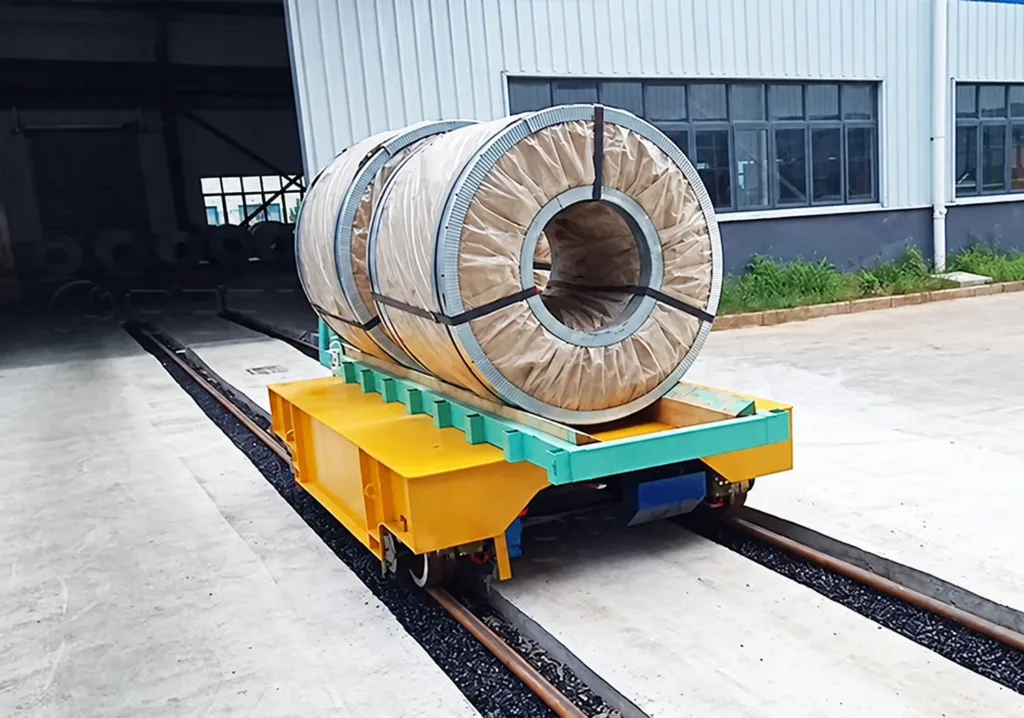
Saddle decks
A shaped support holds a cylindrical load in a defined position. Match the saddle to the coil diameter, width and contact requirements.
Selection details
- Allow access for the crane hook, C-hook or coil tong, and check the height needed to lower the load onto the saddle.
- Specify the smallest and largest coil, orientation and protection for finished surfaces. Packaging straps do not replace the cart’s load restraint.
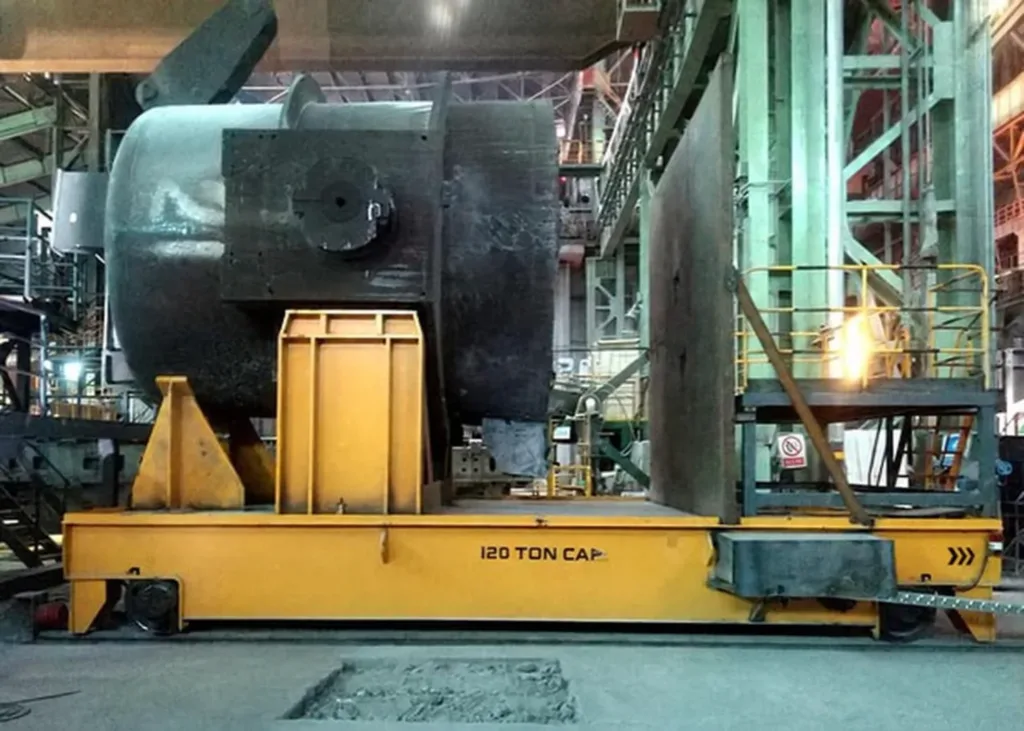
Ladle carriers
A dedicated support frame carries the vessel through the process route. Heat exposure changes the protection needed for the drive, power supply and controls.
Selection details
- Provide the vessel drawing, support points, full and empty weights, and centre of gravity. The support must suit the actual vessel.
- Define radiant heat, spills, stopping and recovery arrangements. A standard flat cart is not a ladle carrier simply because its capacity is sufficient.
Support the die
Give the footprint and concentrated loads. Match deck height and access to the crane, press or die-change equipment.
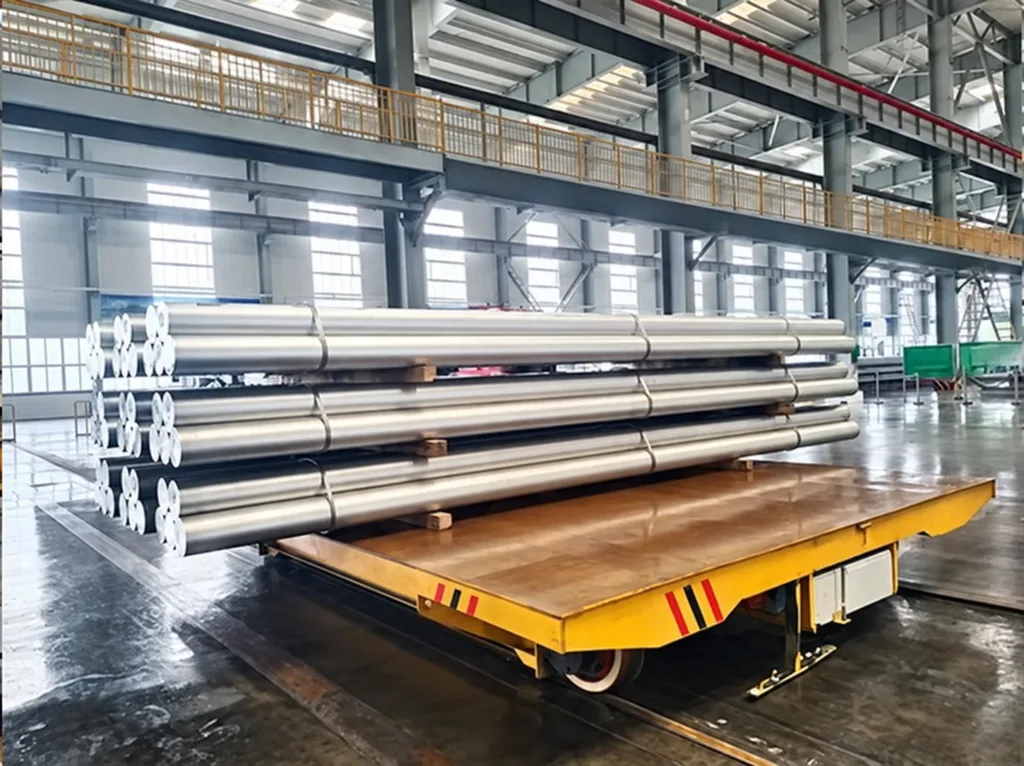
Check the overhang
Specify support spacing, load length and the swept area at curves or direction changes.
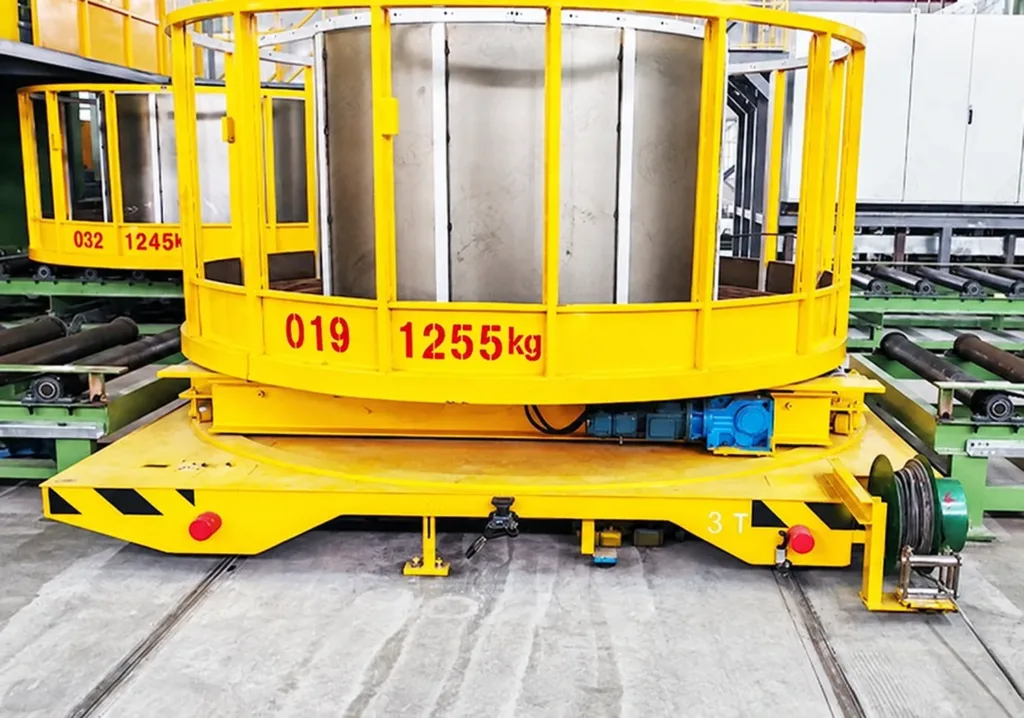
Leave room to load
Allow for jacks, lifting attachments, fixtures and access around the load. State how it is secured during travel.
Match the supply
to the working shift.
Battery, cable and trackside supply are alternative power arrangements. None determines whether the vehicle is manually controlled or automatic.
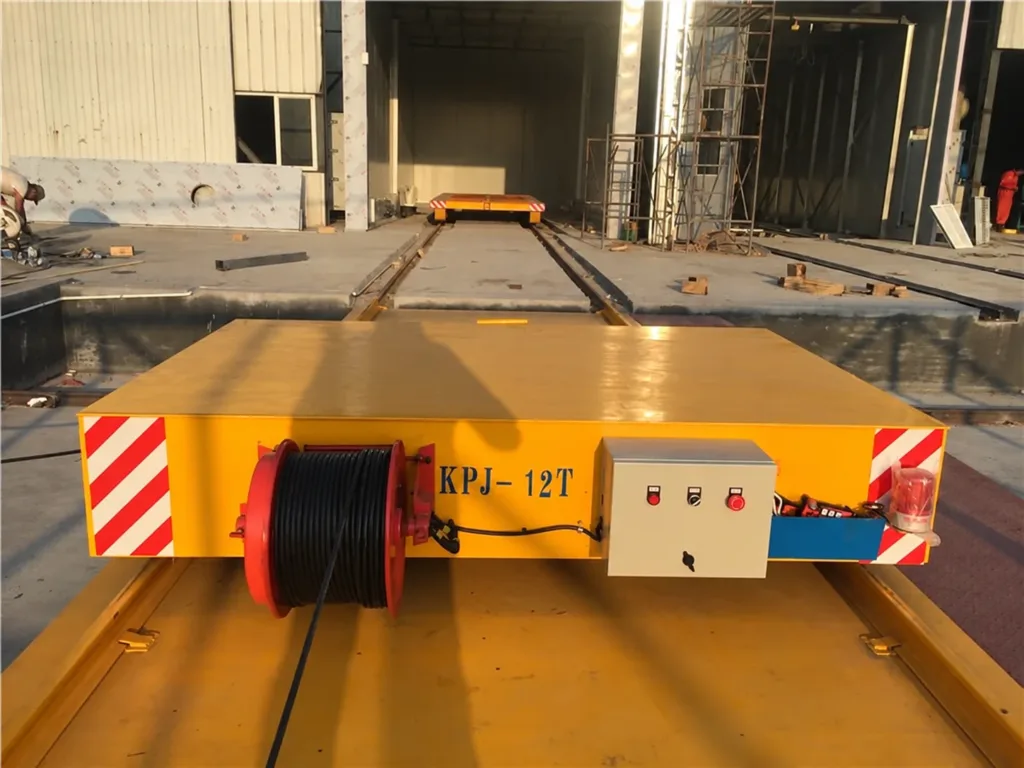
Plan where the cable runs.
The reel manages cable payout and recovery as the cart moves. Its route needs protection from wheels, loads and crossing traffic. A trailing cable uses a different cable-management arrangement.
01Are low-voltage rail power and a conductor bar the same?
No. One arrangement uses the running rails or dedicated conducting rails as part of the supply; another uses a separate conductor and collector. Installation, insulation, drainage and maintenance requirements depend on the selected system.
Connect the stations.
Make space to transfer.
A straight shuttle, a curved route and a turntable need different wheel and track arrangements. Share the route before fixing the cart dimensions.
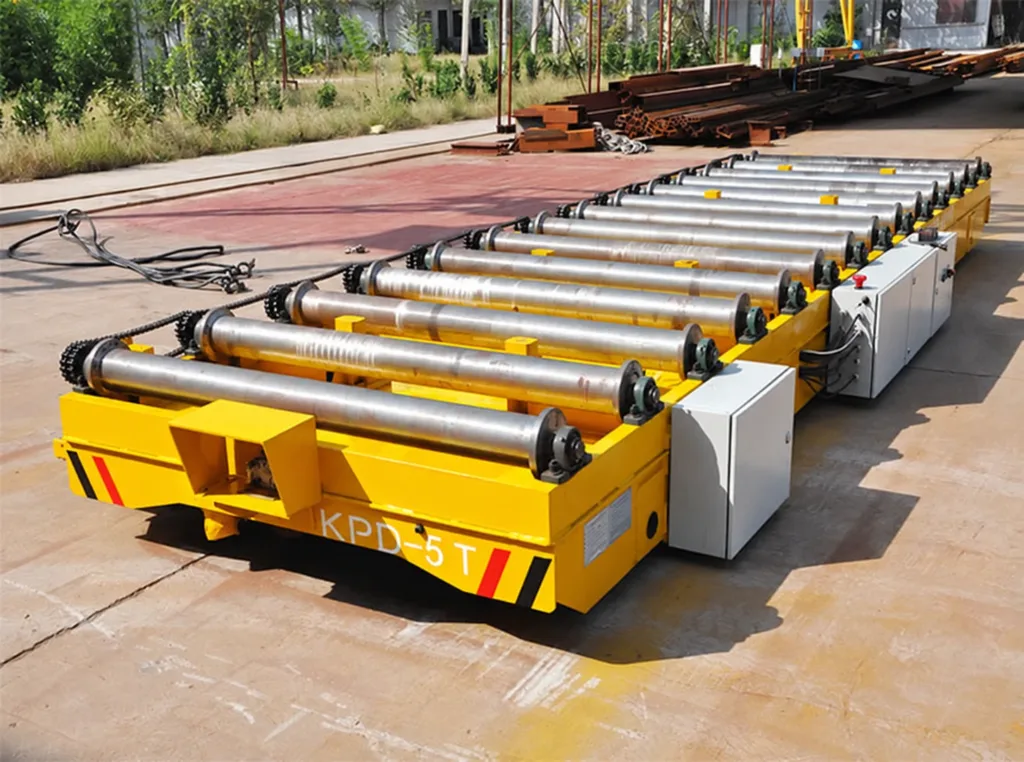
Roll onto the next station.
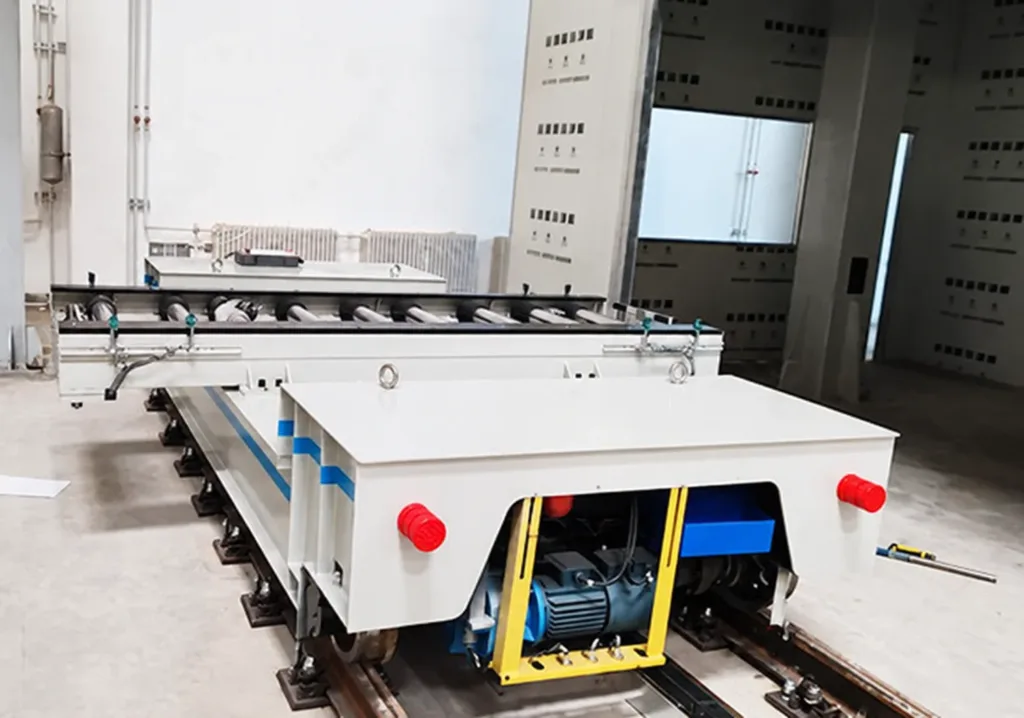
A roller deck can transfer a suitable load to a matching conveyor. Check roller direction, load-base support, deck height, transfer gap and the signals that permit movement.
- 01
Bay-to-bay shuttle
Check both end positions, the loaded envelope and pedestrian or vehicle crossings. Include room for stopping.
- 02
Design the track layout
Curves need suitable wheelbase and wheel guidance. A turntable rotates the vehicle; a traverser moves it sideways to another track.
- 03
Set the handoff height
Fixed, lifting and roller decks serve different loading methods. Agree alignment, position confirmation and load retention.
01Does remote control make this an RGV automation system?
No. Remote control lets an operator command the cart. Automatic station work also needs position sensing, movement permissions, protective functions and defined fault recovery. Include those requirements if you need an automated RGV cycle.
Check the rails,
not just the gauge.
Existing track can be considered once its geometry, condition and supporting structure have been checked against the proposed wheel loads.
| Load and deck | Maximum weight, dimensions, centre of gravity, support points and loading method. |
|---|---|
| Rails and foundation | Rail profile, gauge, length, joints, curves, foundation drawings and existing condition. |
| Duty and gradient | Loaded and empty trips per shift, desired travel time, stopping positions and any slope. |
| Environment and traffic | Indoor/outdoor areas, water, dust, heat, visibility and pedestrian or vehicle crossings. |
01Can the cart run outdoors or on a slope?
Only within its specified design conditions. Rain and standing water affect power collection and protection; gradients affect traction, braking and holding. Provide the steepest gradient and surface conditions instead of assuming workshop equipment will suit the route.
02Can I order a standard cart by load capacity?
Capacity is a starting point. A small die concentrated on four feet can require a different deck from a distributed load of the same weight. Rail gauge, deck height, wheel loads and power also need to match the installation.
Know what arrives.
Know what is tested.
Agree the vehicle package and the site works separately so the cart can be installed and commissioned on the intended route.
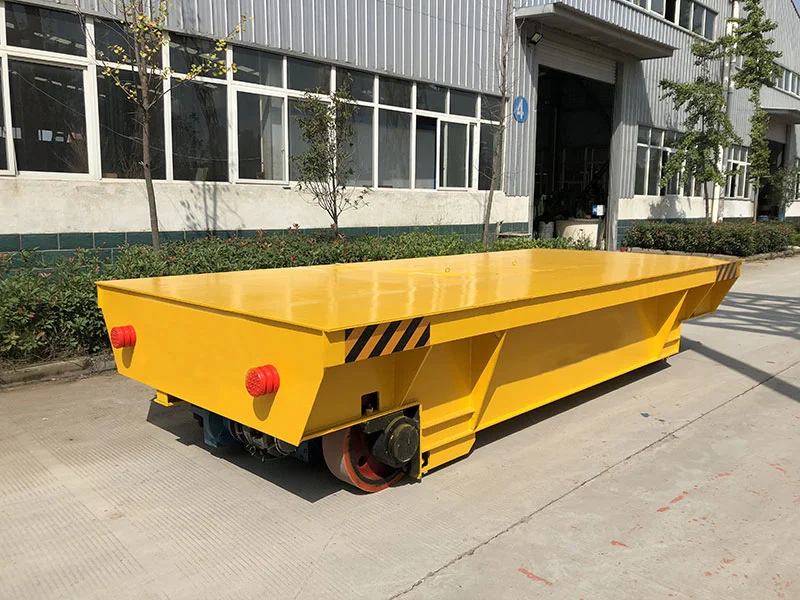
Cart & equipment
Frame, deck or fixtures, wheel assemblies, drive, brakes, controls and selected power equipment. Identify chargers and spare parts included.
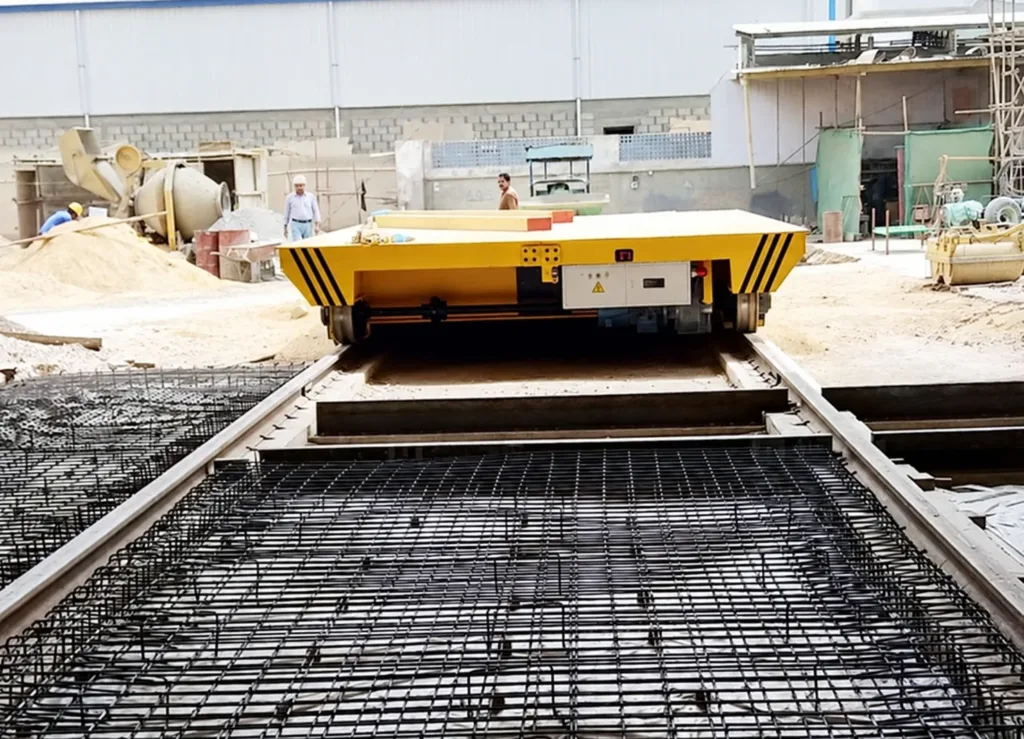
Rails & site works
Allocate rails, fastenings, foundation, power feed, charging location and station equipment. Include installation and commissioning responsibilities.
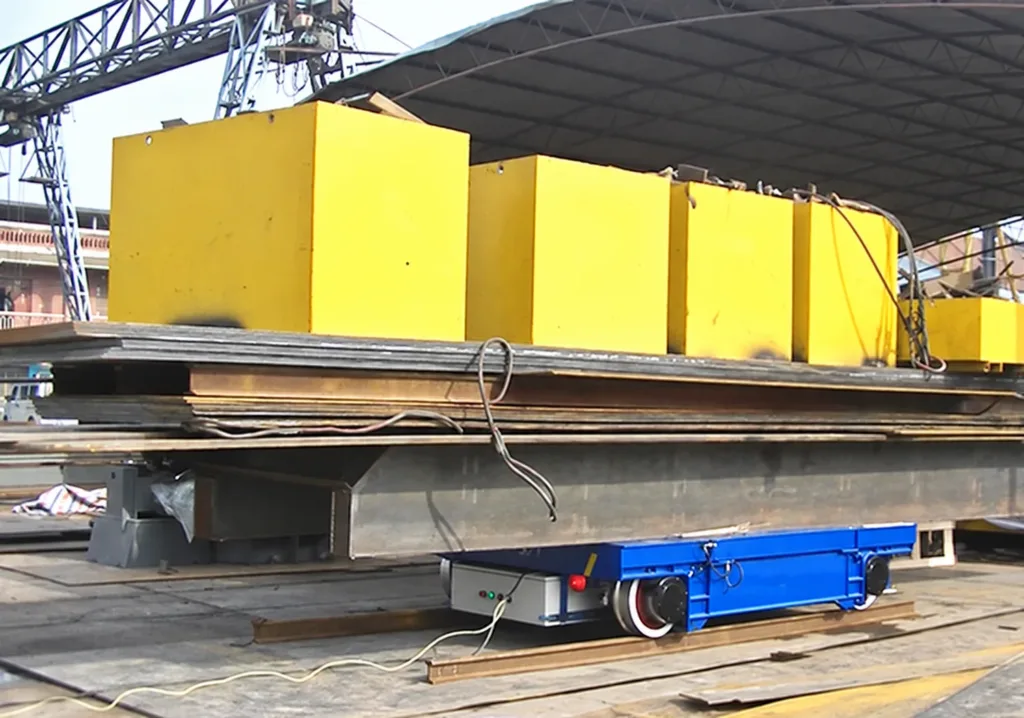
Drawings & tests
Agree load and functional checks, braking and stopping tests, and interface trials where fitted. Request instructions, drawings and maintenance records.
01Which materials and certificates can be supplied?
Specify the destination and required documents in the enquiry. Frame and wheel materials, welding inspection, coating and conformity documentation depend on the selected design and contract; they should not be inferred from a photograph or a generic catalogue.
Send the load.
Sketch the route.
For a new route, a marked-up plant layout is enough to begin the discussion. For replacement equipment, add the existing nameplate and track photographs.
Discuss a rail transfer cart- Weight, dimensions, support points, loading method and any heat or surface-protection needs.
- Distance, rail gauge/profile, curves, gradients, crossings and station heights.
- Trips per shift, power availability, operator control or automatic cycle, destination and delivery scope.