
Jib Cranes · Local Workshop Lifting
Lift beside the machine.
Reach the work.
Jib cranes serve local lifting tasks at machines, benches and loading points. Choose the support and arm arrangement around the pickup and landing positions, available headroom and obstacles in the work area.
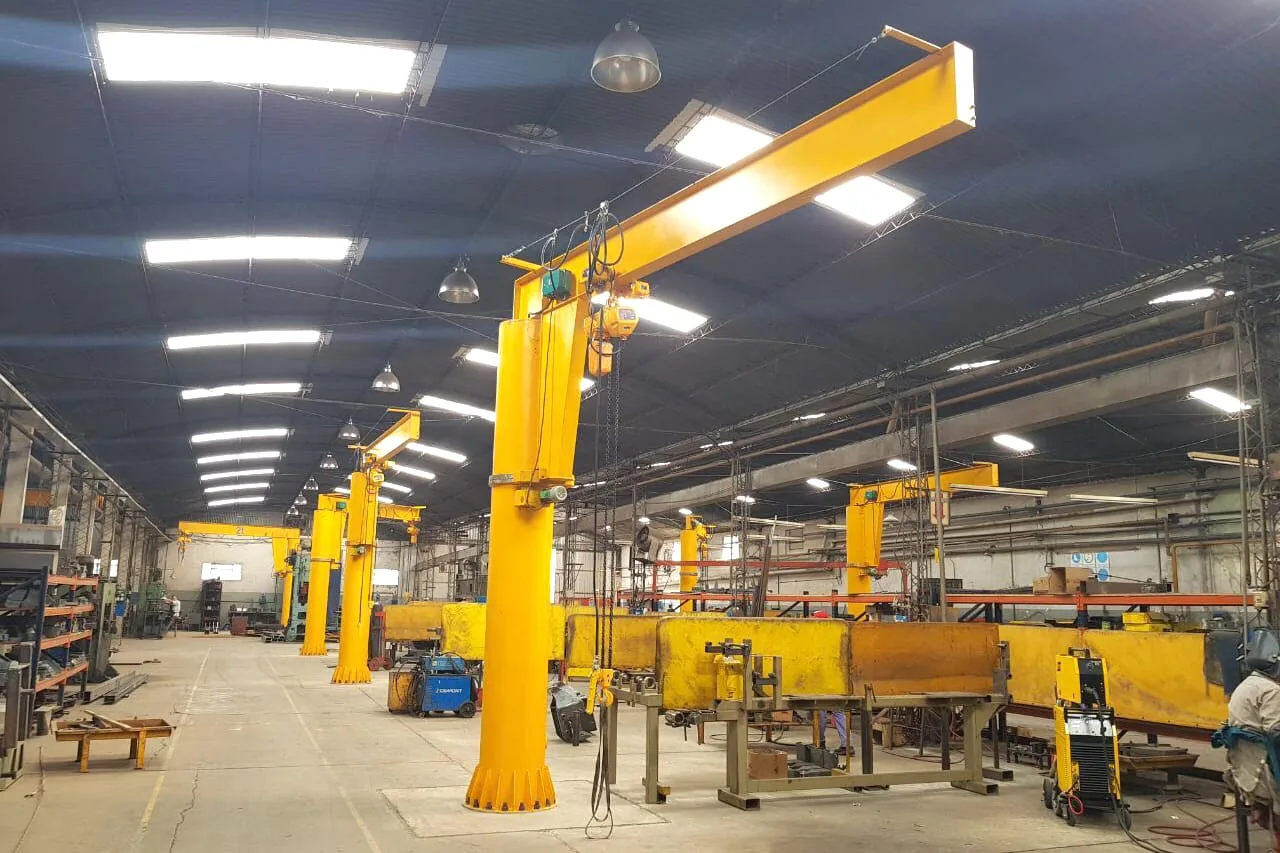
One station.
Or a line of work areas.
Pillar and wall mounting describe the support. Wall travel extends coverage along a building; an articulating arm changes how the load reaches around obstacles.
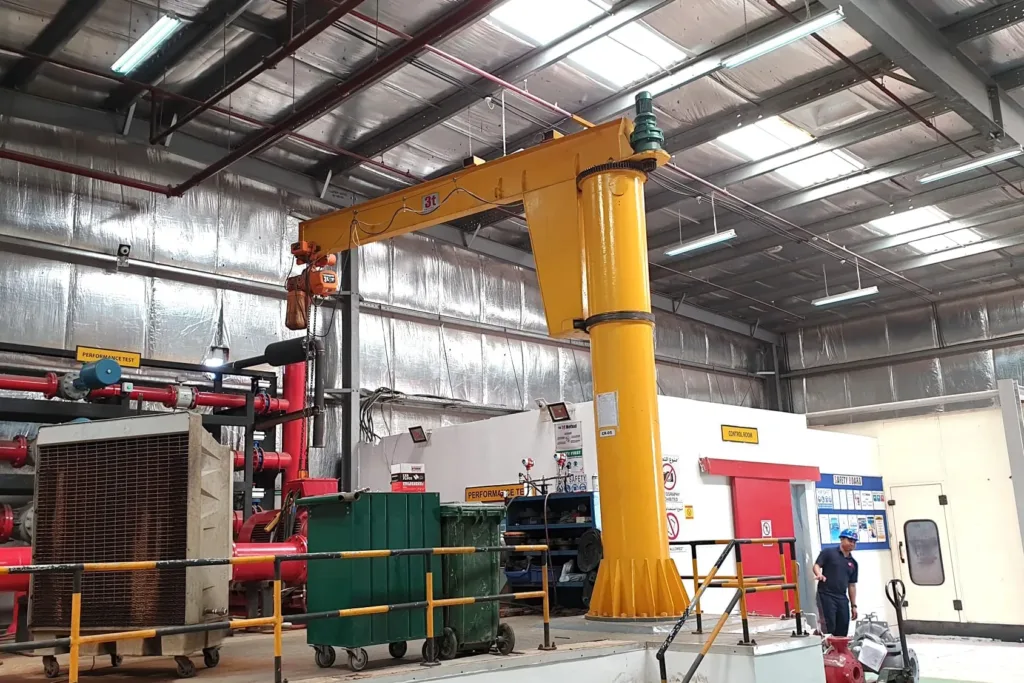
Free-standing pillar
A dedicated pillar serves a local lifting area beside a machine, bench or loading point. The mast and base need a suitable slab or foundation.
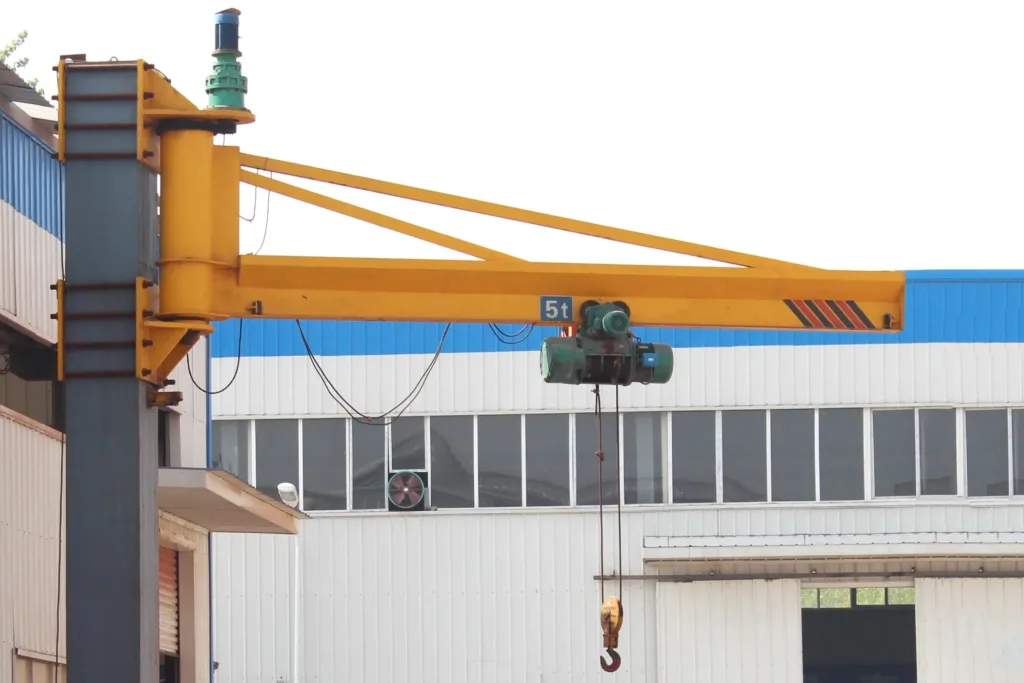
Wall-mounted
A wall or building column supports the boom and keeps a floor-mounted pillar out of the work area. Check both the brackets and the supporting structure.
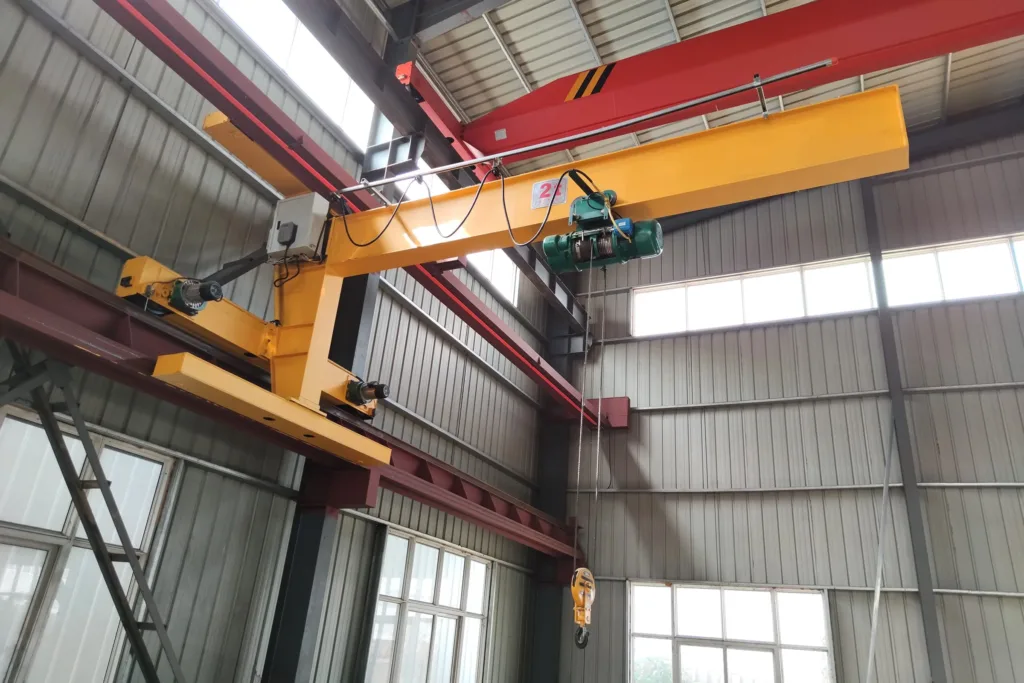
Wall-travelling
A carriage travels along an elevated wall runway to serve several stations. Travel along the building is a separate movement from any rotation offered by the selected design.
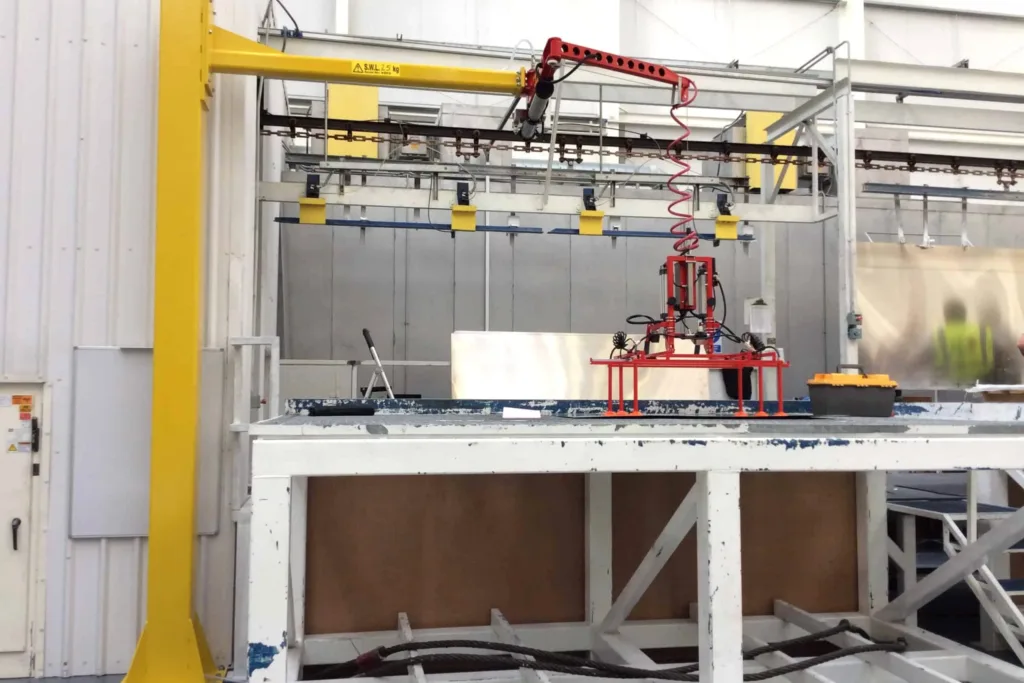
Articulating
A jointed arm brings the lifting point around obstacles or into machinery. It can use a pillar, wall or other suitable support, depending on the selected arrangement.
See what supports
and positions the load.
Select a numbered part on this pillar-jib example. Different support and arm arrangements change the details, but the load and its usable path remain the starting point.
Check the support.
Check the hook path.
A drawing of the work area should include pickup and landing points, the load itself, nearby equipment and where the boom can park.
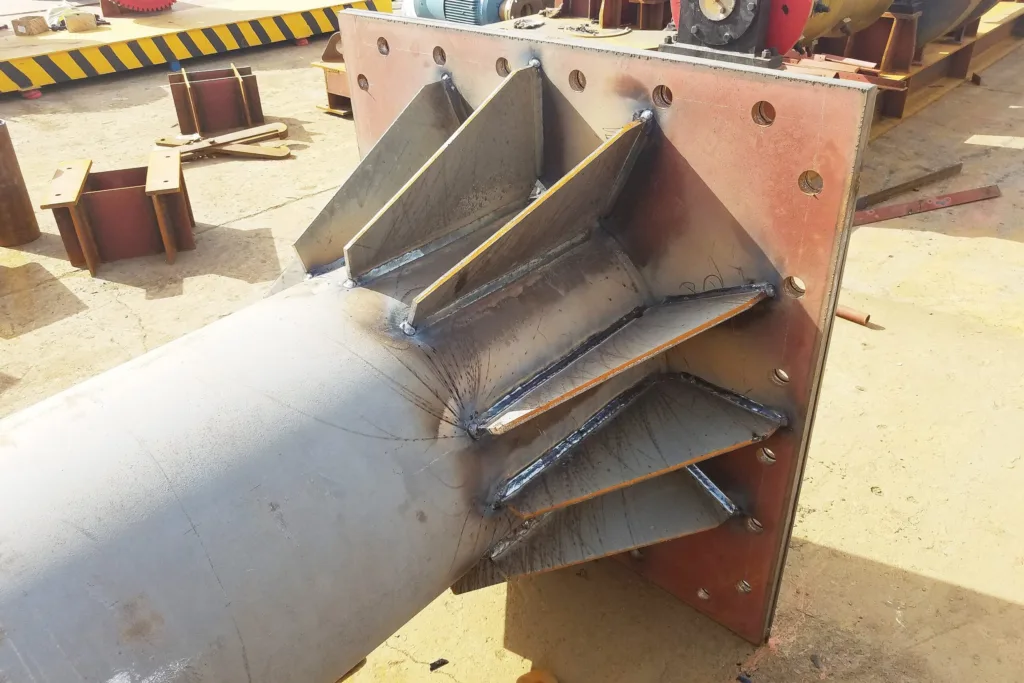
The base is part of the installation.
Provide existing slab or foundation information where available. Confirm the proposed crane reactions, base and anchor arrangement with the responsible structural designer. Wall-mounted and wall-travelling equipment need the equivalent building and connection checks.
01Can a pillar jib be fixed to the existing workshop floor?
Possibly, if the selected crane and anchor arrangement are suitable for the actual slab. Concrete condition, thickness, reinforcement, edges and nearby foundations need review. Foundationless product options still have installation requirements; they are not suitable for every floor.
02Does the stated arm length equal usable hook reach?
No. Check trolley end approaches, boom support geometry, hoist dimensions and the lifting attachment. Confirm both the nearest and farthest required hook positions and the highest load position, including the clearance needed to move past surrounding equipment.
Choose the motions.
Include the installation.
The most useful first enquiry describes the work and the available support, rather than selecting a capacity alone.
01Should the jib movements be manual or powered?
Describe the load, how often it moves, the required reach and positioning needs. Hoisting, trolley travel, rotation and wall travel are separate selections. A powered hoist does not mean that every other movement is powered, and not all arm designs offer every option.
02Can every pillar jib rotate through a full circle?
No. Rotation depends on the selected bearing/support arrangement, power supply and surrounding obstacles. Specify the sector actually needed and any protected areas; do not infer the usable rotation from pillar mounting alone.
03What should the quotation include?
Identify the jib structure, hoist, trolley, controls, moving power, base or brackets, anchors, installation and commissioning. Ask for the arrangement drawing and support reactions needed for the civil or building review. Include the load attachment and outdoor conditions where applicable.
Need rectangular coverage?
Compare workstation bridge cranes and monorails if a local jib cannot connect the required positions.
View workstation cranesShow the machine.
Mark the lifting points.
A site photo and simple dimensioned sketch help establish which arrangement can reach the load and what support information is still needed.
Discuss a jib crane- Typical and heaviest load, lifting attachment, working frequency and positioning needs
- Pickup and landing points, hook height, obstacles, available rotation and parking space
- Floor, foundation or building information, power supply, environment and installation scope