
Metals & Foundry Crane Systems
Metals & foundry
cranes.
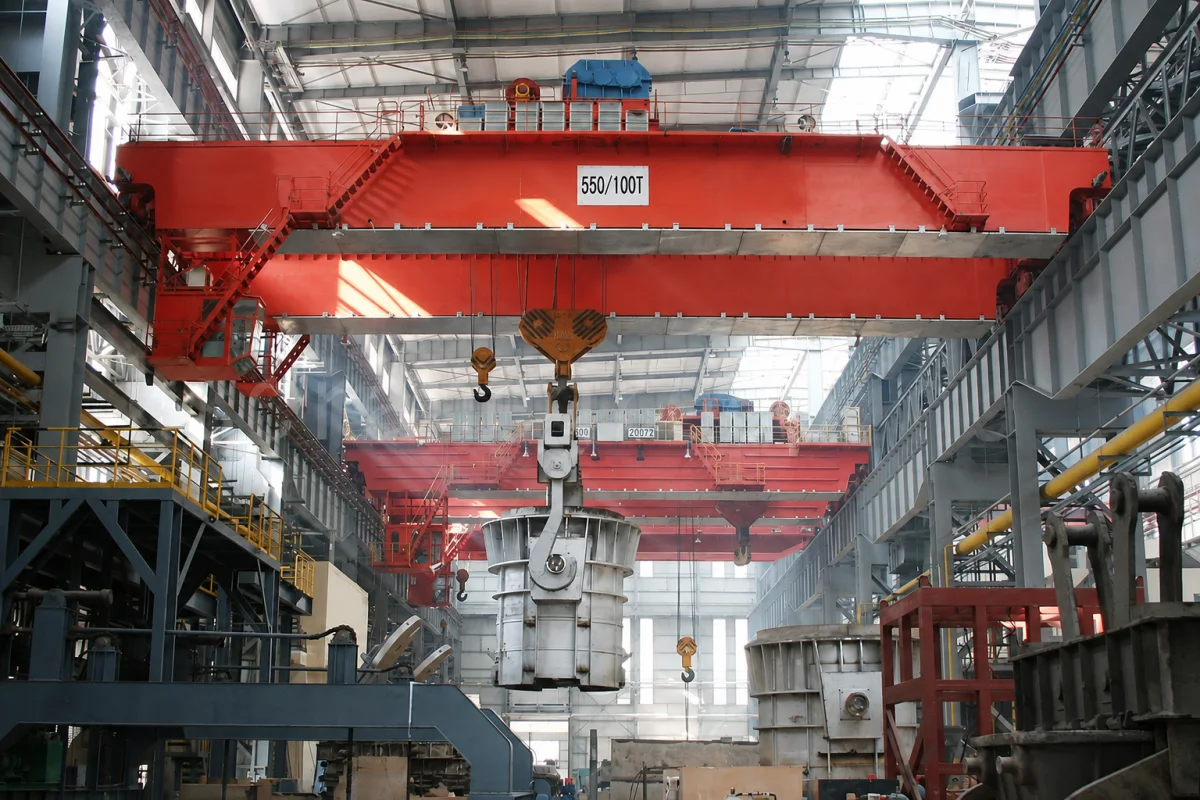
Cranes for molten-metal ladles, furnace charging, hot-workpiece handling and quenching. The load condition and process movement determine the lifting arrangement—not tonnage alone.
What does the
crane need to handle?
Four common tasks, with different loads and movements. These are application groups, not fixed crane models.
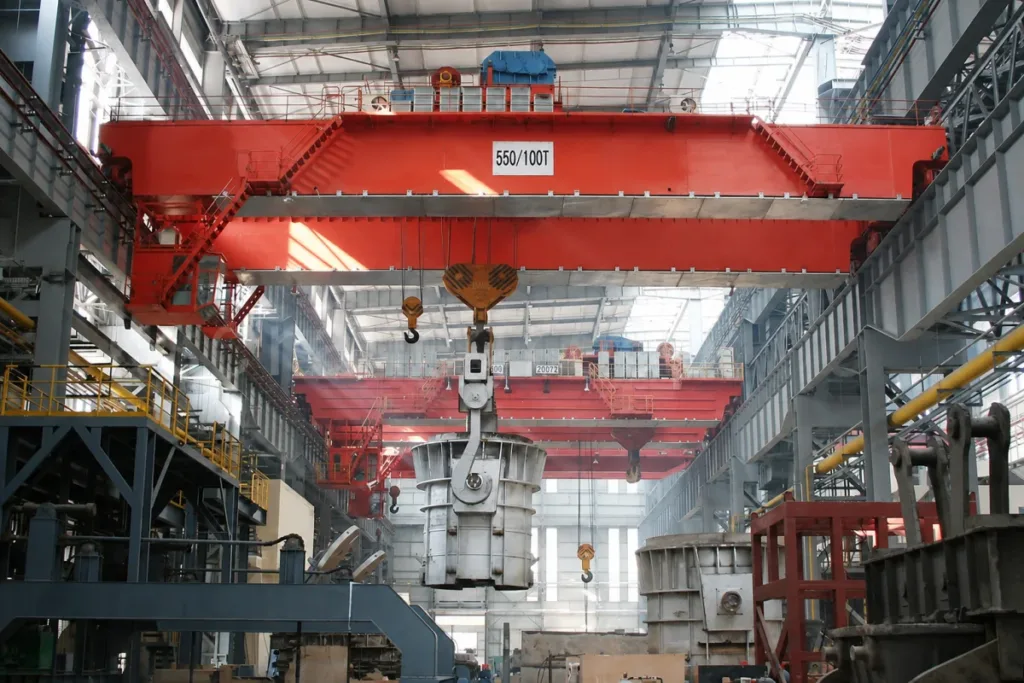
Ladle handling
Transfer a filled ladle between melting, refining and casting stations. Specify molten-metal duty explicitly; a general workshop crane is not an equivalent substitute.
Equipment & selection
- Include the molten metal, ladle and the applicable lifting attachment in the suspended-load assessment. Provide the ladle drawing and lifting points.
- If the crane tilts the ladle, define the main and auxiliary lifting arrangement, attachment geometry and the required pour positions.
- Review radiant heat, load holding, braking, fault response and recovery against the selected design and applicable requirements.
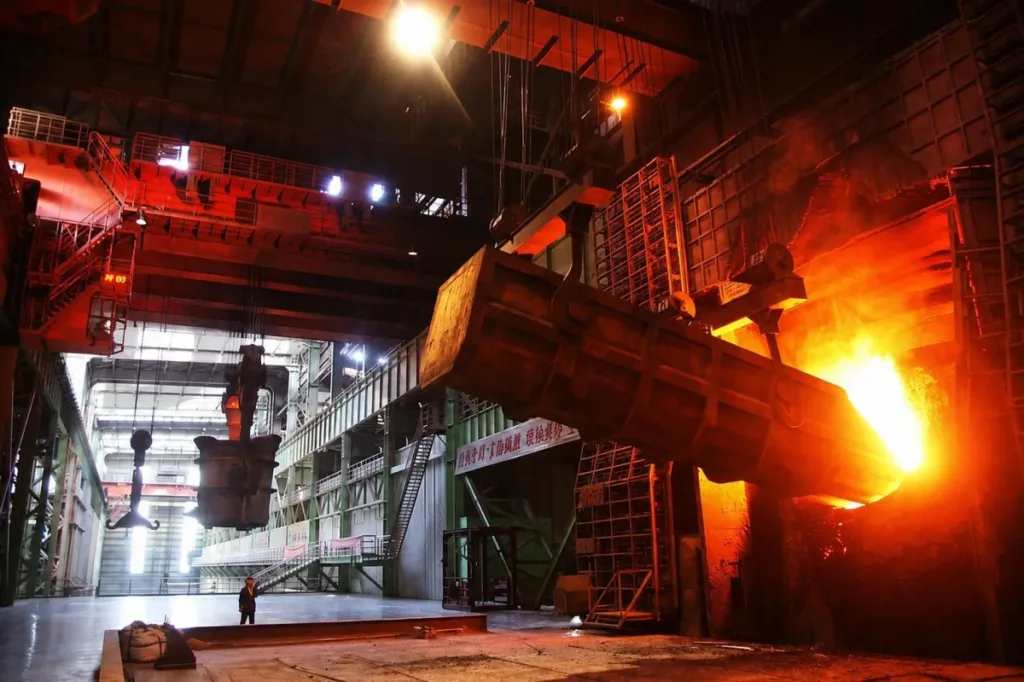
Furnace charging
Lift a scrap box or charging bucket to the furnace and control its discharge. Specify the feed material; cold scrap and molten metal need different assessments.
Equipment & selection
- Provide the loaded container weight, suspension points and tipping or bottom-opening mechanism.
- Check the furnace opening, hook approach, headroom and the container clearance throughout discharge.
- Single- or separate-trolley arrangements depend on the container and discharge movement. A scrap-charging specification does not establish molten-metal suitability.
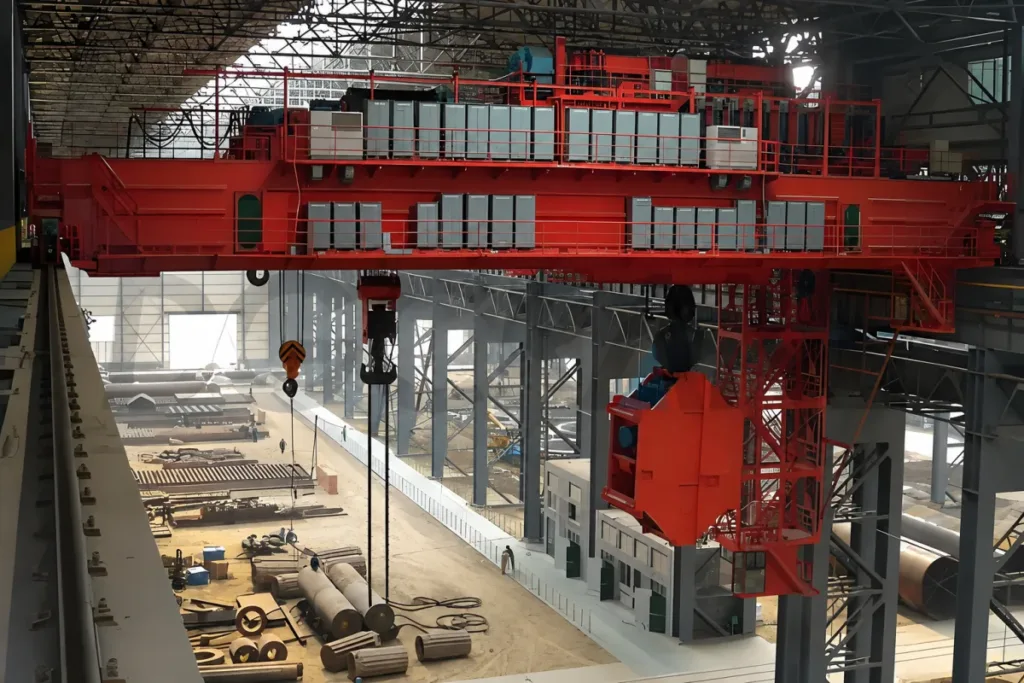
Forging support
Lift, position and turn hot billets around the forging press. The crane handles the workpiece; the press performs the forging.
Equipment & selection
- Define the billet shape, pickup method and required turning movement, including any manipulator or turning device.
- Clarify when the crane carries or supports the workpiece and how its motion coordinates with the press.
- Include process forces and impact exposure in the design review; do not select by static workpiece mass alone.
Quenching
Move hot workpieces from the furnace to the quench tank and lower them through the required immersion cycle. Transfer time and tank clearance are key inputs.
Equipment & selection
- Provide the allowable transfer time and immersion sequence from the heat-treatment process.
- Show the workpiece, fixture, tank opening and required immersion depth, plus the complete travel path.
- Review positioning, lowering control, heat and vapour exposure. Define what happens if a transfer is interrupted.
Follow the load.
See the interfaces.
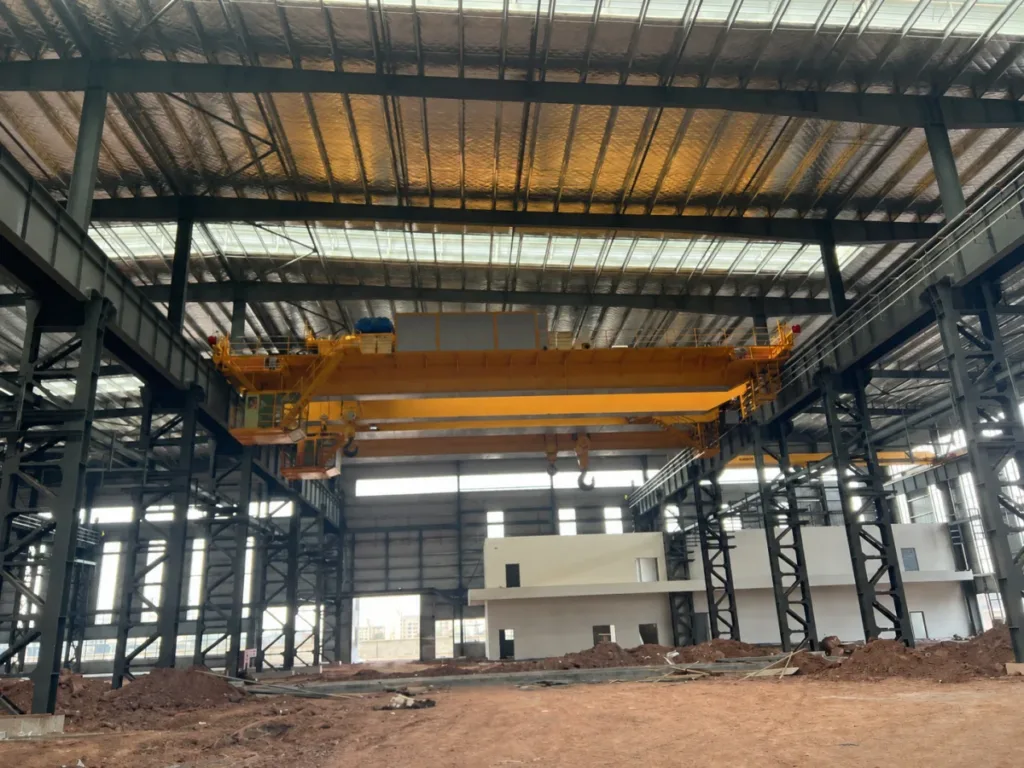
Use the numbered points to inspect this ladle-crane example. The photograph shows visible equipment; it cannot demonstrate internal brake arrangements or fault protection.
Capacity is
only the starting point.
For molten-metal work, agree the required load-holding and fault-response arrangements with the selected supplier. A catalogue label or the number of brakes alone is not enough to establish suitability.
| Complete suspended load | Metal or workpiece, container, fixture and lifting attachment. Show where each connects. |
|---|---|
| Process movement | Transfer only, pouring, bucket discharge, workpiece turning or timed immersion. |
| Heat and duty | Temperature and exposure time at the crane, lift frequency, load spectrum and process forces. |
| Building and recovery | Runway condition, hook approach, maintenance access and the required response to an interrupted lift. |
Define the crane.
Include its interfaces.
Fissure Tech coordinates the equipment and agreed delivery scope. Confirm whether ladles, charging containers, turning devices, runway work and installation are included, supplied by others or retained from the plant.
1Are ladle cranes and casting cranes the same?
The names often overlap for molten-metal ladle handling. Specify the actual transfer and pouring task, container and attachment; the name alone does not define a suitable configuration.
2Can we reuse the existing runway?
It needs a load and condition review against the proposed crane reactions. Share the runway drawings, span, rail level, building details and any inspection records before assuming it can be reused.
3Which documents and checks should be agreed?
Define the applicable requirements, load basis, arrangement drawings and inspection plan before manufacture. Agree the factory and site tests, required records, manuals and maintenance information for the selected equipment.
4What if we only handle coils, plates or stored steel?
That is generally a metal-stock handling selection rather than a molten-metal process duty. Use the Metal Stock Handling page to compare those load types.
Handling solid metal stock?
Compare cranes and attachments for coils, plate, long stock and slabs.
Explore metal stock handlingShow us the load.
Mark the process.
Start with a load or container drawing, a plant layout and a short description of the lift. The first discussion can identify a suitable crane arrangement, the key interfaces and missing inputs for a proposal.
Discuss your process- Material state, full suspended weight, dimensions and pickup or tilting points
- Pickup and destination, handling sequence, heat exposure and lift frequency
- Span, runway and headroom; drawings or photos of the existing installation