
Below-the-Hook Lifting Equipment
The right grip.
For your load.
Lifting beams, mechanical lifters, grabs, magnets and vacuum systems. Choose the attachment around the shape of your load, where it can be supported and how it needs to arrive.
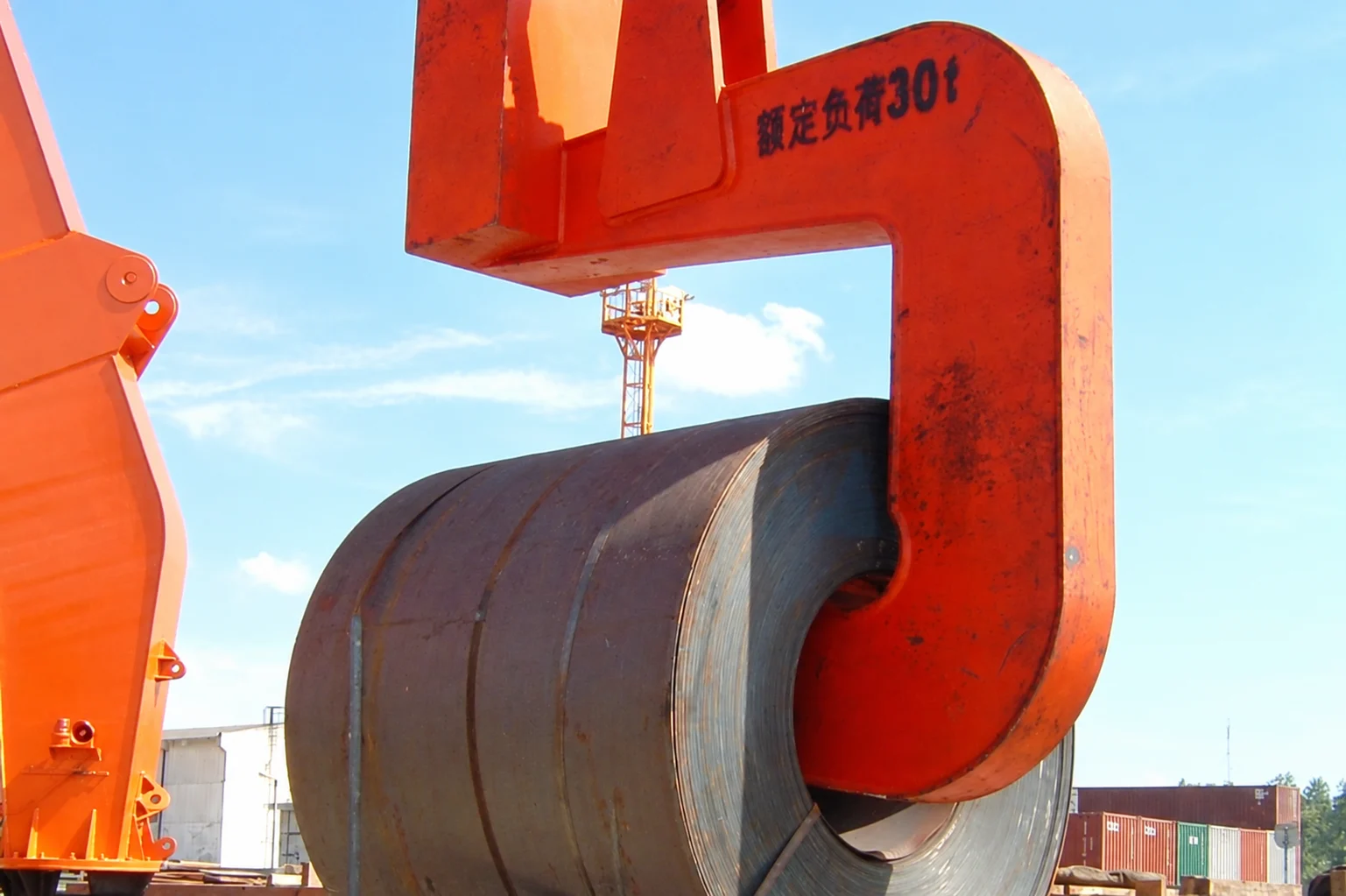
What are you lifting?
And where must it go?
A coil, a paper roll and a steel tube are all round. Their suitable contact points can be very different. Start with the actual load and the movement it needs.
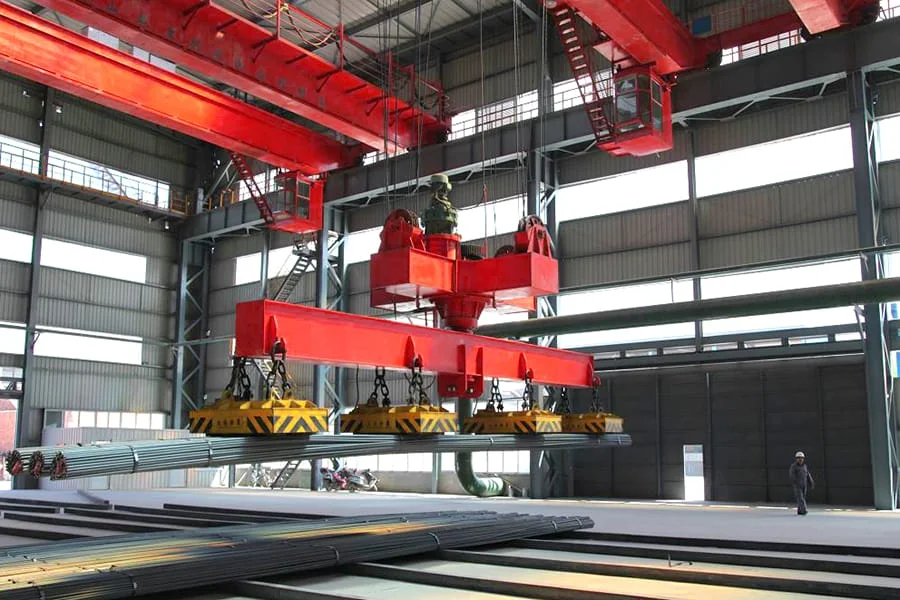
One beam. Several contact points.
Here, a beam positions several magnets along a bundle of steel. The beam layout and the magnetic contact need to be selected together for the material and bundle.
01Coils & rolls — move, rotate or turn upright?
For metal coils, identify whether the eye is horizontal or vertical. C-hooks and coil tongs suit different access and support conditions. Turning a coil upright needs a dedicated arrangement; rotating a grab about a vertical axis is a different movement. For paper rolls, distinguish support through a suitable mandrel from a dedicated vacuum or gripping system.
02Plate, pipe & long steel — one piece or a complete bundle?
Single-sheet pickup, plate-stack lifting and pipe-bundle transport need different contact arrangements. Consider plate clamps, supporting lifters, beams or suitable magnetic systems. Share the thickness, length, surface condition and how the bundle is held together.
03Scrap, waste & bulk material — what fills the grab?
Match the grab shape to the material: irregular scrap, bagged waste, grain or aggregate. Density, lump size and wear conditions affect the choice. Logs need a different gripping shape from wood chips. The closing mechanism must also match the crane.
04Glass, stone & finished panels — which surfaces can be touched?
Vacuum lifting can be considered for suitable panels, including non-magnetic materials. Check surface texture, coatings, leakage and panel stiffness. A hoist-mounted vacuum attachment and a vacuum tube lifter are different systems.
05Moulds, mill rolls & process loads — where can the tool engage?
Use defined lifting points or a purpose-designed support or tong. Mill rolls may require contact at the roll body or neck; cast ingots, carbon blocks and ladles have different interfaces and operating conditions. Send a drawing or close-up of the permitted contact areas.
06Containers & precast units — is there a defined lifting interface?
Container spreaders must match the box type, corner connections and empty or loaded duty. Precast concrete requires lifting connectors compatible with its embedded lifting system and the planned handling direction. Similar load ratings alone do not establish compatibility.
Support. Grip.
Grab or lift from above.
These attachment types differ in how they connect to the load. Open a card for typical uses and the information that changes the selection.
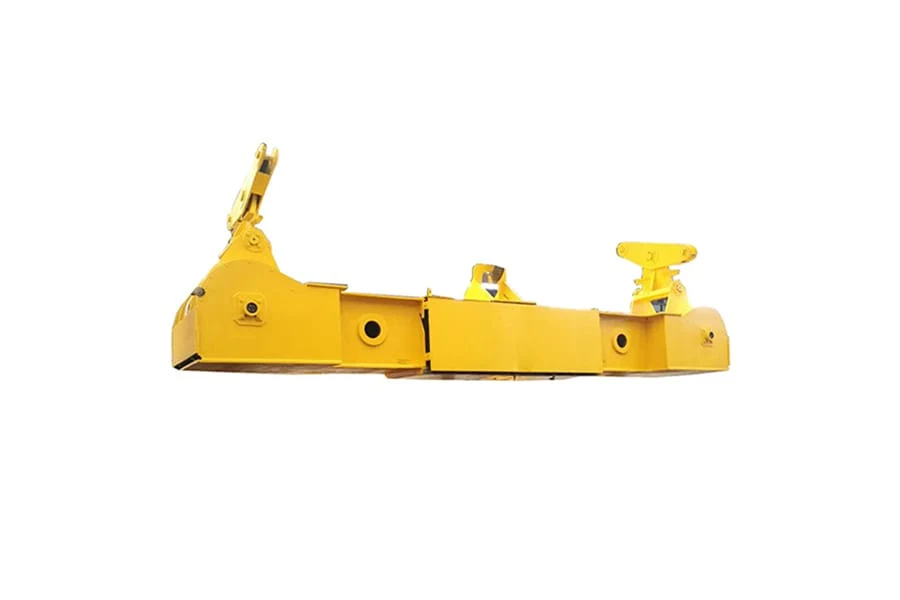
Lifting beams & spreaders
Connect several lifting points or keep slings apart. Choose the beam or frame around the load and available headroom.
Explore lifting beams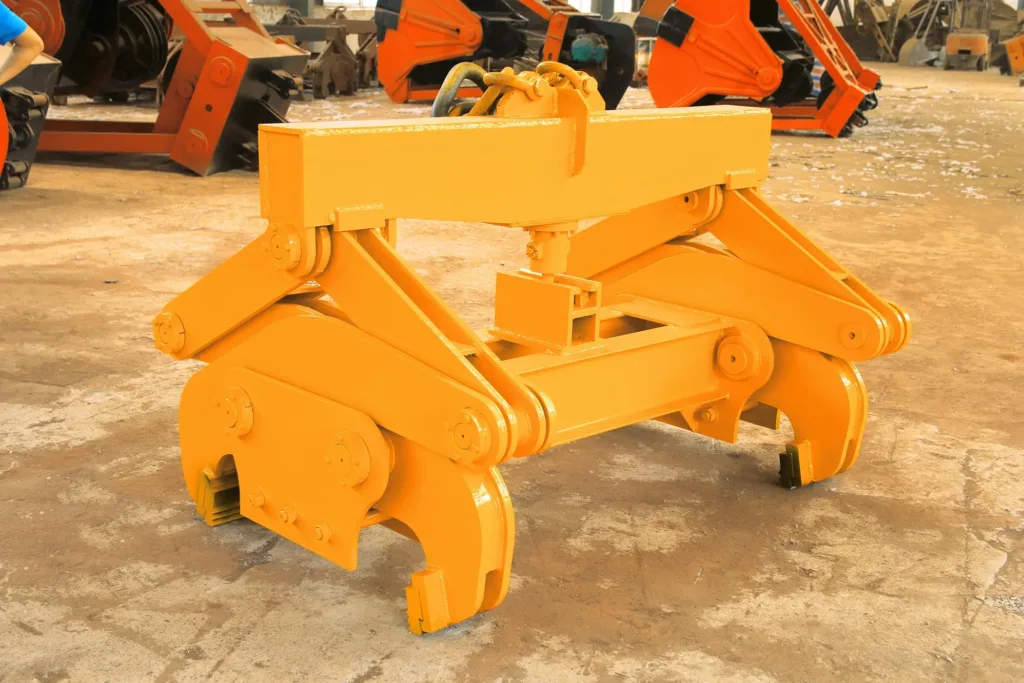
Mechanical lifters & tongs
C-hooks, coil tongs, plate lifters and tools for pipe or rolls. Match the contact shape to the workpiece.
Explore coil & plate lifters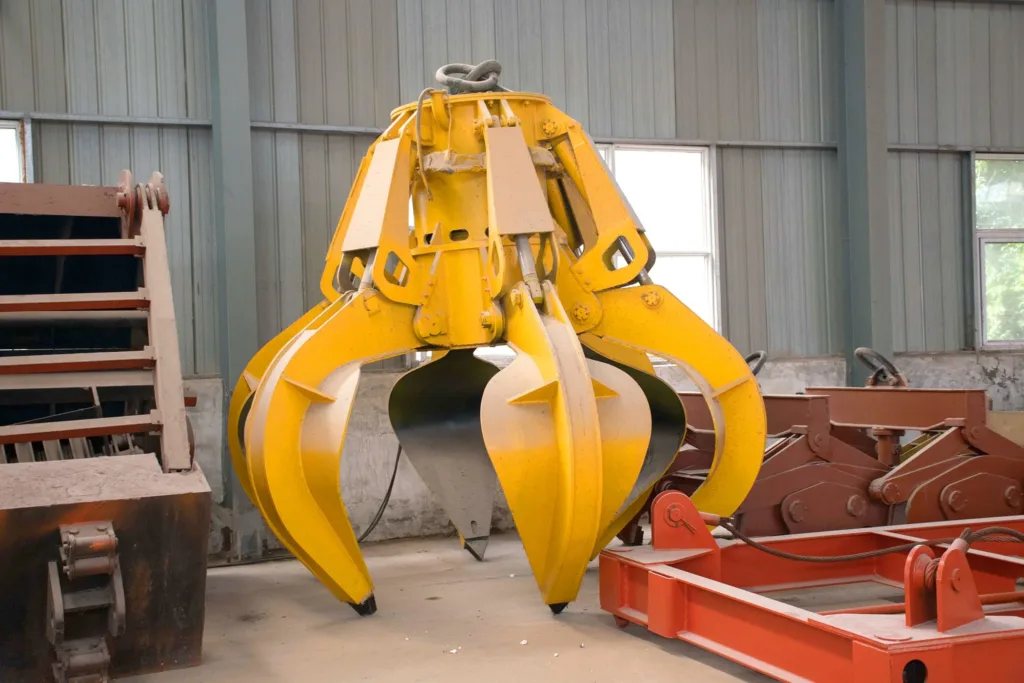
Material grabs & grapples
Collect bulk material, scrap, waste or logs with a suitable bucket or tine arrangement.
Explore grabs & grapples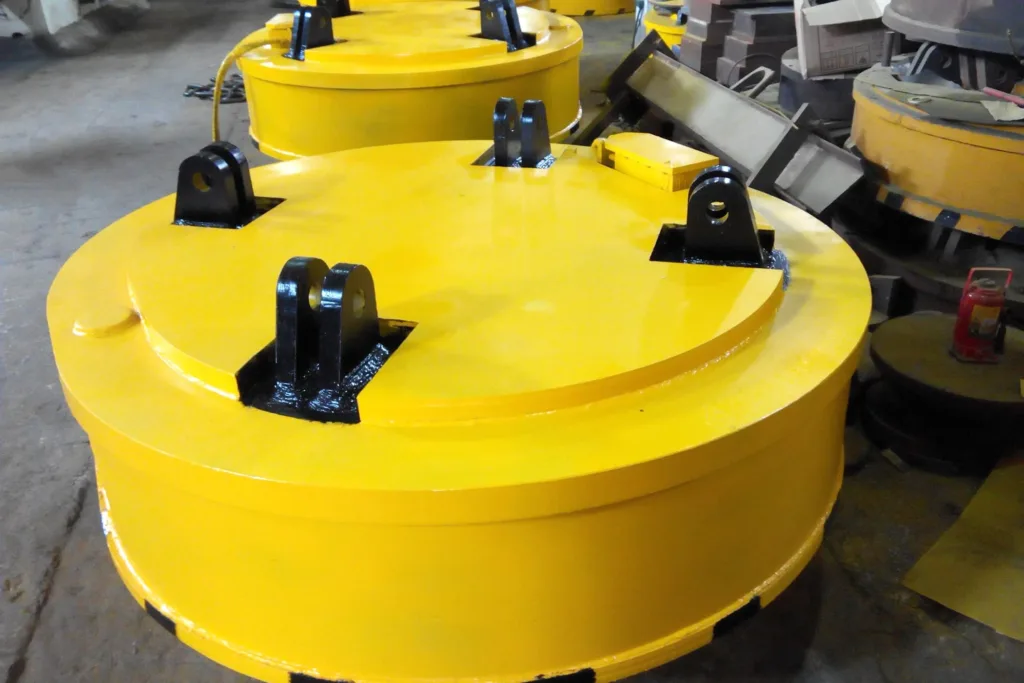
Magnetic lifting systems
Lift suitable ferromagnetic loads with an individual magnet or a multi-magnet beam.
Explore magnetic lifting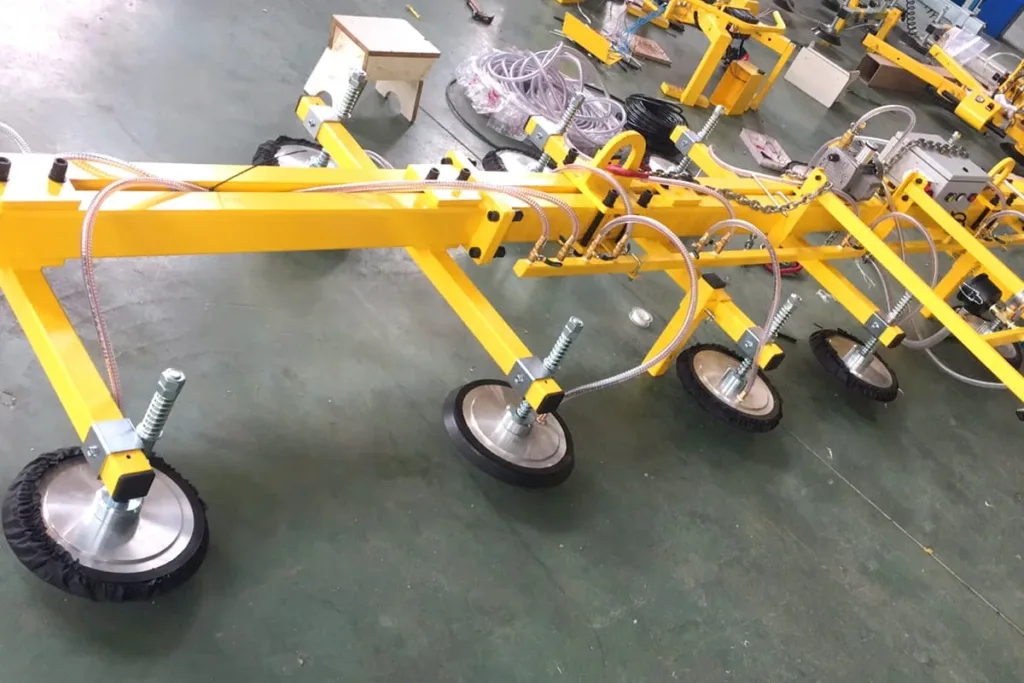
Vacuum lifting systems
Use matched suction pads and a vacuum system for suitable panels, sheets or dedicated roll applications.
Explore vacuum lifting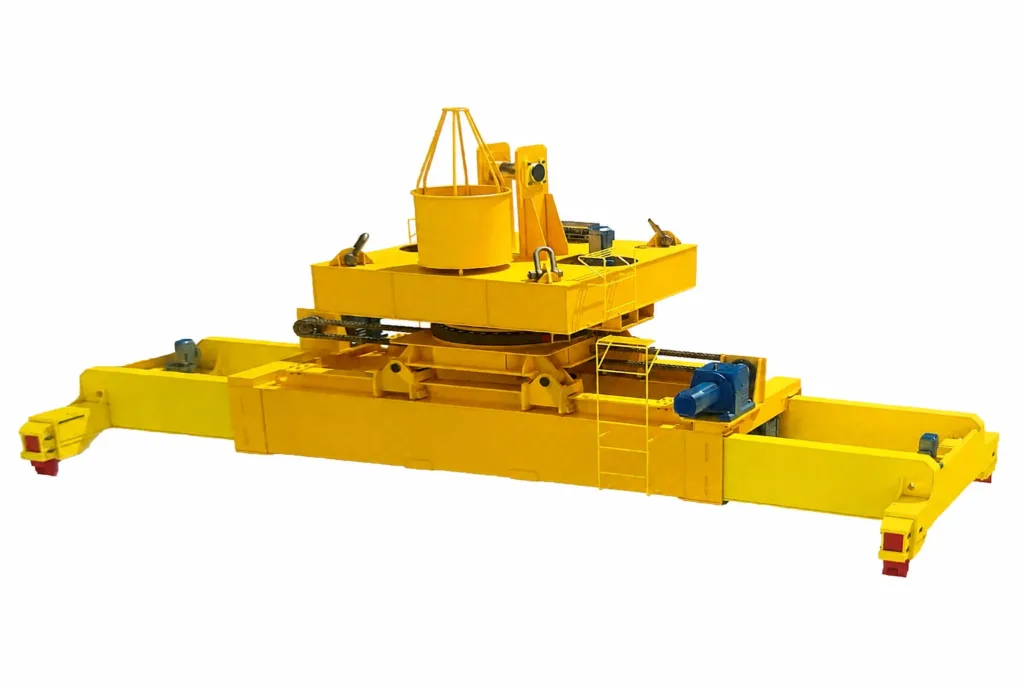
Container spreaders
Engage container corner fittings with a spreader matched to the box and lifting machine.
Explore container spreaders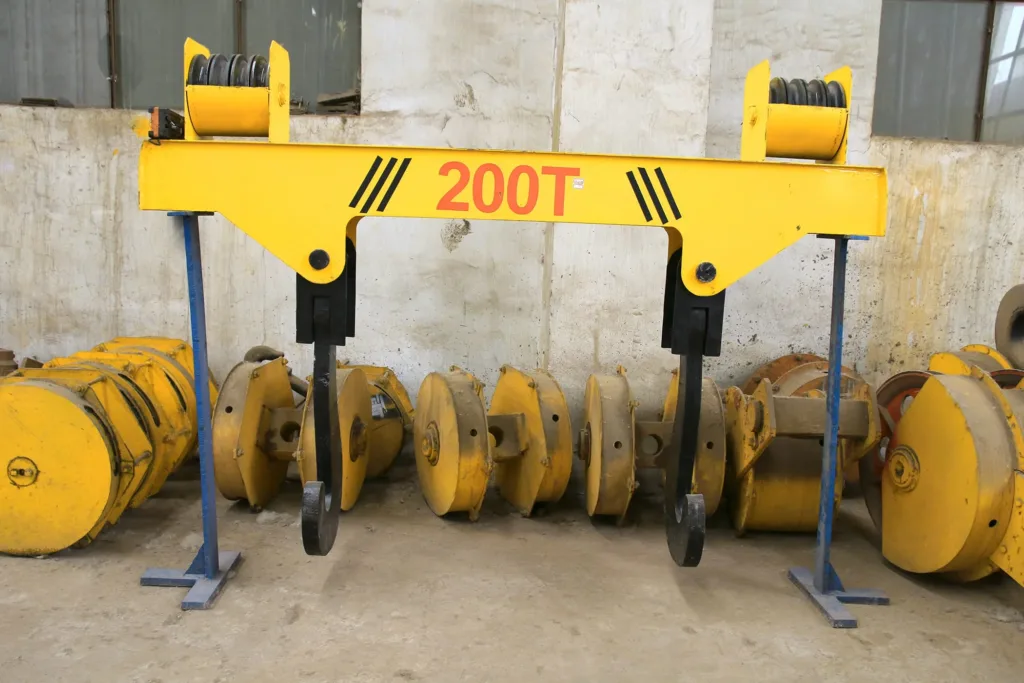
Built around a defined interface.
Ladle hooks and beams, carbon-block clamps and ingot-handling tools follow the geometry and conditions of a particular process. Start with the workpiece drawing, contact temperature and required movement. Supply scope and protective functions are confirmed for that application.
Where does the load
actually rest?
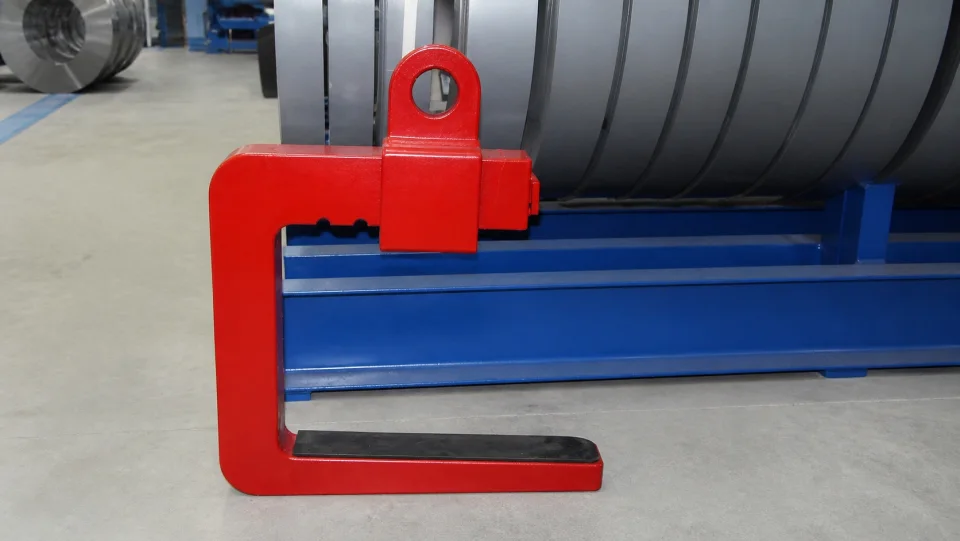
This unloaded C-hook makes three practical checks visible. Select a numbered point to see what must match. Other attachments need their own contact checks.
Check the space.
And the complete weight.
A suitable attachment still has to fit the lifting machine and the pickup location. These checks help define the complete arrangement.
- 01
Include the attachment
Provide the load range, attachment and rigging weight, hook details and any multi-hook arrangement.
- 02
Show the whole lift
Include slings, the attachment, load height and room to enter, turn and release the load at both ends.
- 03
Identify the interface
Confirm electrical, hydraulic or pneumatic supply, or the hoisting and closing functions required for a rope-operated grab.
01Can one attachment handle all sizes in our range?
Sometimes, within a defined adjustment range. Share both the smallest and largest workpieces, their weights and contact geometry. Adjustable spacing or opening does not mean the same capacity applies to every configuration.
02What is included with the attachment?
Identify whether you need the lifting device alone or also matching slings, connecting hardware, controls, power connections and a storage stand. For a powered device, define which crane functions and signals are included.
03What information can we review before ordering?
Agree the arrangement drawing, rated capacity for the selected configuration, operating limits, inspection and test documentation, and maintenance information. Any certificate requirement should refer to the actual equipment and project destination.
Show us the load.
And the pickup.
Send a drawing or photos. Include how the load starts, how it needs to arrive and any surfaces that must be protected.
Discuss a lifting attachment- Weight range, dimensions, material, centre of gravity and permitted contact areas.
- Single piece or bundle, pickup and delivery positions, rotation or turning.
- Hook details, clear height, available power and operating environment.