
Industrial Transfer Systems
Move the load.
Connect the workshop.
Rail carts, trackless platforms and industrial trailers for moving coils, tools and large assemblies between work areas. Choose the route first, then the steering, load support and control.
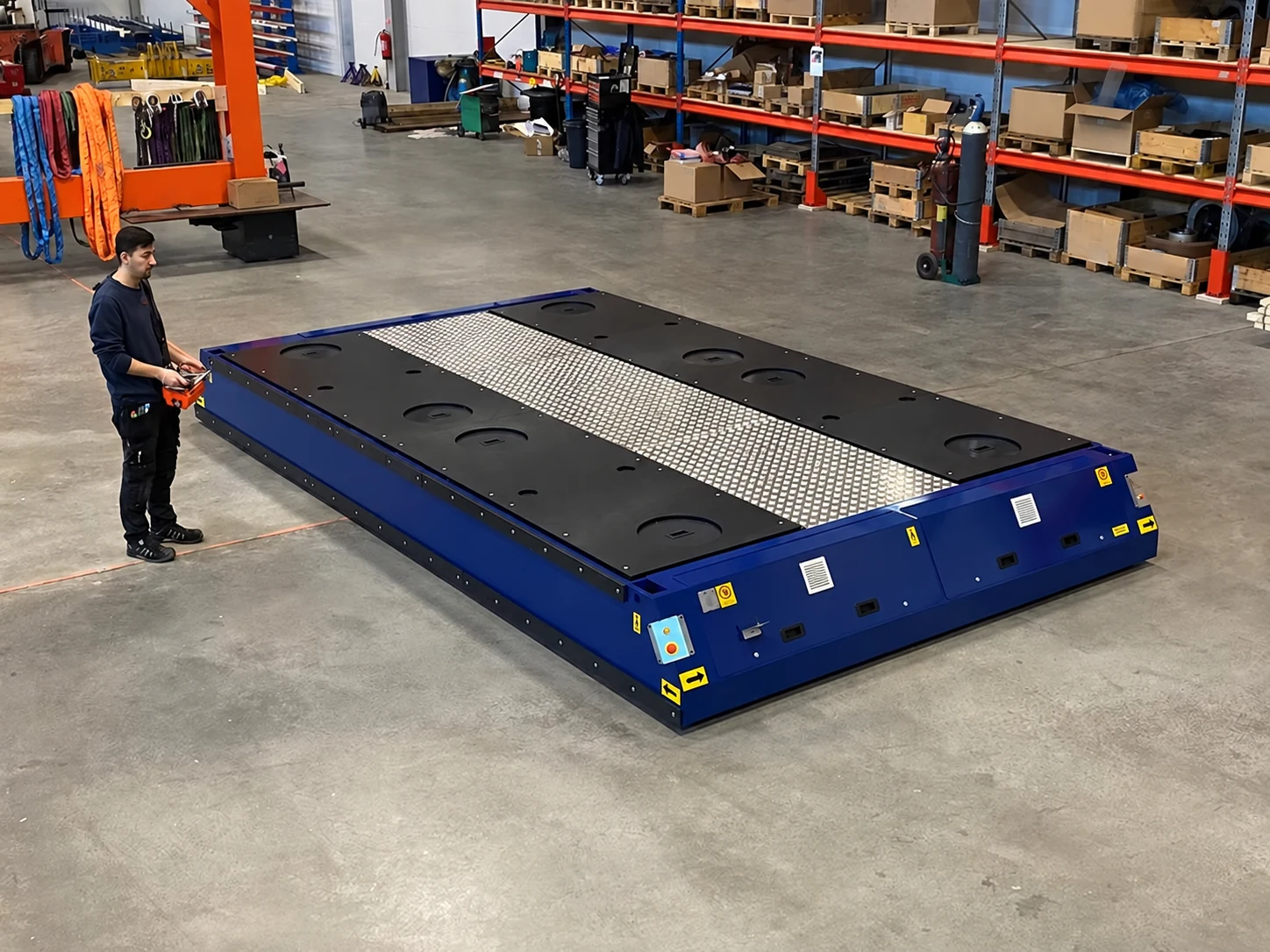
Fixed rails.
Or a steerable floor route.
Start with the route you can provide. Rail and trackless vehicles can both use custom decks; automation is a separate choice.
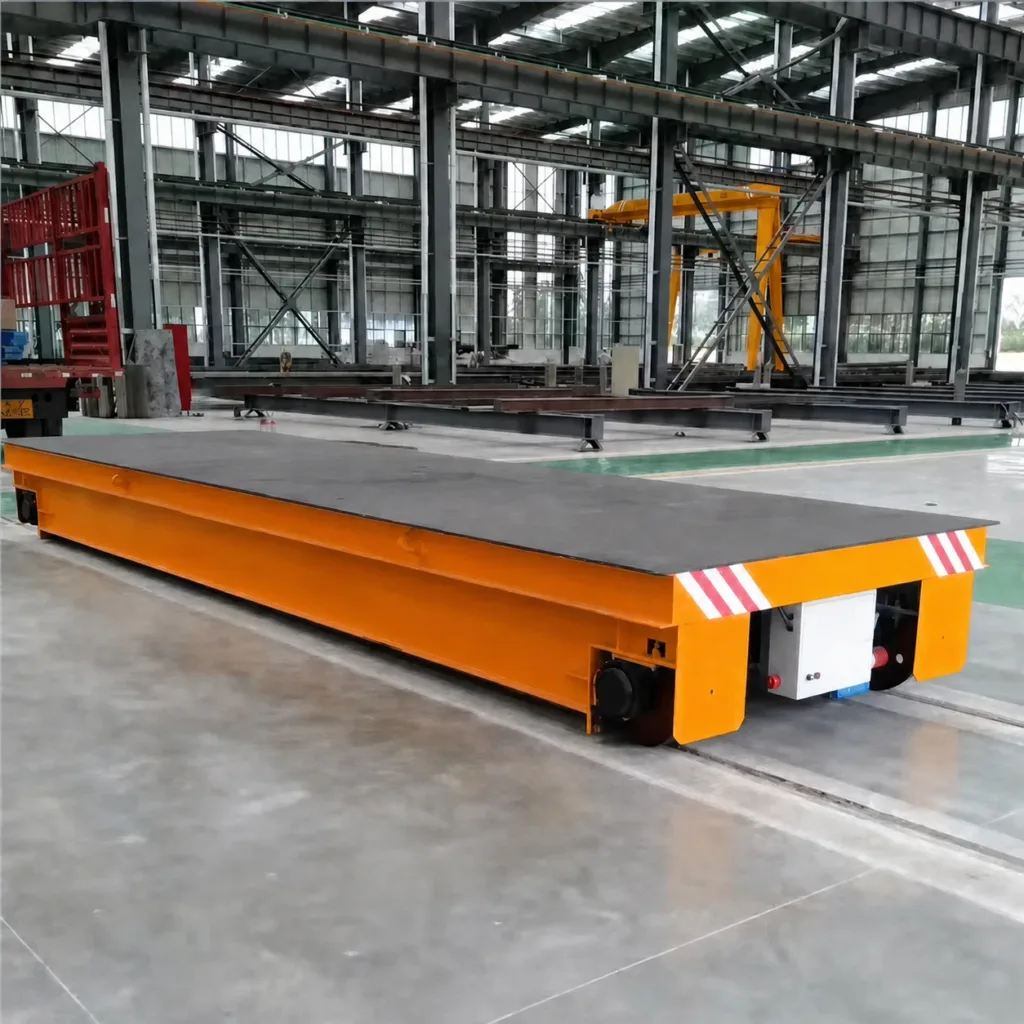
Rail transfer carts
A repeatable path between bays, machines or storage positions. The rail layout fixes where the cart can travel.
Explore rail transfer carts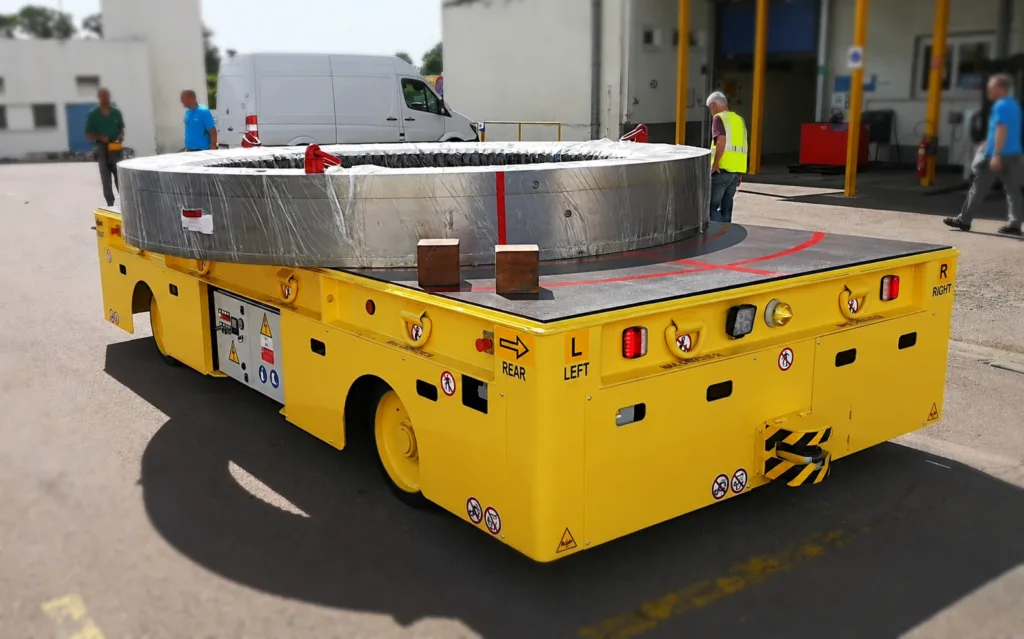
Trackless transfer carts
Steer between pickup points without laying rails. Check the full turning path with the load on board.
Explore trackless transfer cartsNeed to move sideways?
Or tow the load?
These solve different problems. Omnidirectional movement is a steering capability; a trailer relies on a separate towing vehicle.
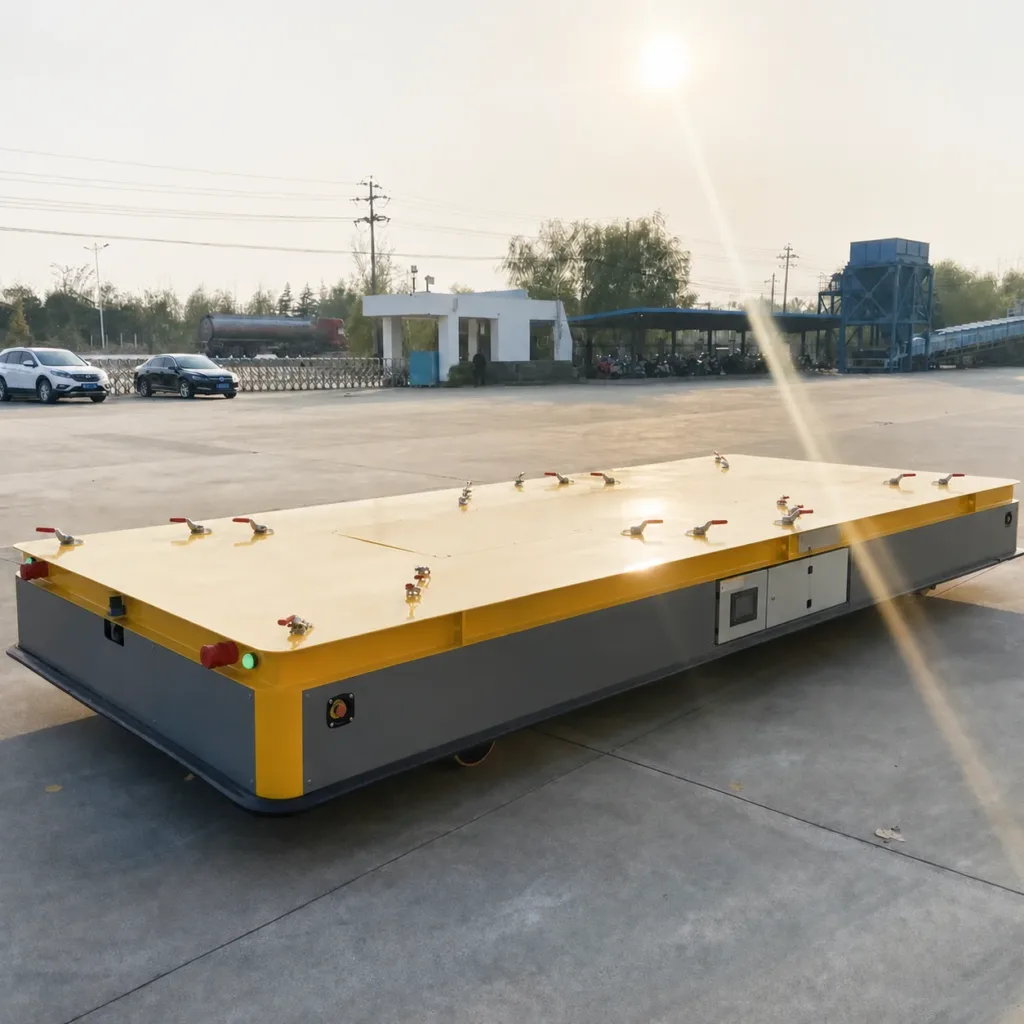
Omnidirectional platforms
Bring a long or wide load alongside a workstation without the turning arc of conventional steering.
Explore omnidirectional platforms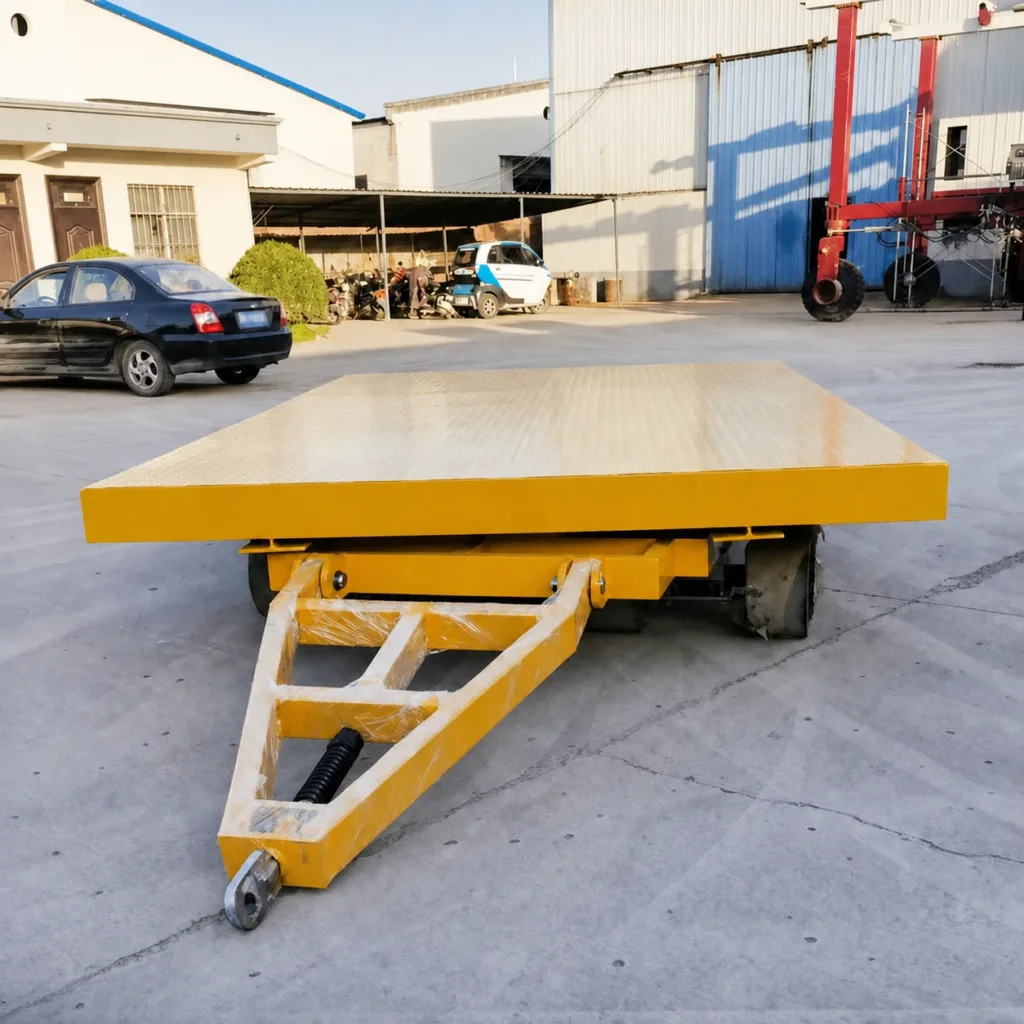
Industrial trailers
Use a towable load platform with a suitable tug or forklift. Check the towing vehicle and trailer as one combination.
Options & site checks
- Identify the coupling, drawbar, steering arrangement and swept path through corners.
- Define the load, slopes, braking and how the trailer is loaded. Automatic towing does not imply automatic coupling.
Need autonomous logistics?
Explore robot vehicles for repeatable pallet, rack and towing tasks. Keep the load carrier and the vehicle control requirements distinct.
Explore mobile roboticsFrom a rail vehicle
to an RGV system.
An automated RGV connects named stations. The scope includes the transport task and the receiving equipment, as well as the cart.
Explore automated RGV systems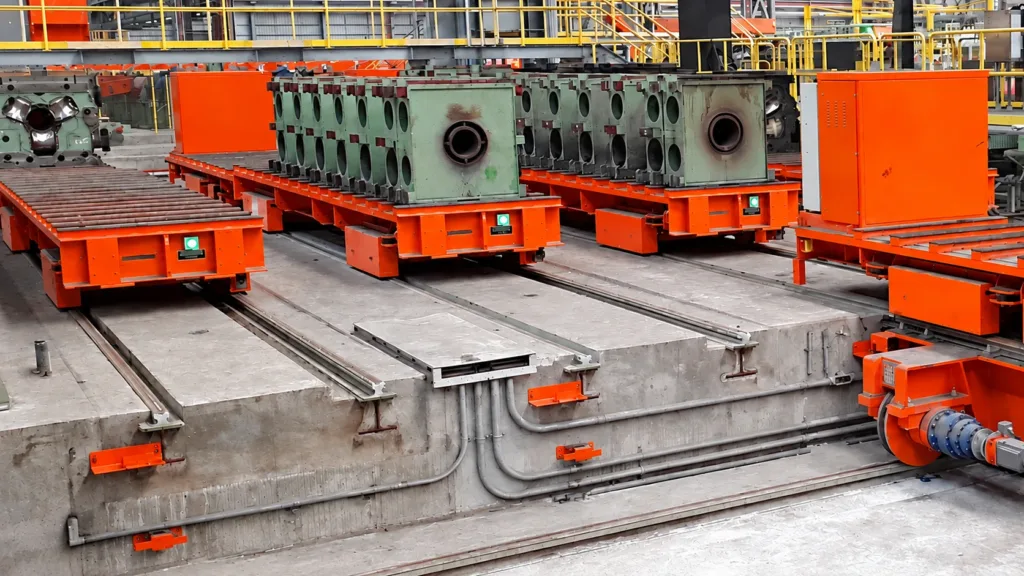
Arrive. Align. Transfer.
Define the stopping positions, load transfer mechanism and ready/complete signals at each station. Conveyor or lifting decks can handle the handoff; the required arrangement follows the load and the receiving equipment.
01What is included beyond the cart?
The agreed scope can include station positioning, an onboard conveyor or lifting mechanism, task controls and interfaces to the production line. Identify who supplies the fixed stations, track and higher-level control. A rail cart alone is not a complete automated line.
02What happens if a station is occupied?
Define where the vehicle waits, how a task is resumed and how an operator can recover the load. Manual service controls may remain part of an automatic system. Stopping accuracy and cycle time must be checked for the selected vehicle, load and station.
The deck carries the load.
The interface completes the move.
Choose how the load is supported and how it leaves the cart. A flat platform, coil saddle and conveyor deck perform different jobs.
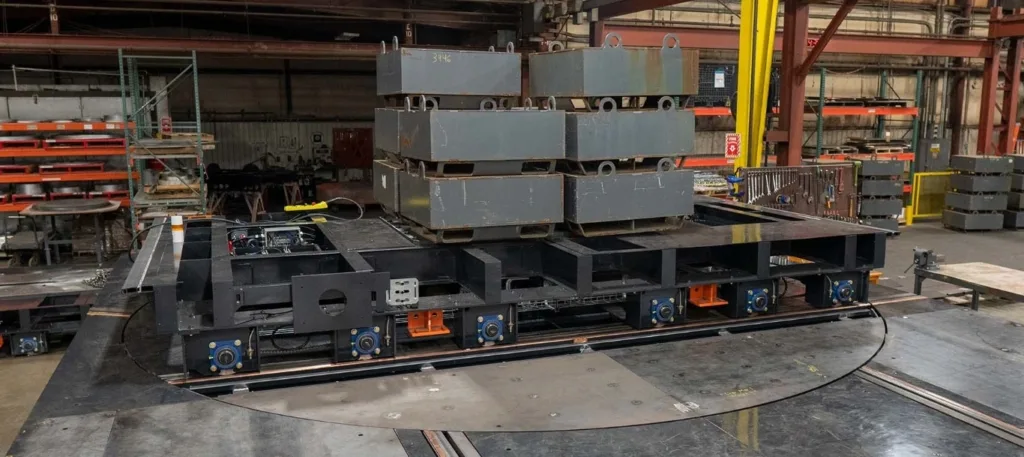
A turntable connects tracks.
A rotating table reorients the vehicle to a connecting track. For parallel tracks, a ferry or transfer table can carry a vehicle sideways. The rail alignment, available space and controls belong in the route design.
Large loads need
the right support.
The task may require a custom transporter, but heavy-duty is not a separate navigation method. Start with the load and the full route.
Explore special transporters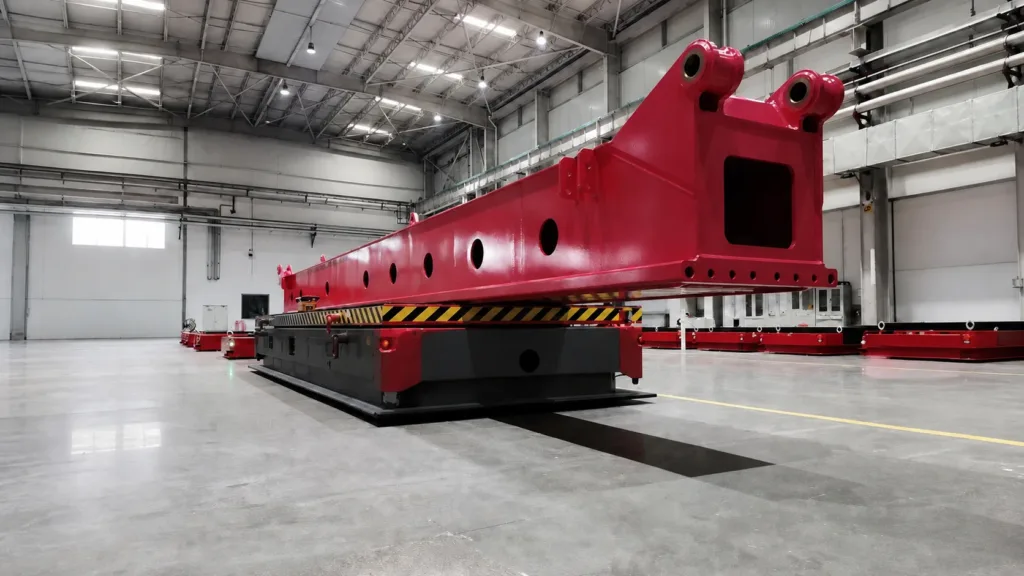
Show where the load bears.
A large assembly may need several support points and a chassis arranged around them. Share the support locations, footprint and centre of gravity, along with floor capacity and doorway clearances.
01Moving tools between storage and a press?
Specify how the tool is lifted onto the cart and positioned at the machine. A transport-only platform and a die-change system with lift or push-pull functions are different scopes.
02Moving coils between bays or process stations?
Show the coil orientation and size range, how it is supported and how it is picked up. Saddle design and station height depend on those details.
03Moving between buildings or outdoors?
Include thresholds, gradients, surface condition, drainage and weather exposure. Do not assume an indoor vehicle can use the same wheels, controls or protection outdoors.
Still choosing the vehicle type?
Use the transfer-cart buying guide to compare operator-controlled transport and automated movement.
View the buying guideSend a photo.
Sketch the route.
Tell us what moves, where it starts and where it needs to finish. We can then discuss the vehicle, load support and station equipment required.
Discuss your transfer- Weight, dimensions and support points.
- Distance, rails or floor, corners and slopes.
- How the load is lifted, placed or conveyed.