
Industrial cranes · General coverage systems
Map travel.
Set support.
Choose the crane from the working envelope and support path. Then define the load, duty, environment, controls and delivery boundary inside that format.
- 01
- 02
- 03
- 04
- 05
Four coverage formats.
Four different support paths.
Choose by working geometry and reaction path before comparing capacity. Process cranes and port, marine or infrastructure equipment are separate product groups because their operating requirements and system interfaces differ.
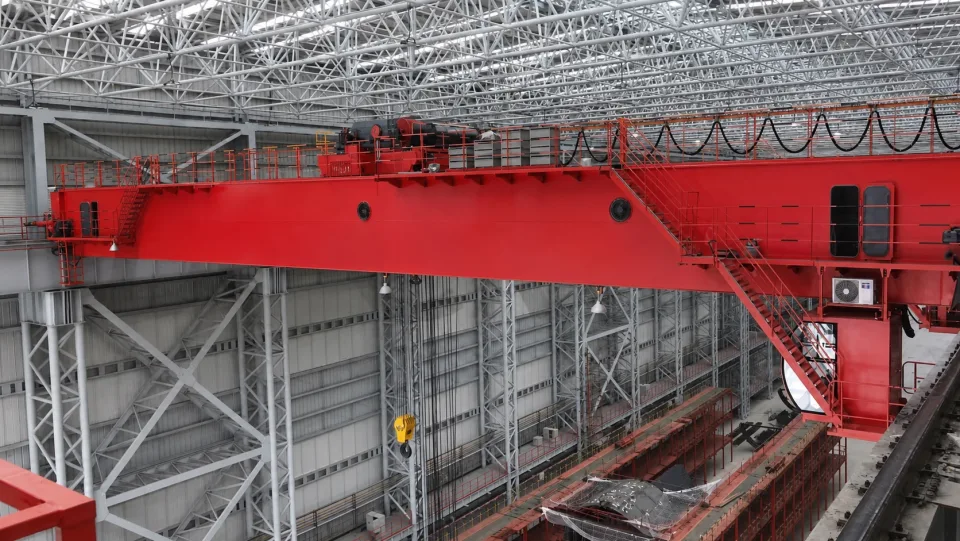
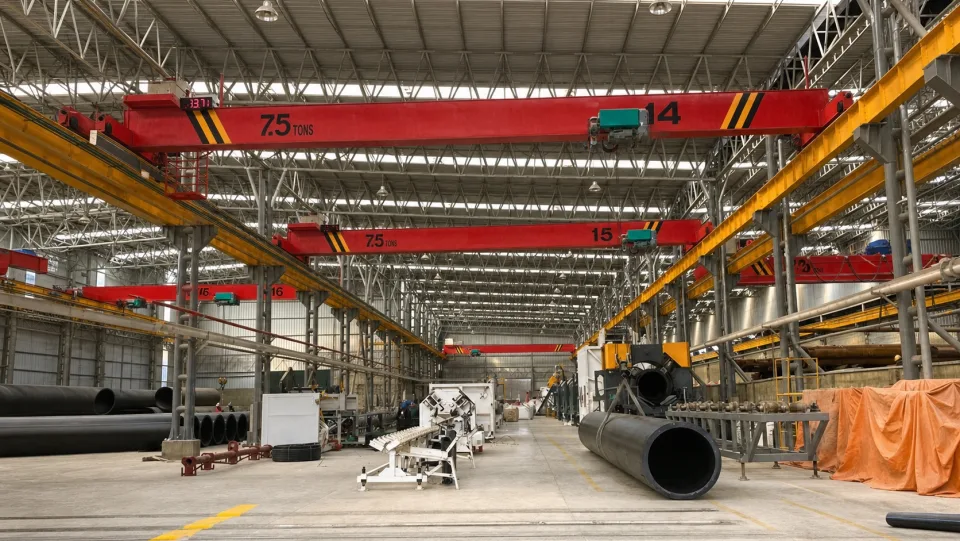
Overhead & Bridge Cranes
Use elevated runways to provide rectangular bay coverage while keeping the working floor open.
- Single-girder, double-girder and under-running formats
- Top-running or suspended runway relationships
- Full-bay production and storage coverage
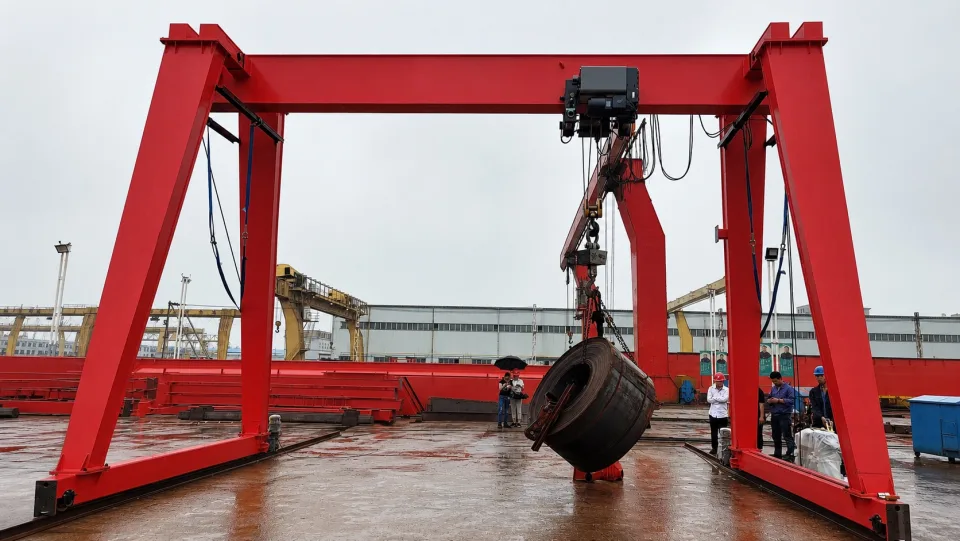
Gantry & Portable Cranes
Carry the bridge through legs to ground level when the site cannot or should not support elevated runways.
- Full, semi-gantry and rail-mounted arrangements
- Outdoor yards and unsupported indoor bays
- Portable formats for bounded or temporary work zones
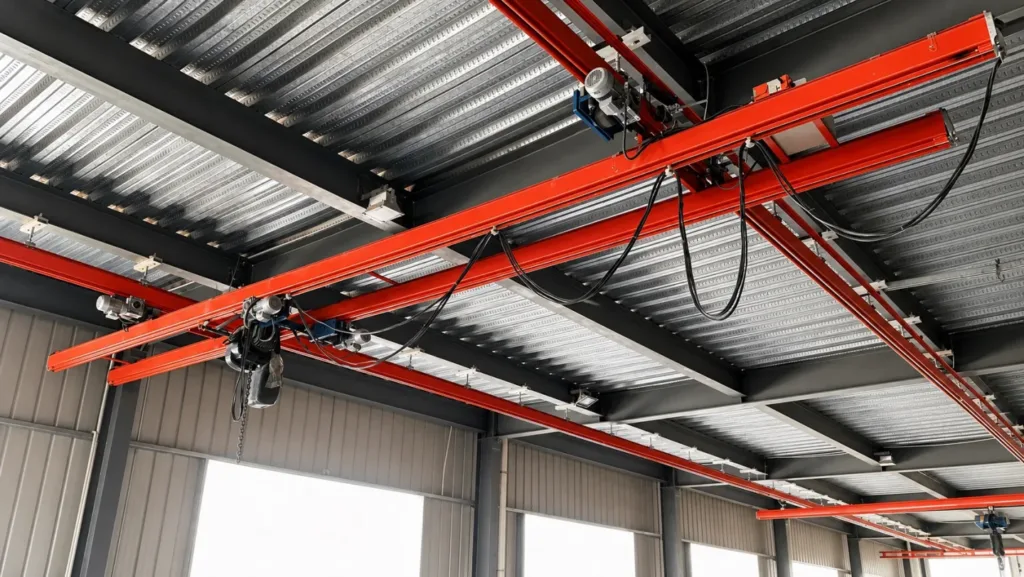
Workstation & Monorail Systems
Bring repeated lifting into a defined cell or route the load along a controlled linear path.
- Freestanding or ceiling-supported workstation systems
- Local rectangular coverage for repeated handling
- Straight, curved or switched monorail paths
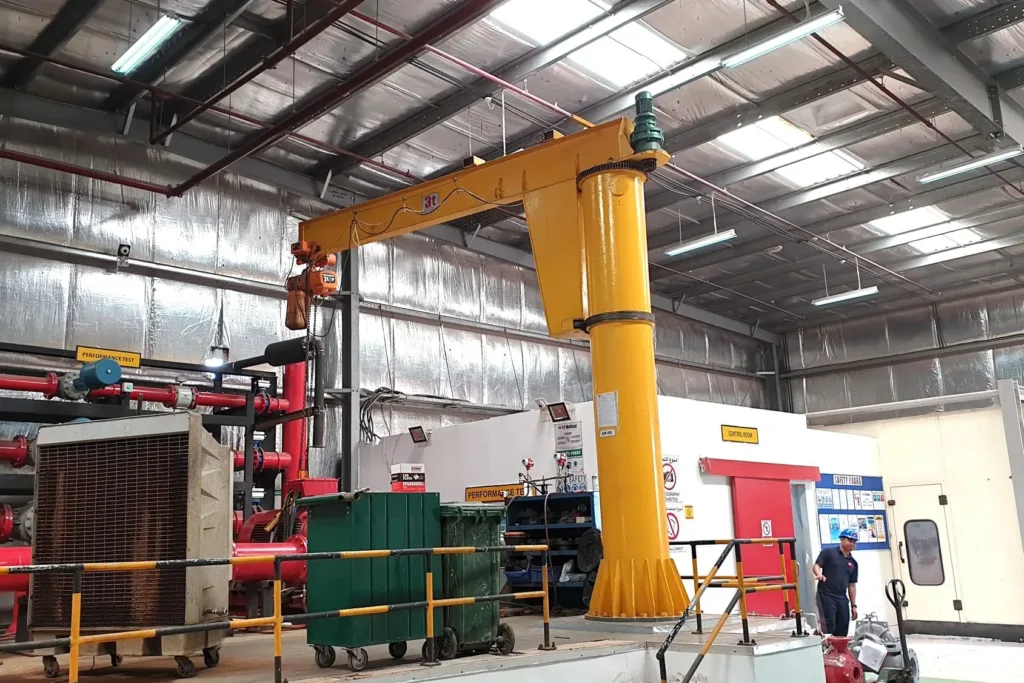
Jib Cranes
Serve one machine or work position through a controlled radial envelope and known mounting path.
- Freestanding, wall-mounted and column-mounted formats
- Outreach, rotation limits and hook approach
- Dedicated machine, assembly or maintenance positions
Compare only
what changes the route.
This table compares four general industrial formats. Capacity, duty, lifting mechanism, controls and protection are configured after the coverage and support relationship is credible.
Three evidence groups.
One connected crane system.
These inputs accumulate; no single stage selects another product. The format cards own navigation, while this sequence shows what must be resolved around the selected crane.
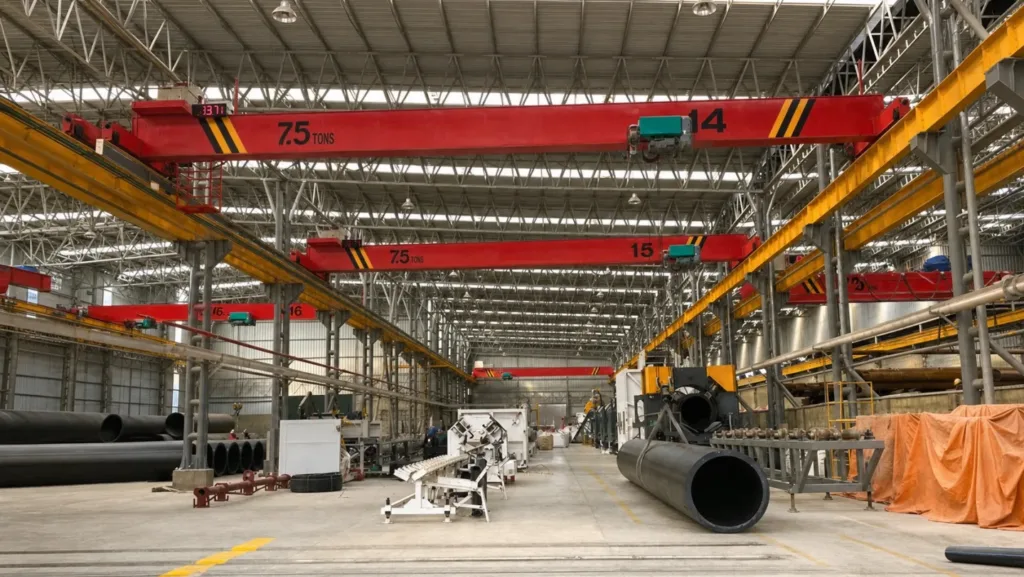
Connect the working envelope to a credible support path. 01Where must the load travel—and where can the reactions go?
Pick, travel and release points define the useful envelope. Building runways, dedicated steelwork, ground rails, frames, columns and foundations then decide which crane formats remain credible.
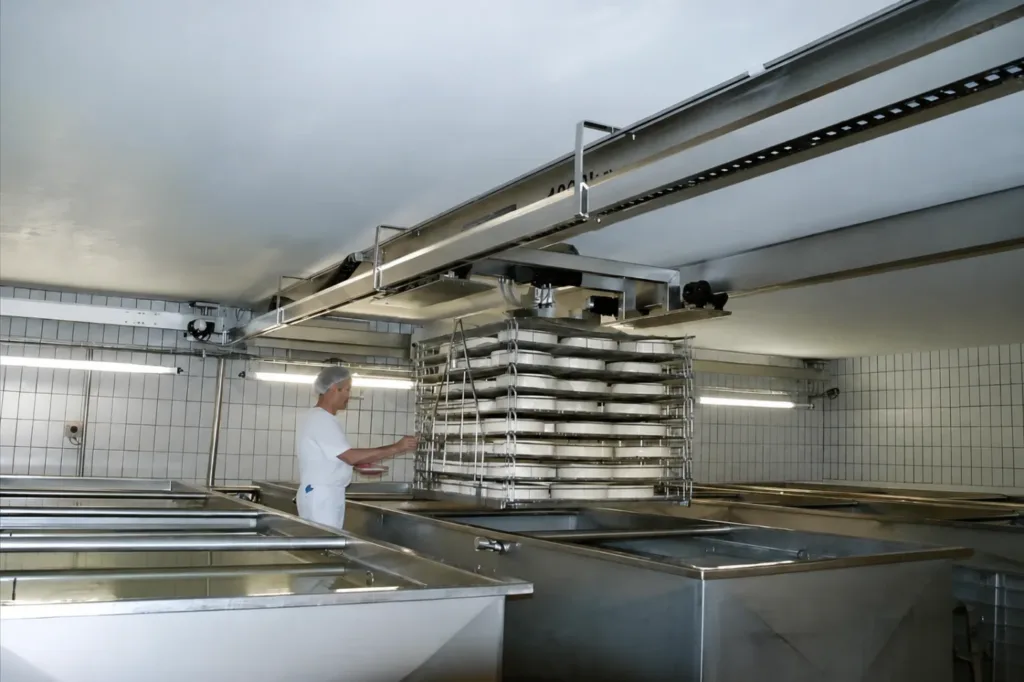
Configure the chosen format around the real operating demand. 02What changes during the lift and operating cycle?
Load geometry, centre of gravity, engagement, lift, starts, speeds, utilisation and exposure determine the mechanism, duty and protection requirements inside the selected crane format.
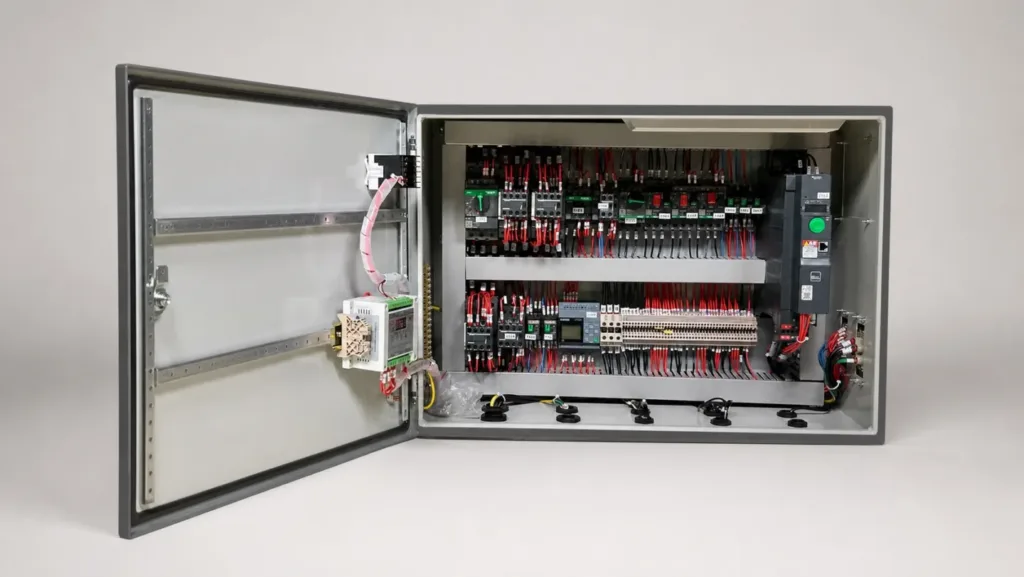
Make interfaces and responsibilities visible before procurement. 03How will the crane be controlled, installed and accepted?
Power, controls, access, logistics, installation, commissioning, documentation and acceptance roles form one delivery boundary around the selected equipment and retained site.
Questions that change
the crane format.
These answers stop at the general-format decision. Detailed configuration, performance and delivery questions continue inside the selected product page and project brief.
01Should I choose an industrial crane by capacity first?
Capacity is necessary, but it does not define the coverage pattern, support path or hook approaches. Choose the credible crane format first, then size its lifting mechanism, duty, controls and supporting interfaces.
02When does an overhead crane make more sense than a gantry crane?
An overhead crane is the stronger route when elevated runways can provide the required bay coverage while keeping the floor open. A gantry becomes relevant when reactions need to travel through legs to ground level, the site lacks a suitable runway or the work is outdoors.
03How do top-running and under-running overhead cranes differ?
A top-running bridge travels on rails above the runway beams; an under-running bridge is suspended from the lower flange of its runway. The building section, available headroom, spans, reactions and hook approaches decide whether either arrangement is credible.
04How do I separate workstation, monorail and jib coverage?
Use workstation tracks for repeated handling across a local rectangular cell, a monorail for a defined linear or routed path, and a jib when one radial envelope around a machine or service point connects the required positions.
05What if the existing building cannot carry an overhead-crane runway?
That changes the format rather than ending the project. A dedicated freestanding runway, gantry arrangement or smaller local system may remain credible after the floor, foundation, access and working-area evidence is reviewed.
Send the area.
Not a finished specification.
For a new facility, a layout and intended route are enough to begin. For an existing site or replacement, add the photos, nameplates and drawings you have. The first review identifies credible crane formats, missing site evidence and the next useful equipment decision.
Map your crane requirement- Pick, travel and release points across the working envelope
- Weight, geometry, attachment and lifting condition
- Building, runway, floor, rail or foundation information
- Cycles, utilisation, exposure and protection requirements
- Power, controls, access, installation and acceptance scope
- Existing equipment, retained interfaces and intended change