
01 · SOLUTIONS / OPERATING CONTEXTS
The load is only
the start.
Material handling becomes a production issue when a load crosses a process boundary: receiving into storage, storage into a machine, a hall into a yard, or packing into dispatch. Start with the route. Define the lifting and transfer roles around it.
- 01
- 02
- 03
- 04
Start with the operation.
Then define the handling roles.
The product name is not the starting point. The material, hand-offs, operating pressures and system boundary determine which equipment and engineering support belong in the discussion.
- 01
The real material.
Define the load form, condition, attachment and any change between receiving and dispatch.
- 02
Every hand-off.
Mark where the load waits, changes equipment, crosses traffic or enters another process zone.
- 03
The operating pressure.
Heat, cold, dust, wind, hygiene, timing, access and redundancy can change the handling concept.
- 04
The system role.
Separate equipment, structure, controls, interfaces, recovery and acceptance before defining supply scope.
Where does the flow
break down?
Each industry has its own material, timing, access and hand-off conditions. Select one to inspect the process moments that define the handling discussion.
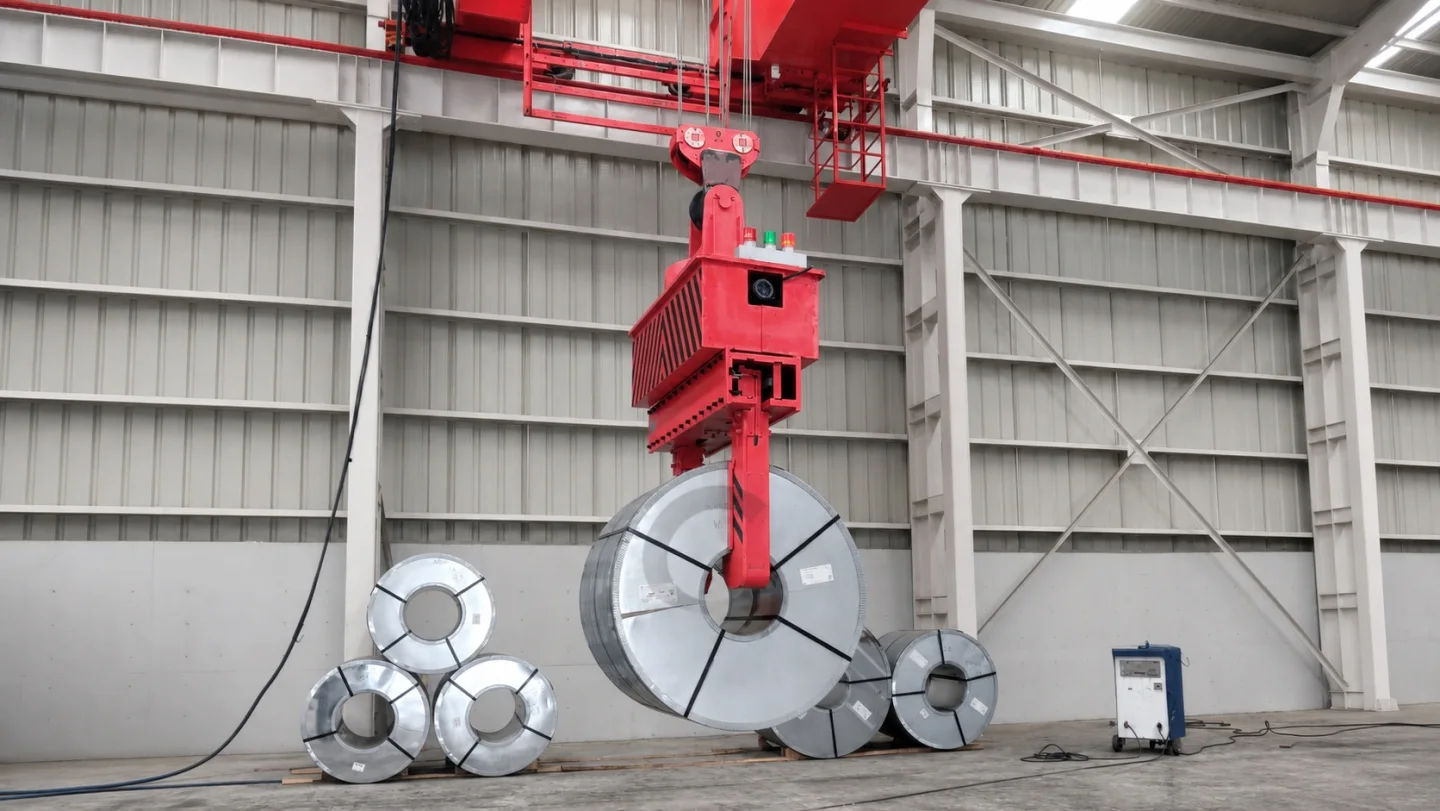
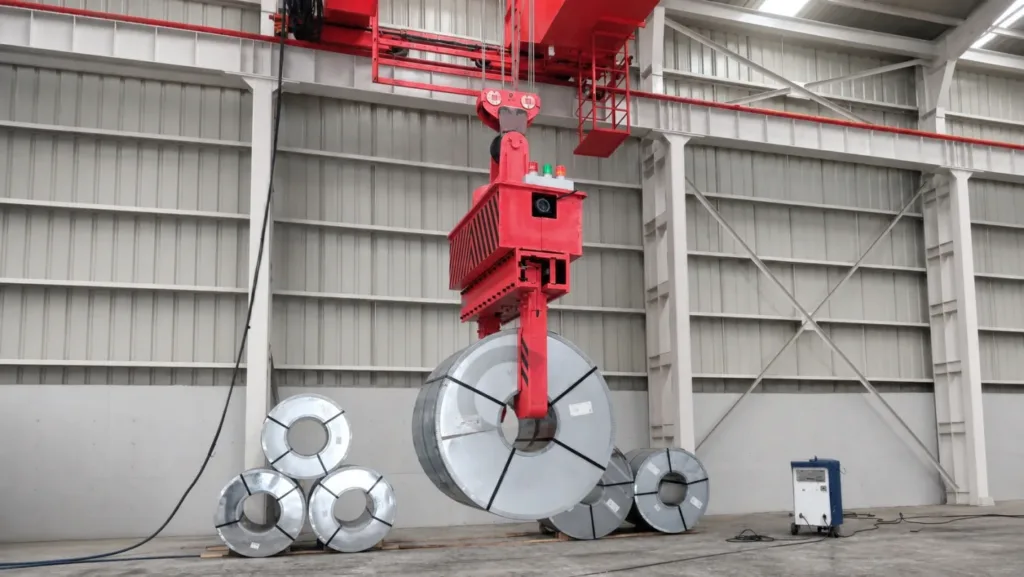 Steel Mills & Metal ProcessingReceiving, processing, inter-bay transfer and dispatch all change how coils, plate and long products should move.
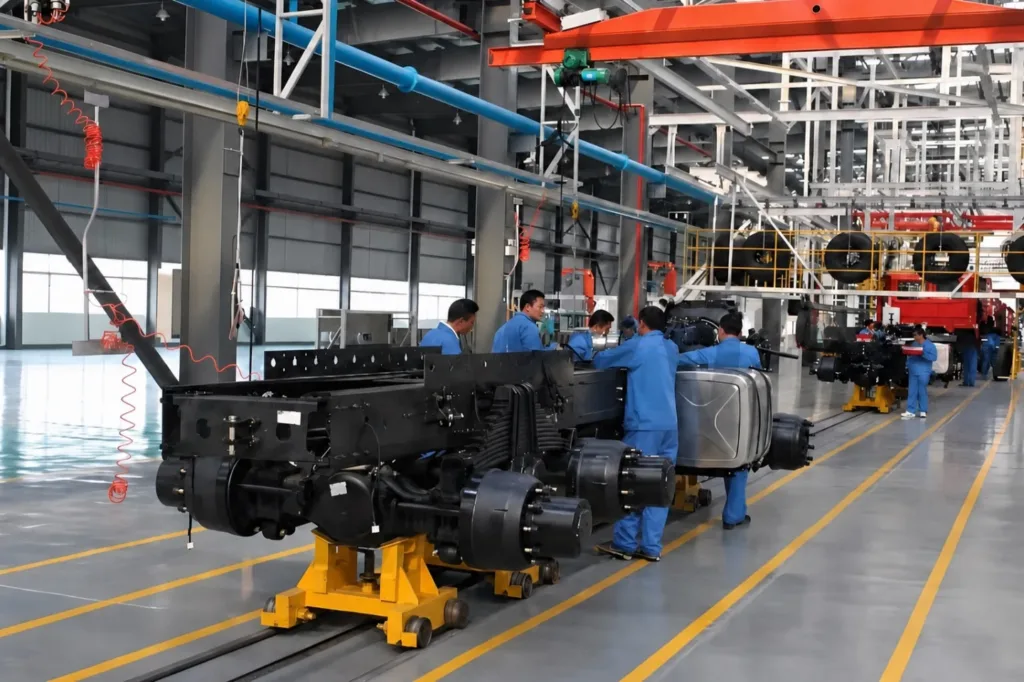 Automotive & Assembly ManufacturingTool readiness, line-side presentation, inter-zone hand-offs and maintenance access decide whether flow keeps pace.
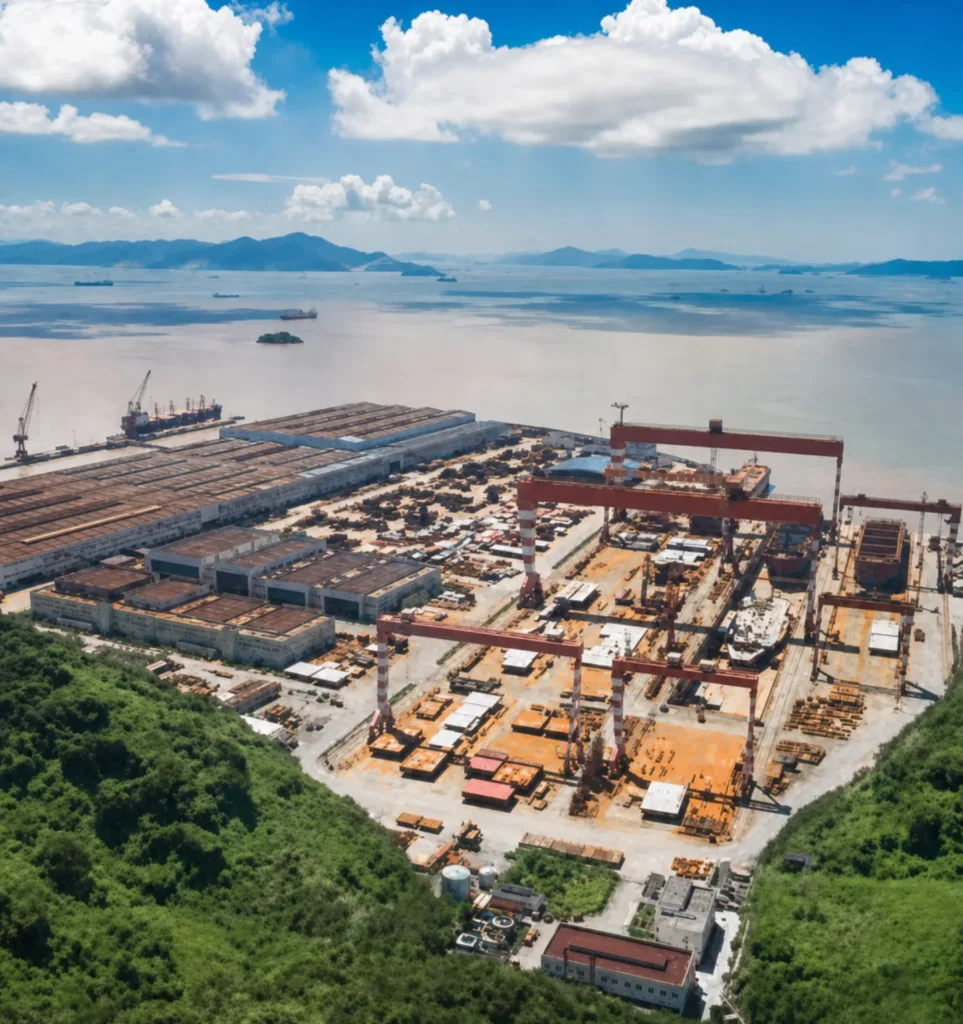 Shipyards & Marine FabricationPlate fabrication, block assembly, hall-to-yard transfer and outfitting each create a different movement boundary.
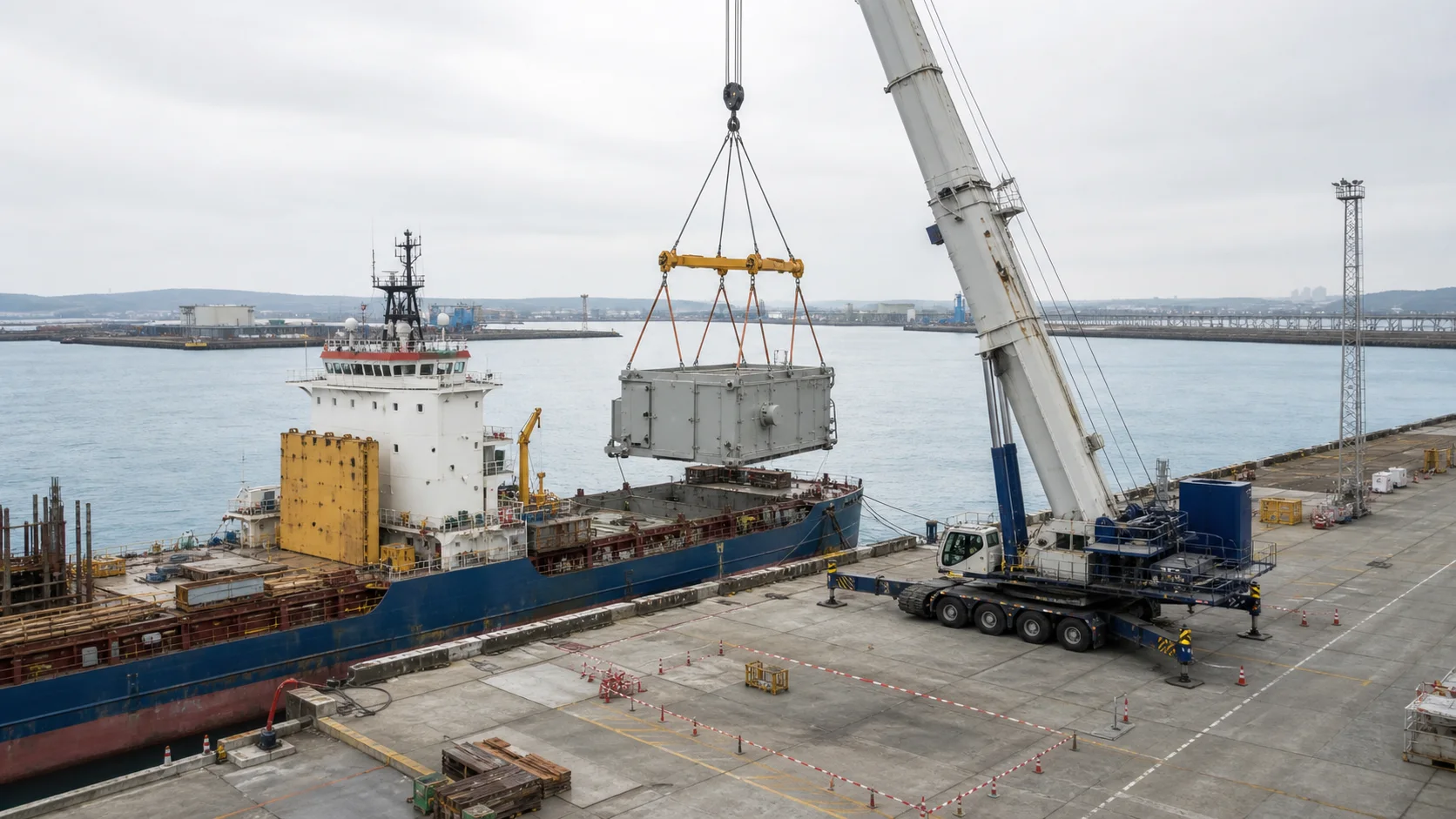
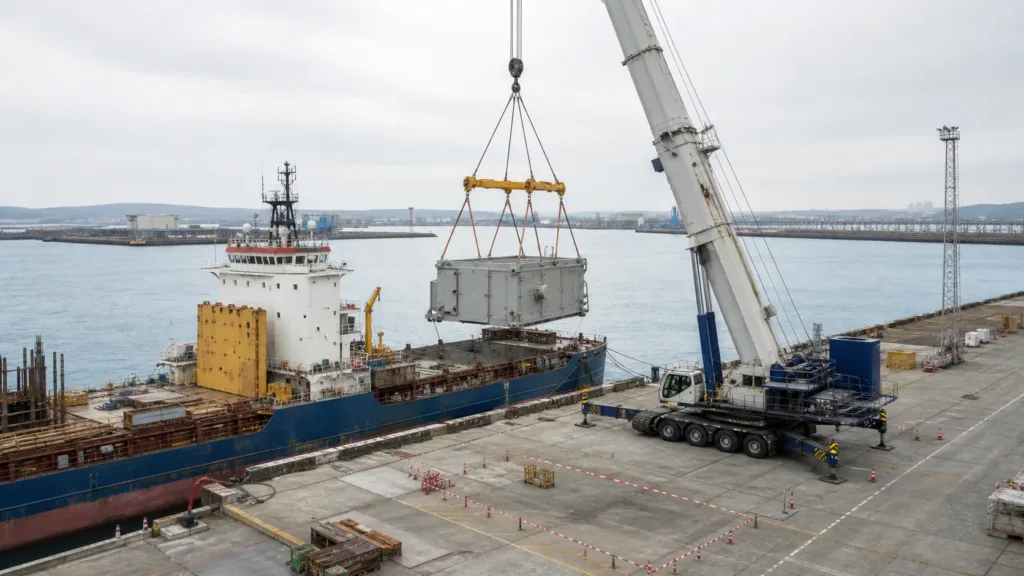 Ports & Marine TerminalsVessel interface, quay transfer, yard storage and landside hand-off define whether each cargo stream can move safely and predictably.
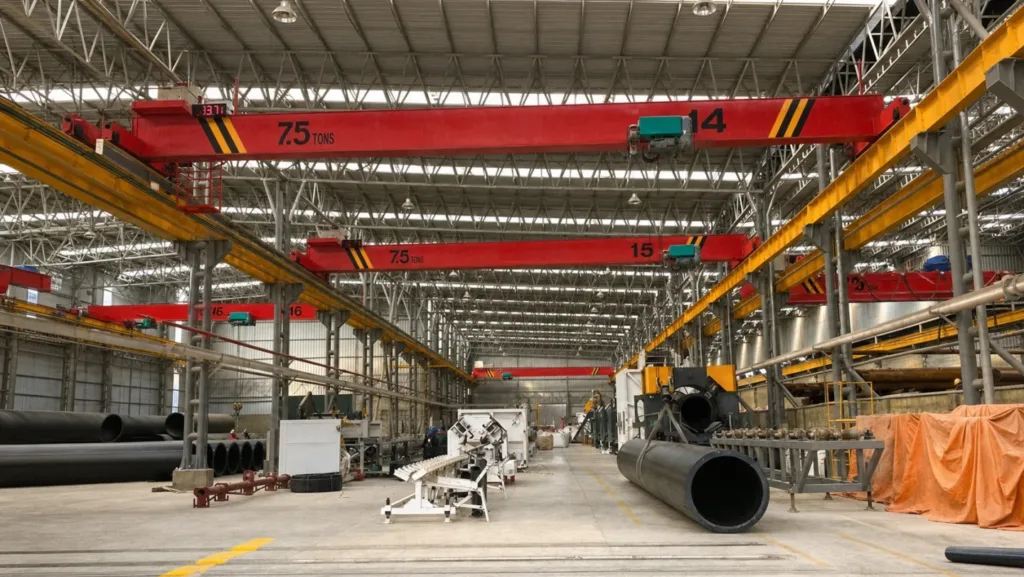 Machinery Manufacturing & Service WorkshopsReceiving, machine service, precision assembly and repair routes make access and positioning as important as lift.
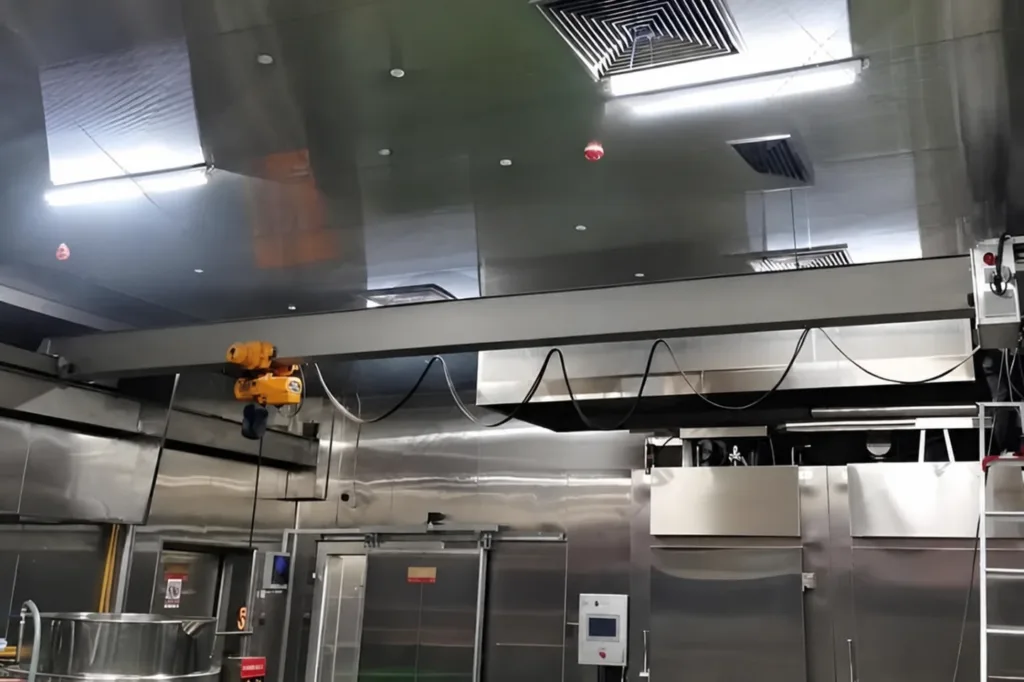 Food & Beverage ProcessingMaterial condition, cleaning access, short maintenance windows and packed-product flow shape the work.
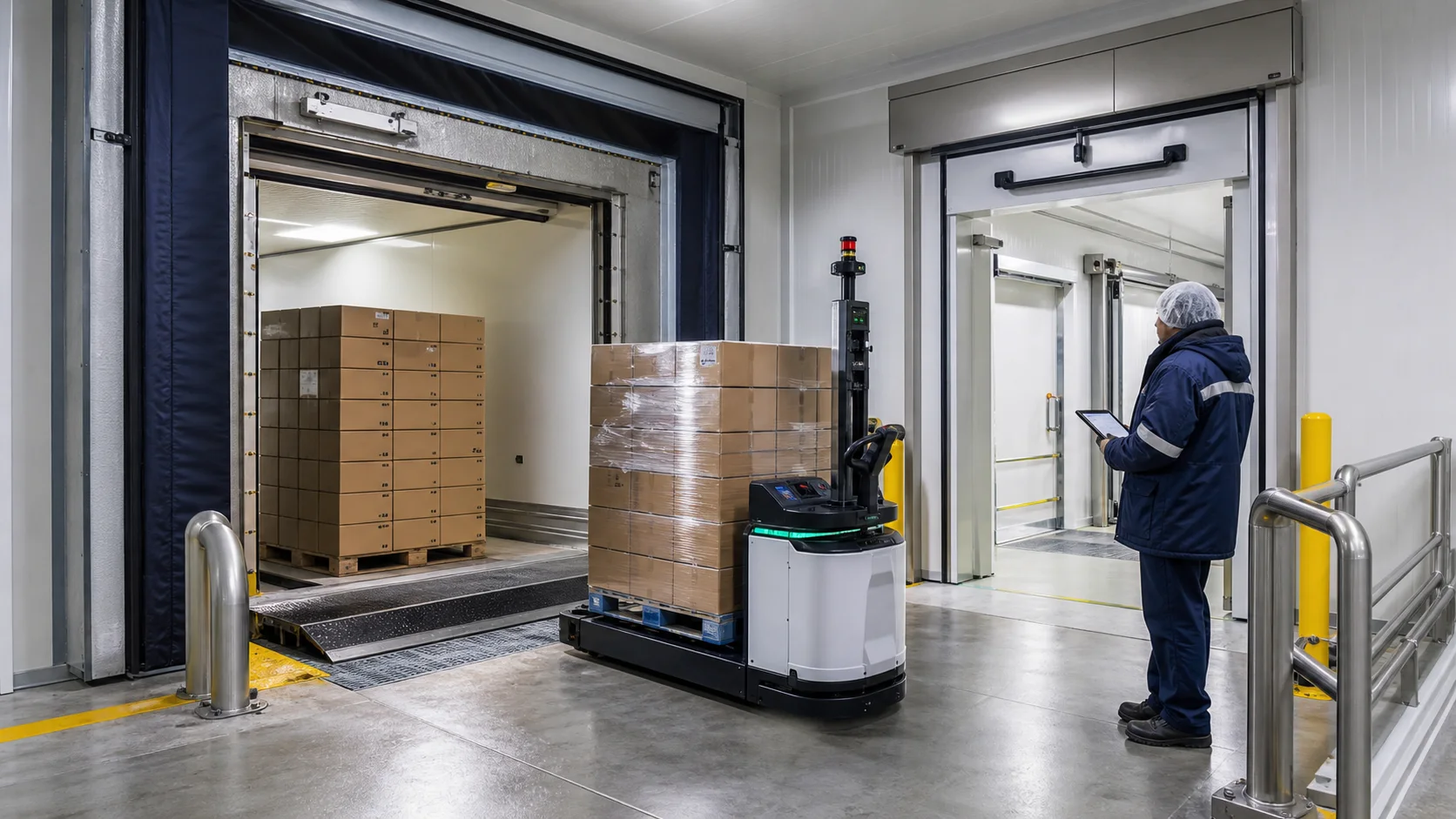
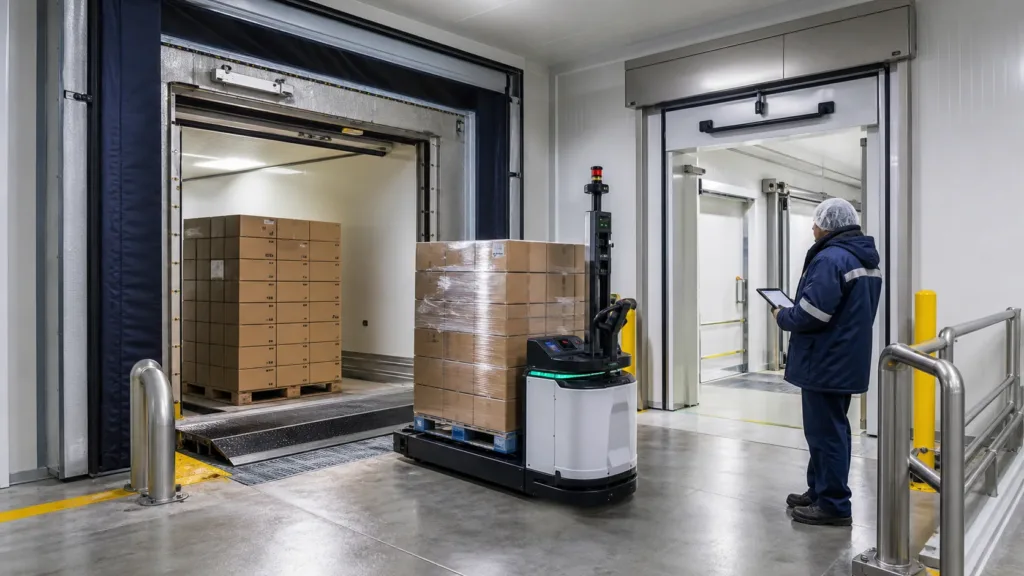 Cold-Chain Storage & DistributionTemperature-controlled receiving, zone transfer, storage and dispatch must preserve product condition without exposing people or flow to avoidable delay.
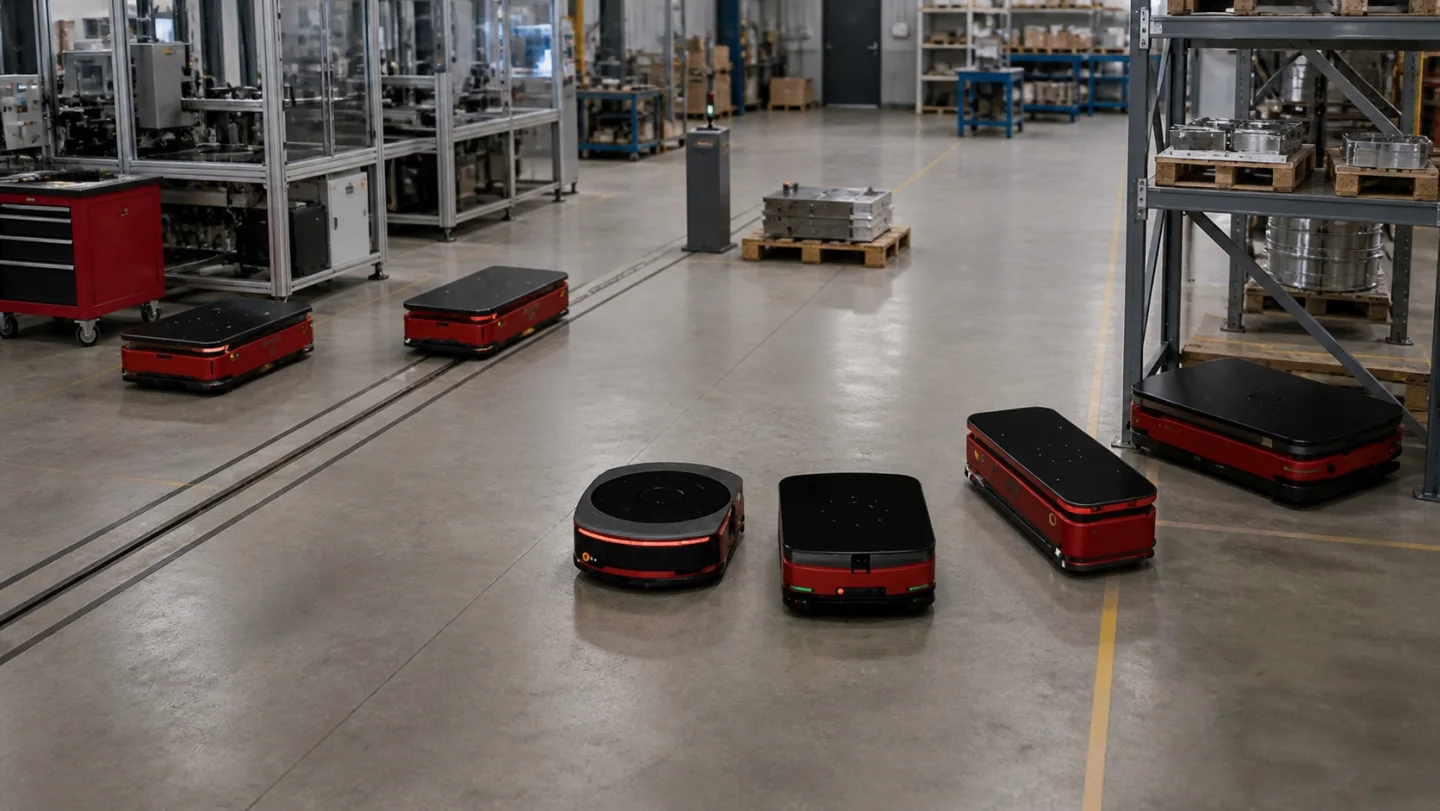
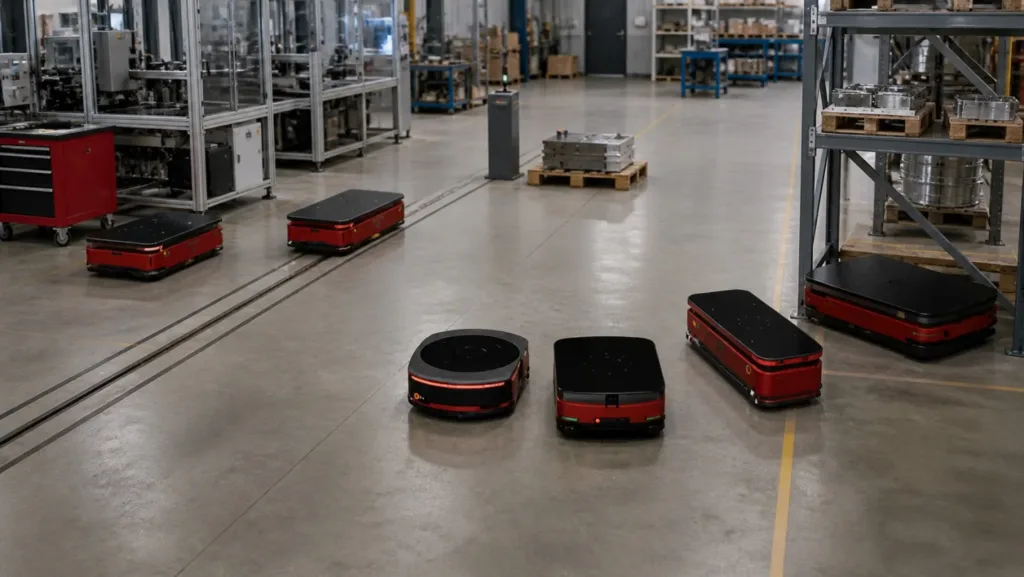 Warehousing, Distribution & IntralogisticsInbound verification, replenishment, consolidation and dock hand-off determine whether inventory moves predictably.
FOLLOW THE BLOCK FROM HALL TO YARD.
Indoor fabrication, outdoor assembly and the transport interface are different operating environments. A credible plan makes each hand-off explicit.
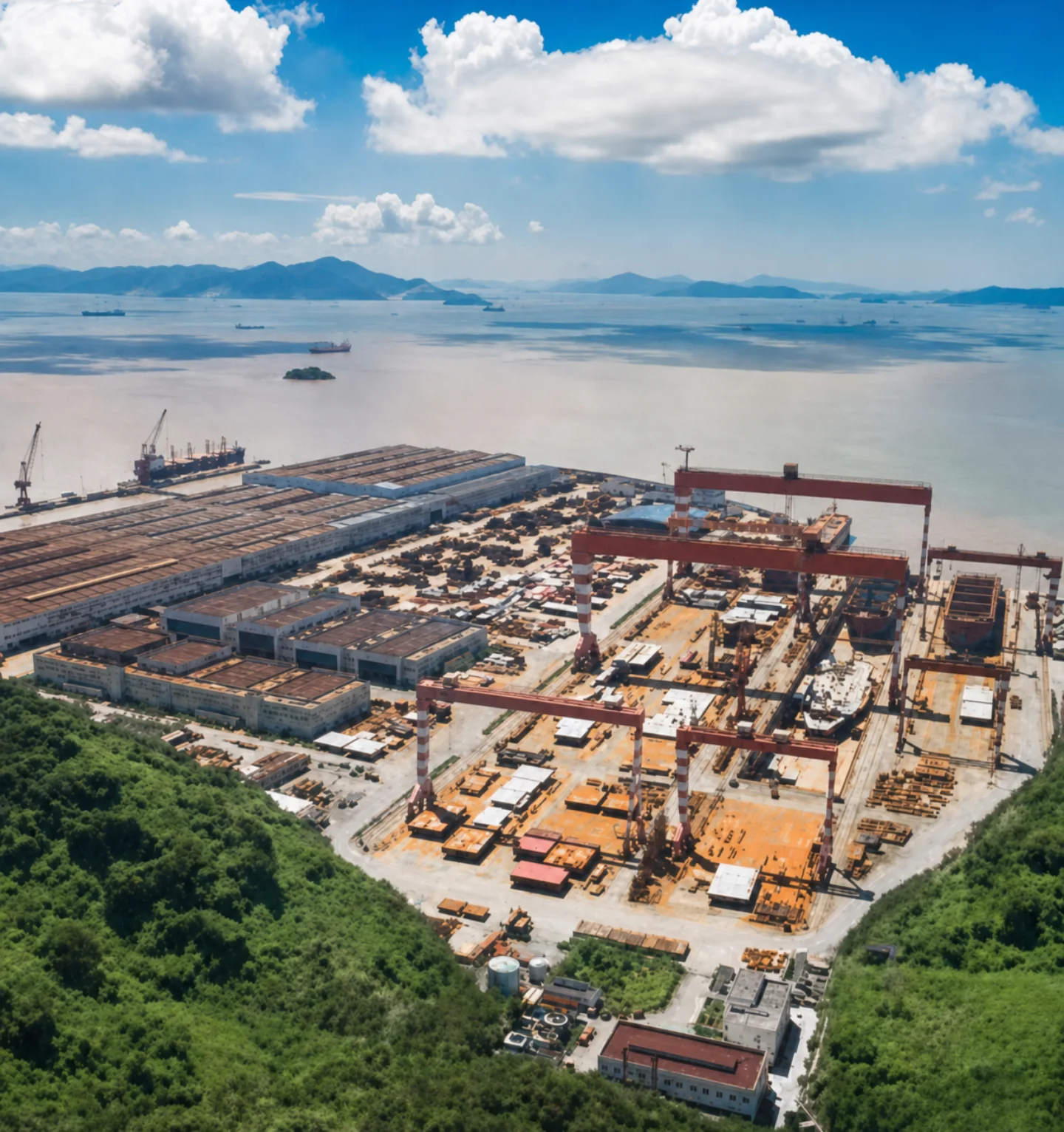
MOVE PLATE THROUGH THE FABRICATION HALL WITHOUT DISTORTION.
Steel plate enters cutting, forming, welding and panel preparation with different support needs at each step. The key questions are how it is picked without damage, what remains clear for welding or fit-up, and how the route behaves when several panels are in progress.
Discuss plate fabrication- Plate / panels / profiles
- Storage → cutting/forming → fit-up
- Support, work-zone access & congestion
- Plate format and stiffness
- Pick-point or attachment
- Indoor span
- Work-zone exclusion
- Weld sequence
- Route congestion
Fabrication-hall coverage, local fit-up lifting and a handling-attachment discussion.
POSITION THE BLOCK WITH ACCESS STILL OPEN TO THE CREW.
During block or module assembly, lifting only adds value if crews can align and hold the work around temporary structures, welding access and neighbouring tasks. Load balance, multi-point picks, visibility and controlled travel define the discussion.
Discuss block assembly- Blocks / modules / structural sections
- Assembly station → alignment → set-down
- Balance, access & visibility
- Block geometry
- Pick-point design
- Balance requirement
- Assembly envelope
- Visibility
- Weather exposure
High-coverage lifting concept, coordinated hoists and site-specific control and communication planning.
TREAT THE OUTDOOR HAND-OFF AS A ROUTE, NOT A GAP.
A module may pass through a door, across a transfer route and onto a transporter or support. The plan must account for clearance, ground or rail interface, turning points, weather exposure and the confirmation point for every transfer of responsibility.
Discuss hall-to-yard- Modules / machinery packages
- Hall → yard route → transporter or staging
- Clearance, ground interface & weather
- Transfer path
- Door envelope
- Ground or rail interface
- Transporter interface
- Weather criteria
- Route segregation
Gantry or ground-rail route, transfer-cart/transporter interface and hand-off controls.
MAKE ROOM FOR INSTALLATION AND THE NEXT SERVICE LIFT.
Machinery packages, piping modules and outfitting components arrive with different packaging, lifting points and installation windows. The handling path must keep access open for service teams rather than using a lifting route as permanent storage.
Discuss outfitting & service- Piping modules / machinery packages
- Receiving → installation → service access
- Elevation, temporary staging & access
- Package dimensions
- Installation elevation
- Work access
- Temporary staging
- Hook approach
- Controls environment
Local jib/workstation coverage, workshop overhead lifting and a service/modernisation route for existing equipment.
WHY THIS INDUSTRY NEEDS ITS OWN HANDLING LOGIC.
Shipbuilding and marine fabrication combine several factories in one site. Plate moves through cutting and forming halls; panels and blocks are aligned around welding access; completed modules cross doors and outdoor routes; machinery packages are then staged for outfitting, installation or service.
The main engineering challenge is the boundary between these environments. Indoor headroom, outdoor wind, ground or rail conditions, transport clearances, large and asymmetric loads, tandem movements and temporary supports all need to be understood before selecting a handling role.
- 01
LARGE IRREGULAR GEOMETRY
Block dimensions, pick points and centre of gravity can matter more than nominal load mass.
- 02
INDOOR–OUTDOOR BOUNDARY
Doors, ground routes, weather and transport interfaces interrupt otherwise continuous material flow.
- 03
ASSEMBLY ACCESS
Welding, fit-up, scaffolding and service teams still need safe access while a block is positioned.
Four moments.
One material flow.
Use the route below as a first technical map. Each moment changes what needs to be measured, protected, timed or handed over.
MOVE PLATE THROUGH THE FABRICATION HALL WITHOUT DISTORTION.
Steel plate enters cutting, forming, welding and panel preparation with different support needs at each step. The key questions are how it is picked without damage, what remains clear for welding or fit-up, and how the route behaves when several panels are in progress.
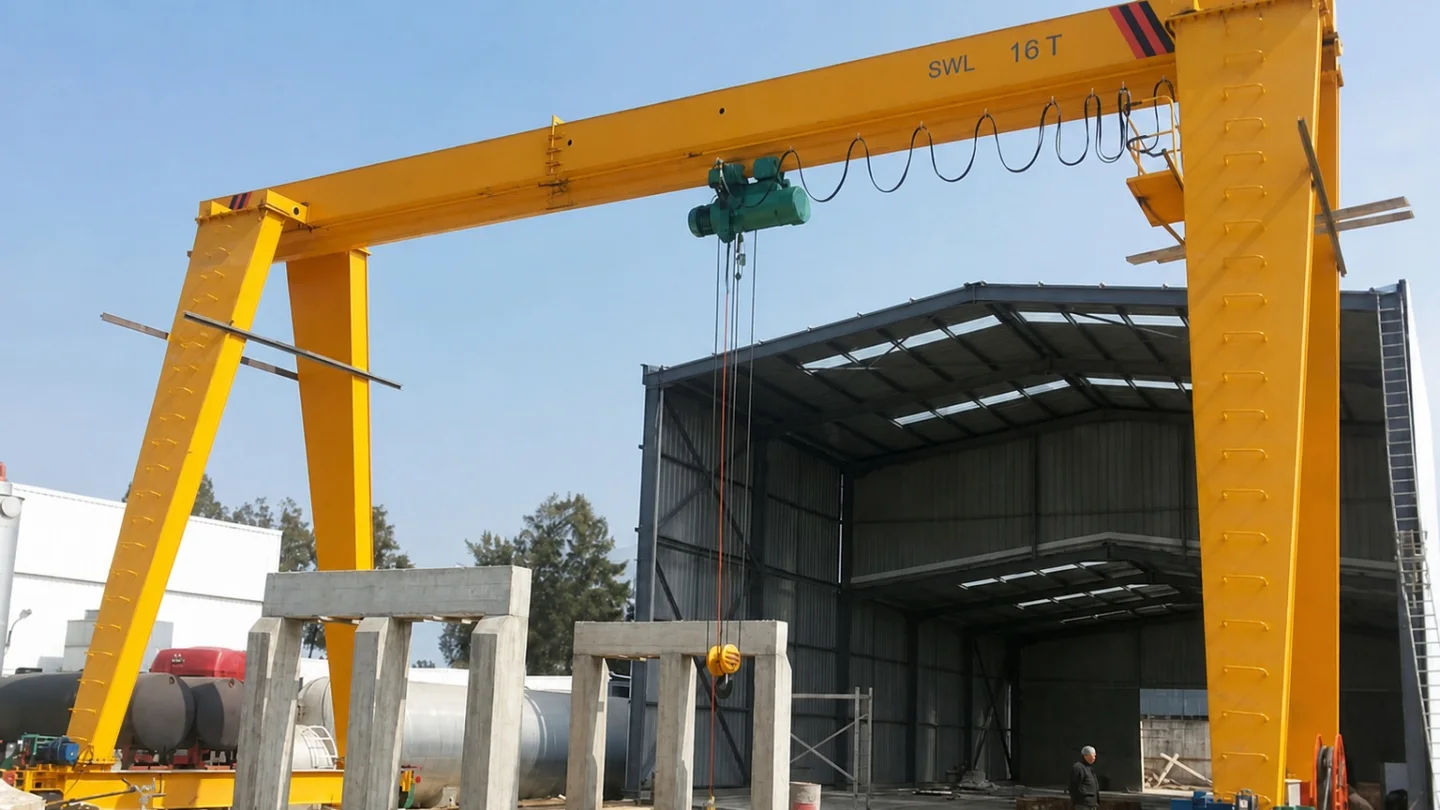
POSITION THE BLOCK WITH ACCESS STILL OPEN TO THE CREW.
During block or module assembly, lifting only adds value if crews can align and hold the work around temporary structures, welding access and neighbouring tasks. Load balance, multi-point picks, visibility and controlled travel define the discussion.
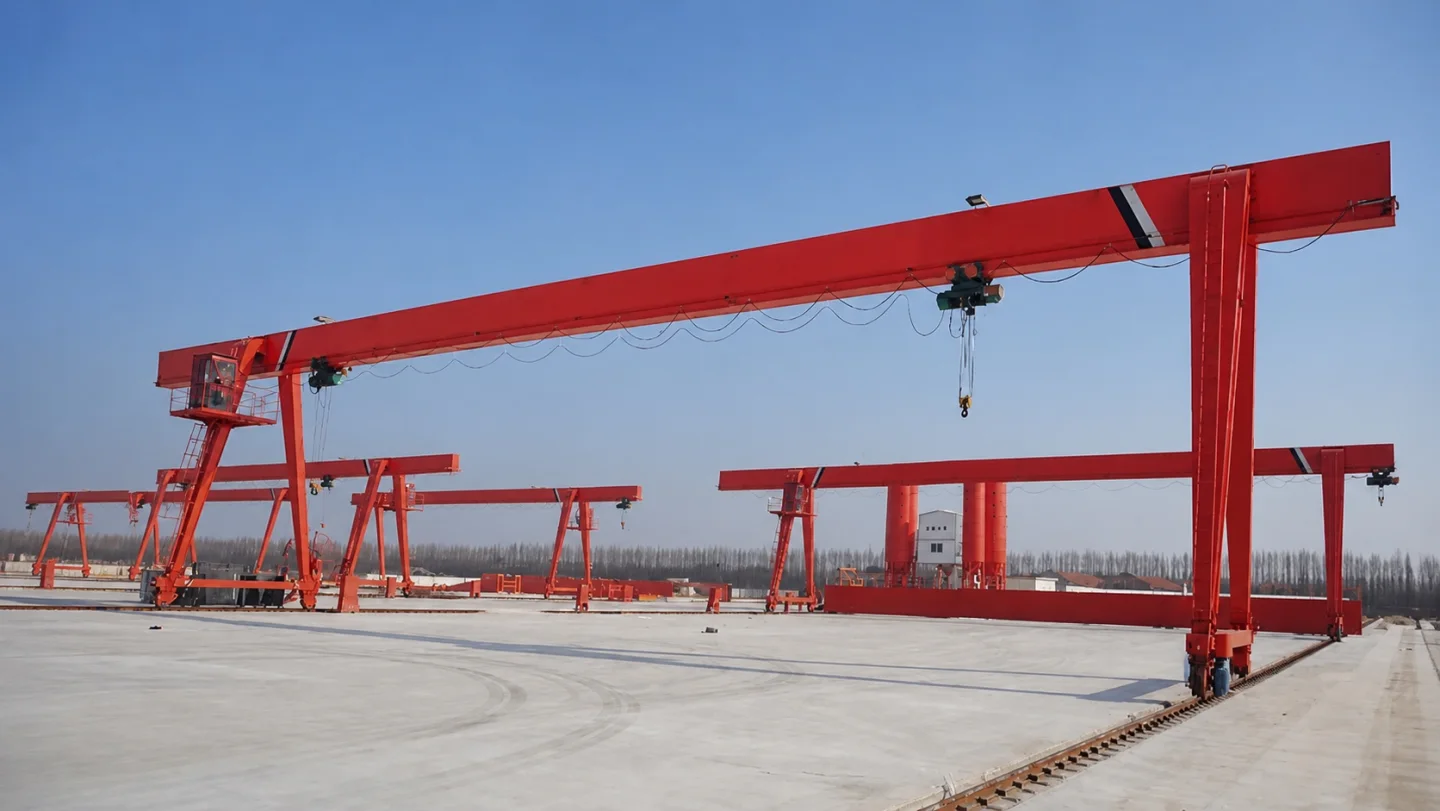
TREAT THE OUTDOOR HAND-OFF AS A ROUTE, NOT A GAP.
A module may pass through a door, across a transfer route and onto a transporter or support. The plan must account for clearance, ground or rail interface, turning points, weather exposure and the confirmation point for every transfer of responsibility.
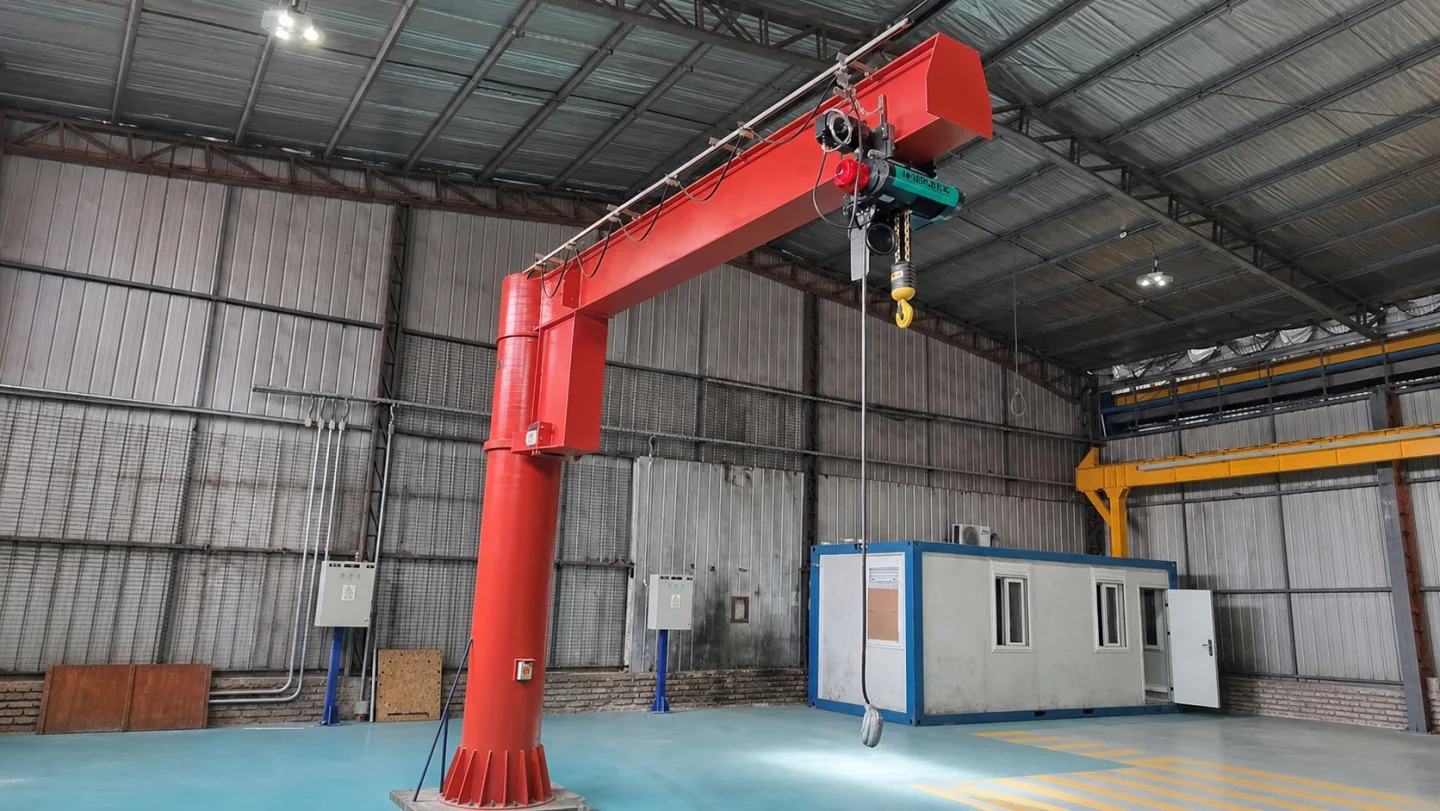
MAKE ROOM FOR INSTALLATION AND THE NEXT SERVICE LIFT.
Machinery packages, piping modules and outfitting components arrive with different packaging, lifting points and installation windows. The handling path must keep access open for service teams rather than using a lifting route as permanent storage.
What changes
the concept?
- A
LIFT AND BALANCE PLAN
Define pick points, multi-hook or tandem needs, allowable tilt and communication responsibility.
- B
WEATHER OPERATING RULE
Connect wind and visibility limits to safe waiting positions and the production schedule.
- C
TRANSFER ENVELOPE
Verify doors, turning radii, transporter interface, ground condition and overhead clearance.
- D
TEMPORARY SUPPORT
Plan where modules can be held or set down without blocking the next fabrication or logistics route.
Choose the equipment.
Then add the operating constraint.
Explosion protection, cleanliness, electrical insulation, availability, heat and automation can change components, controls, verification and acceptance across more than one product family. Treat these as project requirements, not as separate equipment categories.
Explosion-Protected Lifting
Classified gas or dust zone, group and temperature classChanges permitted motors, brakes, enclosures, wiring, controls, documentation and acceptance evidence.Define this requirement02Clean & Controlled Environment Handling
Cleanliness class, particle limits, material and lubrication restrictionsChanges exposed surfaces, materials, lubrication, enclosure, cleaning access and contamination controls.Define this requirement03Electrically Insulated Lifting
Voltage context, required insulation points and contact riskChanges the insulation architecture, monitoring, component separation and configuration-specific verification.Define this requirement04High-Availability & Redundant Lifting
Failure consequence, required recovery time and maintenance accessChanges drive and brake architecture, fallback states, maintainability and proof of continued availability.Define this requirement05High-Temperature & Molten-Material Handling
Molten or high-temperature load, radiant heat and personnel exposureChanges shielding, cabling, control position, emergency strategy and protection of critical components.Define this requirement06Automation, Remote & Unmanned Operation
Remote or unmanned cycles, system hand-offs and fault recoveryChanges sensing, interlocks, permissions, recovery logic, interfaces and responsibility boundaries.Define this requirementBring the route,
not a perfect spec.
A layout, route sketch, load list, photos or process sequence is enough to begin. The first discussion identifies the operating boundaries, missing inputs and handling roles worth evaluating.
MAP YOUR HANDLING ROUTE- Form, dimensions, condition, attachment and stability
- Origins, destinations, waiting points, doors and crossings
- Sequence, buffer, cycle, peak flow and recovery
- Structure, floor, access, temperature, dust, hygiene or wind
- Signals, traffic, responsibility, verification and delivery boundary